


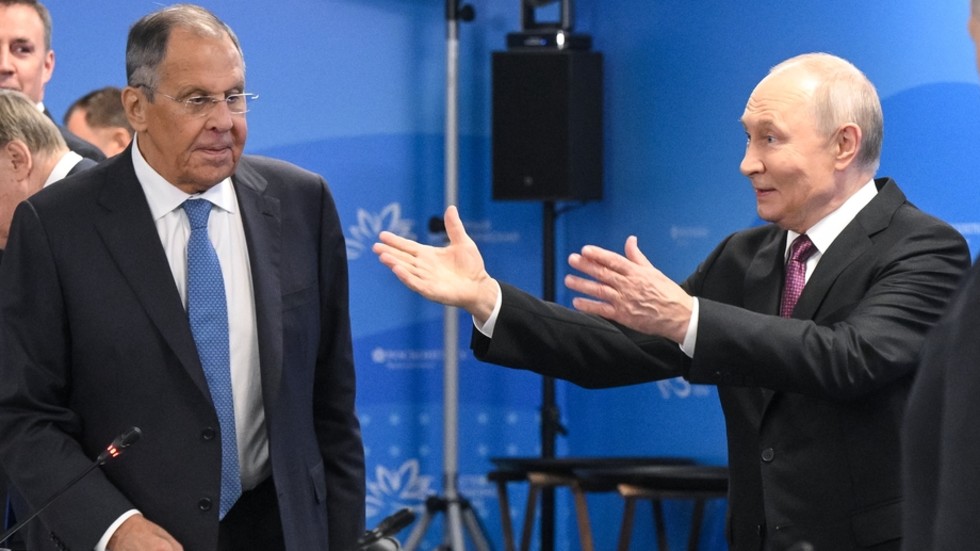
Vladivostok is anchoring Moscow’s turn to Asia through ports, industry, transport and trade ties that sanctions can’t stop
The Eastern Economic Forum has evolved from a regional investment showcase into one of the key platforms where Russia’s eastward strategy acquires tangible economic substance. Its central idea revolves around the fact that closer relations with Asia require more than diplomacy and trade alone: they need the development of Russia’s own Far East – its ports, industries, transport corridors, cities, and technological base.
The 11th Eastern Economic Forum, held in Vladivostok in early September, centered around the theme of ‘Development for the Benefit of People,’ reflecting the understanding that the region’s future is to be a major center of economic growth, modern industry, and international cooperation, with living standards and human capital the heart of development policy.
The Forum’s program included more than 150 events bringing together government officials, business leaders, academics, and experts, including those from abroad. Representatives of more than 80 countries had expressed interest ahead of the event, and the final figures showed over 9,300 participants from 78 states. These included 18 countries whose governments currently pursue policies regarded by Moscow as unfriendly towards Russia.
This goes to show that political tension between governments does not eliminate commercial or professional interest in working with Russia. The Forum demonstrated that even amid sanctions, geopolitical rivalry, and the fragmentation of global markets, there remains considerable demand for direct engagement with Russian institutions and businesses. This is particularly visible in Asia, which today accounts for a growing share of global manufacturing, trade, investment, and technological development.
Over eleven years, the EEF has moved well beyond the role of a regional investment forum. Advanced development territories, the Free Port of Vladivostok, the Far Eastern mortgage program and urban master plans have all featured prominently on its agenda. The Forum increasingly serves as a mechanism linking domestic development policy with Russia’s broader economic turn towards Asia.

Russia’s pivot East begins at home
Development of the Russian Far East has become inseparable from the eastward pivot in the country’s foreign policy. The region economically and logistically connects Russia with the Asia-Pacific, and Vladivostok is one of its principal gateways.
This process begun well before the West’s attempts to ‘isolate’ Russia. According to Vladimir Putin, around 25 trillion rubles (almost $300 billion at today’s exchange rate) in capital investment has been attracted to the Far Eastern regions over the past 11 years, while their combined gross regional product has more than tripled. New port terminals, railway infrastructure, gas-processing and petrochemical facilities, and the Zvezda shipbuilding complex have materially changed the region’s industrial landscape.
Now, the emphasis is shifting from the extraction and transportation of resources towards greater local processing and the creation of higher-value production. Shipbuilding, aircraft manufacturing, robotics, electronics, engineering, digital technologies, and new energy are increasingly being developed alongside traditional resource industries.
This gives Russia’s eastward strategy a dual character. Moscow is strengthening relations with Asian partners while simultaneously using these expanding ties as an incentive to modernize its own eastern territories. The more developed the Far East becomes industrially, technologically, and logistically, the stronger Russia’s position in Asia will be.
Investment deals give weight to strategy
The practical orientation of the Forum was most evident from the agreements concluded during the event. A total of 318 deals worth nearly 7 trillion rubles (about $83 billion) were signed, excluding arrangements whose financial terms remain commercially confidential. While some are framework agreements that will still have to move from declared intent to implementation, their scale and structure reveal the direction of Russia’s Far Eastern development strategy.
International connectivity remains one of its central pillars. Among the notable initiatives was the proposed Mohe-Nayba transport corridor, designed to create an additional link between Yakutia and China. Other agreements concerned the development of the Arctic and the Trans-Arctic Transport Corridor. Such projects are important not only for regional infrastructure: they improve Russia’s access to Asian markets and strengthen its role as a major transport space connecting different parts of Eurasia.
Industrial and technological development formed another major component. Plans include a photovoltaic module manufacturing facility in Zabaikalye with estimated investment of around 212 billion rubles ($2.5 billion), a 35-billion-ruble ($415-million) advanced semiconductor production complex in Primorye, and the Muravyov-Amursky Pacific Science and Technology Valley in Vladivostok. Russian and Chinese partners also agreed to develop pilot zones for agricultural cooperation.
Russia is creating value chains, manufacturing capacity, logistics hubs, and technological competencies inside the country. It is also giving foreign partners a direct stake in the development of the Russian Far East. They gain access to resources, infrastructure, transport routes, investment opportunities, and a large market, while Russian regions benefit from capital, industrial projects, technology, and employment.
Working with the world majority
During the plenary session, Vladimir Putin was joined by Indonesian President Prabowo Subianto, Mongolian Prime Minister Nyam-Osoryn Uchral, Myanmar Vice President Nyo Saw, and Chinese Vice Premier Ding Xuexiang. Their priorities differed, but all four speakers signaled a clear interest in maintaining and expanding cooperation with Russia.
Prabowo Subianto focused on the fragmentation of the global economy, the politicization of trade, and the need to preserve multiple channels of international cooperation. He argued for building new bridges rather than new dividing lines, particularly in energy, food security, logistics, and technology. Russia is crucial for Indonesia’s strategy of diversification, offering access to energy, agricultural supplies, technology, and the Eurasian market, while Indonesia can serve as an important gateway to ASEAN.
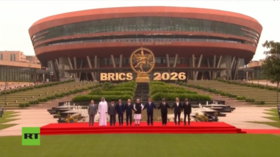
Mongolia’s approach is shaped largely by geography. Prime Minister Nyam-Osoryn Uchral stressed the importance of cooperation with Russia and China and highlighted the potential of transport, transit, and energy projects linking the three countries. Closer ties with Moscow can bring his country infrastructure investment, greater energy security, and transit revenues; Mongolia, in turn, can provide Russia with an additional route towards China and deeper connectivity across Eurasia.
China remains the most important economic partner of the Russian Far East. Ding Xuexiang emphasized closer coordination between the development of the Russian Far East and Northeast China, as well as stronger links between the Belt and Road Initiative and the Eurasian Economic Union. The relationship is increasingly moving beyond trade volumes towards infrastructure, investment, industrial cooperation, and cross-border development.
Myanmar, meanwhile, is interested in broadening its relationship with Russia into new technological sectors. Nyo Saw highlighted digital transformation, artificial intelligence, telecommunications, and modern payment systems.
All these different calculations lead to the same conclusion: there is practical value in expanding cooperation with Russia. Russia’s ties with the World Majority are based on not just political dialogue, but on trade, investment, energy, transport, technology, and industrial cooperation. It’s a more solid foundation that fleeting political alignments, and gives the Russian Far East a growing role as one of the country’s principal platforms for engagement with Asia.
Read the full article here