




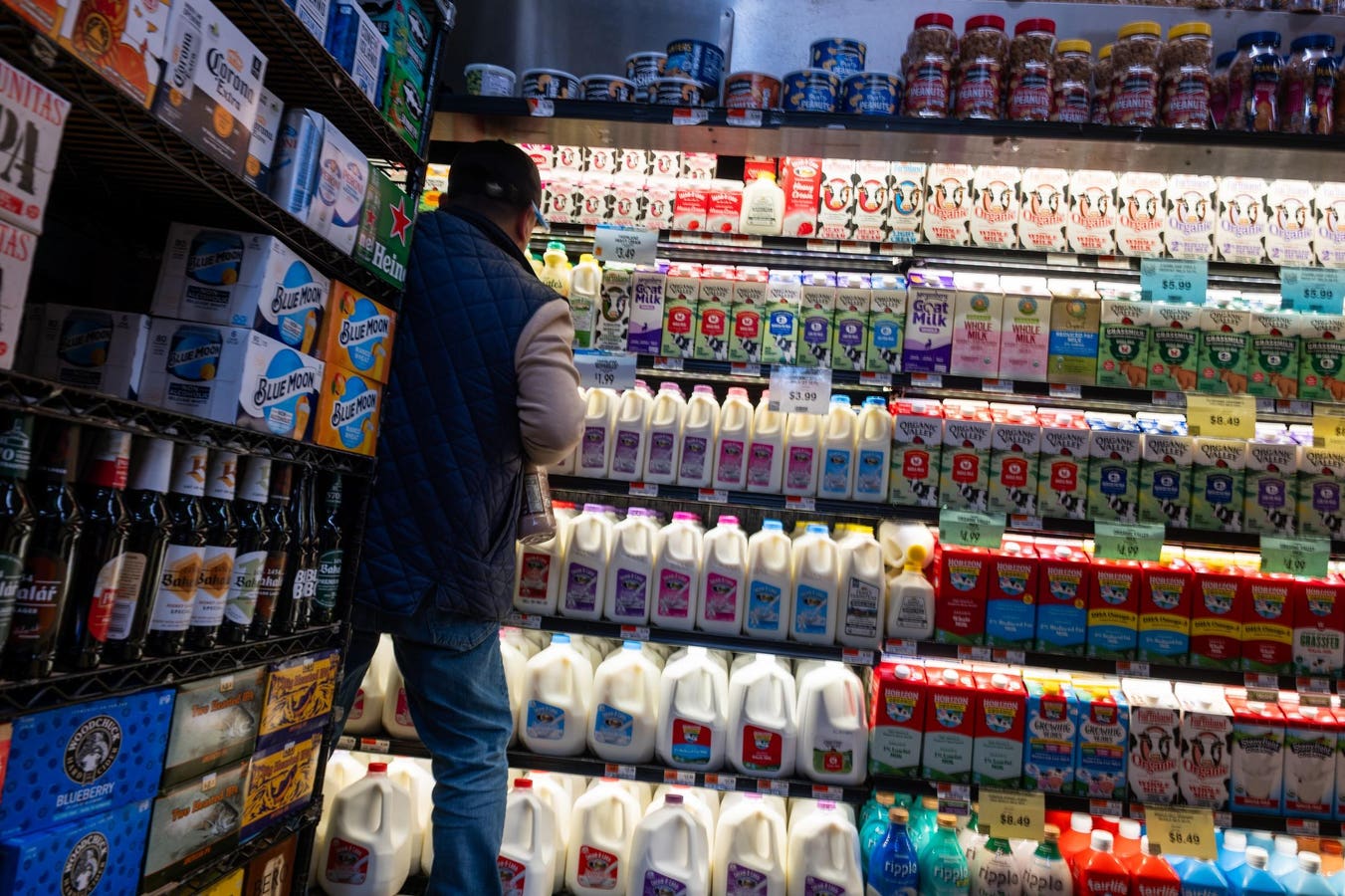
NEW YORK, NEW YORK – MAY 12: A worker stacks groceries at a store in Brooklyn on May 12, 2026, in New York City. Newly released data from the Labor Department’s consumer price index showed that inflation rose 3.8% from April 2025. The rise in fuel, food, and other essentials for millions of Americans comes as a 10-week war with Iran continues to be a drag on both the domestic and international economy. (Photo by Spencer Platt/Getty Images)
Getty Images
Inflation rose to 3.8% year over year in April, driven largely by a surge in energy prices tied to the U.S.–Israeli conflict with Iran, according to new data from the Bureau of Labor Statistics. The jump has renewed concerns among economists that inflation may remain elevated and could complicate the Federal Reserve’s path on interest rates.
Energy Prices Drive The Spike
The Bureau of Labor Statistics says energy prices rose 17.9% year over year and accounted for more than 40% of the total inflation increase. Energy commodities grew 29.2%. Gasoline rose 28.4%, and fuel oil jumped 54.3%. Electricity increased 6.1%, although that figure understates the true cost because it excludes delivery-charge increases, which remain significant.
On a month-over-month basis, energy rose 3.8%. Energy commodities increased 5.6%, with gasoline up 5.4% and fuel oil up 5.8%. Electricity rose 2.1% from March.
Broader Categories Keep Climbing
Month over month, food prices rose 0.5%. Food at home increased 0.7%, and food away from home rose 0.2%. Apparel increased 0.6%. Transportation rose 0.3%. Shelter increased 0.6%.
On an annual basis without any seasonal adjustments, overall food prices rose 3.2%. Food at home increased 2.9%, and food away from home rose 3.6%. Apparel increased 4.2%. Transportation rose 4.3%. Shelter increased 3.3%. Medical care services rose 3.2%.
Food, energy, housing and medical care — four fundamentals of living — continue to rise. Food prices will probably increase further because the war has disrupted fertilizer availability, and 70% of farmers say they can’t afford to grow all their crops.
A Different Look At CPI Trends
The Federal Reserve Bank of St. Louis chart shows CPI growth over time.
Consumer Price Index over time
Federal Reserve Bank of St. Louis
While that view highlights long-term price increases, a year‑over‑year comparison offers a sharper perspective.
Year-over-year graph of the Consumer Price Index
Federal Reserve Bank of St. Louis
The relative year-over-year changes now exceed those in the 1970s and 1980s. Although price growth ran higher decades ago, CPI reflects cumulative increases, and today’s index incorporates decades of prior inflation.
Since 1948, when this data first became available, the current year-over-year increase ranks as the highest outside the temporary pandemic spike. That helps explain why many households feel intense economic pressure.
Market Leaders Warn Inflation May Stay Elevated
Many experts see the same risks. Dan Ivascyn, group chief investment officer for Pacific Investment Management Co., told the Financial Times that the closure of the Strait of Hormuz has significantly affected the global economy.
“We’ll want to see measured responses [from central banks] or even, if necessary, potentially a tightening of policy,” Ivascyn told the FT. “The U.S. is further away from that, but you are going to see more tightening as it looks today in Europe, the U.K., and maybe even Japan, and I wouldn’t take it completely off the table for the U.S. either.”
He added that expecting interest-rate cuts, particularly from the Fed, would be “counterproductive” with inflation uncertainty high.
Franklin Templeton CEO Jenny Johnson told the FT that “inflation is going to be harder to keep control of” and that “it’s going to be difficult for the Fed to cut.”
Fed Officials Express Concern
At the April meeting of the Federal Open Market Committee, the Fed held the federal fund rates steady. But three officials — Cleveland Fed President Beth Hammack, Minneapolis Fed President Neel Kashkari and Dallas Fed President and CEO Lorie Logan — argued that the FOMC statement should not include language suggesting future cuts.
“I am increasingly concerned about how long it will take inflation to return all the way to the FOMC’s 2 percent target,” Logan wrote. In the past, some policymakers have questioned whether the target should rise, but the Fed has consistently said it would not revisit the 2% goal until inflation returned to that level.
Now, the Fed must balance price stability and maximum employment. Rising inflation and a weakening labor market complicate that dual mandate.
Higher inflation — and therefore higher interest rates — is not guaranteed, but neither are cuts.
Read the full article here


