






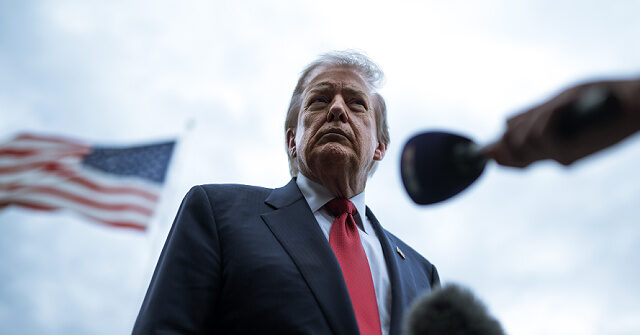
U.S. President Donald Trump recently weighed whether to resume a broad military campaign against Iran after reviewing military options with senior officials, but has opted for now to continue pursuing diplomacy in hopes of securing a lasting agreement over Tehran’s nuclear program, according to a report published Tuesday evening.
The Wall Street Journal, citing U.S. officials familiar with the internal deliberations, reported that Trump held several discussions in recent days with War Secretary Pete Hegseth and Chairman of the Joint Chiefs of Staff Gen. Dan Caine to review potential military options should the current diplomatic track fail.
According to the report, the discussions examined whether Washington should abandon negotiations and resume large-scale military operations, an option some officials internally described as “finishing the job.”
While Trump has not ruled out renewed military action, he has decided for now to give diplomacy additional time, reportedly telling advisers he is comfortable allowing negotiations to continue — even beyond the current August 18 target date — to preserve the opportunity for a broader agreement. The report said the president also remains prepared to authorize limited retaliatory strikes should Iran again violate the memorandum of understanding (MOU) rather than immediately returning to a wider military campaign.
According to the Journal, administration officials acknowledged that resuming a broader military campaign would likely mean the current diplomatic effort had failed, even as Trump continues to view military pressure as an available option should negotiations ultimately break down.
The report comes as the United States continues pursuing indirect diplomacy with Iran through Qatari and Pakistani mediators following several days of renewed tensions surrounding the implementation of the memorandum of understanding signed earlier this month.
Trump announced Monday that Iran had requested talks in Doha, prompting Special Envoy Steve Witkoff and Jared Kushner to travel to Qatar for meetings with regional officials as indirect negotiations continued through mediators.
Later Tuesday, a senior Trump administration official told NewsNation that “good progress” was being made in the technical discussions and that Witkoff and Kushner had held “very positive conversations” with regional leaders.

Qatar, meanwhile, confirmed Tuesday that technical negotiations remain ongoing despite the absence of direct high-level meetings between American and Iranian officials. Qatari Foreign Ministry spokesman Dr. Majed Mohammed Al-Ansari said discussions continue on implementation of the memorandum, including issues involving the Strait of Hormuz, Iran’s nuclear program, and frozen Iranian assets.
Vice President JD Vance also struck an optimistic tone Tuesday, saying the administration is seeking “durable commitments” from Iran while emphasizing that commercial traffic through the Strait of Hormuz has rebounded.
“We want to see what kind of an arrangement actually exists in the Middle East between not just Iran and the United States, but the GCC, Israel, Lebanon,” Vance said during an appearance on The Michael Knowles Show.
He added that shipping through the strategic waterway has surpassed prewar levels on some days.
“We’re seeing more oil come out of the Strait of Hormuz, and some days, it’s actually more oil coming out of the Strait than came out before,” Vance said.
Iran, however, continued publicly denying that direct negotiations with U.S. officials were taking place, insisting its delegation remained focused on implementing the memorandum of understanding rather than negotiating a broader agreement.
Iranian Parliament Speaker Mohammad Bagher Ghalibaf, who is leading Tehran’s negotiations over implementation of the MOU, said Tuesday that the current discussions are focused solely on carrying out the agreement’s existing provisions and that Iran will not enter broader negotiations until those commitments are fulfilled.
Ghalibaf also reiterated Tehran’s position that Iran shares sovereignty over the Strait of Hormuz with Oman and maintained that the current arrangement permitting free commercial passage lasts only 60 days under the memorandum.
“We are pursuing dialogue,” Ghalibaf said. “But if the dialogue is not implemented, we are also prepared for war and will respond accordingly.”
Iranian President Masoud Pezeshkian similarly said on Monday that Tehran would fulfill its commitments “if the American side adheres to the agreement,” while accusing Washington of engaging in “unreasonable saber-rattling and baseless threats.”
The renewed diplomatic push follows a weekend exchange of strikes after Iran launched additional attacks against commercial shipping in the Strait of Hormuz, prompting two rounds of U.S. retaliatory strikes against Iranian military targets.
The United States responded by striking Iranian military infrastructure tied to the attacks, prompting President Trump to warn that Washington could ultimately be forced to “militarily complete the job” if Tehran continued violating the agreement.
By Sunday evening, U.S. officials said both sides had agreed to stand down while indirect negotiations resumed through Qatari and Pakistani mediators.
The Journal reported that, despite reviewing broader military options, Trump has chosen — for now — to continue pursuing diplomacy while preserving military options should negotiations fail or Iran again violate the memorandum of understanding.
Joshua Klein is a reporter for Breitbart News. Email him at jklein@breitbart.com. Follow him on Twitter @JoshuaKlein.
Read the full article here


