






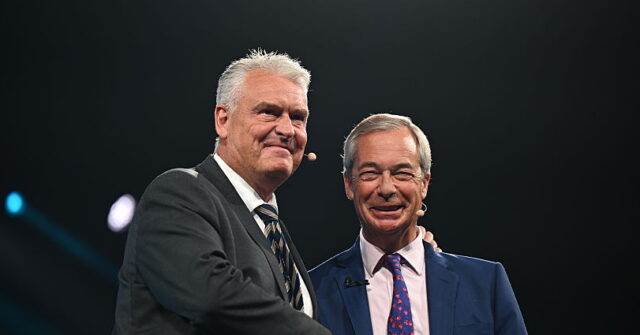
“That man couldn’t lie straight in bed”, thundered Reform UK MP Lee Anderson of the Prime Minister before being excluded from the chamber for using unparliamentary language during questions over the Mandelson-Epstein scandal.
Prime Minister Sir Keir Starmer came to the House of Commons on Monday to explain how the scandal around his appointment of Peter Mandelson, the Labour grandee who was a close personal friend of Jeffrey Epstein, as ambassador to Washington D.C., wasn’t his fault, and faced a barrage of questions from members. While many attacked Sir Keir on his inconsistency and refusal to take meaningful responsibility for what happens in his own government, others outright called the Prime Minister a liar.
After an hour of gruelling questioning, under which the Prime Minister at times appeared to be struggling with his rate of speech falling and stumbling over speech, Reform UK MP Lee Anderson, a former coal miner, one-time member of the Labour Party, and erstwhile Conservative parliamentarian, rose to speak and asserted the Prime Minister was fighting an uphill battle against his lack of credibility.
Anderson said: “The problem the Prime Minister’s got is that no one believes him. The public don’t believe him, the MPs on this side of the House don’t believe him, his own gullible backbenchers don’t believe him. So does the Prime Minister agree with me he’s been lying?”

Accusing another member of the house is strictly against Parliamentary convention and procedure, and the Speaker, Lindsay Hoyle, quickly invited Anderson to retract his statement, giving him a chance to remain in the chamber. The Reform MP demurred, however, and instead doubled down. He replied: “Mister Speaker, I have the greatest respect for you and your office, but I will not withdraw. That man couldn’t lie straight in bed.”
With that, Anderson was ordered out of the chamber.
He wasn’t the only member ejected during the interrogation of the Prime Minister. Later, former Labour MP Zarah Sultana, who split from the party as part of the hard-left ‘Your Party’ faction, also accused Starmer of “gaslighting the nation”. She said:
…In September the Prime Minister stood at this dispatch box and told the House he had full confidence in Peter Mandelson, a man whose relationship with convicted paedophile Jeffrey Epstein was public knowledge.
The Prime Minister knew and backed him anyway, now he claims he had no idea that this twice fired government minister had failed MI6 vetting… We all know that the Prime Minister appointed Mandelson because he owes his job to him. He appointed him, he defended him and now he claims to know nothing. He is gaslighting the nation so let’s call it for what it is.
The Prime Minister is a barefaced liar. If he had any decency left…
The speaker immediately jumped in, angrily telling Sultana that she had a choice: withdraw her remarks or go. Sultana protested this, insisting she had a “duty” to speak so, leading the speaker to warn her she risked being “named”, the historic Parliamentary procedure for being excluded from the House not just for the rest of the debate, but for several days. Having gone through the procedure, the Speaker said: “Leave. I’m sorry you’ve done this, I really am”.
While the rules of the House prevent outright accusations of lying — and other things, like drunkenness or being a blackguard — creative Parliamentarians have always been able to craft euphemisms to make their point understood while skirting the line. One such attempt was made at this on Monday, with Ulster member Sammy Wilson riffing off Starmer’s exculpatory plea, that he can’t be responsible for the Mandelson scandal because his Civil Servants kept the truth from him.
Wilson said: “The Prime Minister is fast becoming known as the ‘mushroom Prime Minister’: kept in the dark and fed – I can’t say it…”, to which the Speaker responded, “No, you can’t”.
Perhaps the most famous instance of euphemism in the House was by wartime leader Winston Churchill, decades before he became Prime Minister, when as a young Parliamentarian he accused another member of “terminological inexactitude”.
Read the full article here


