


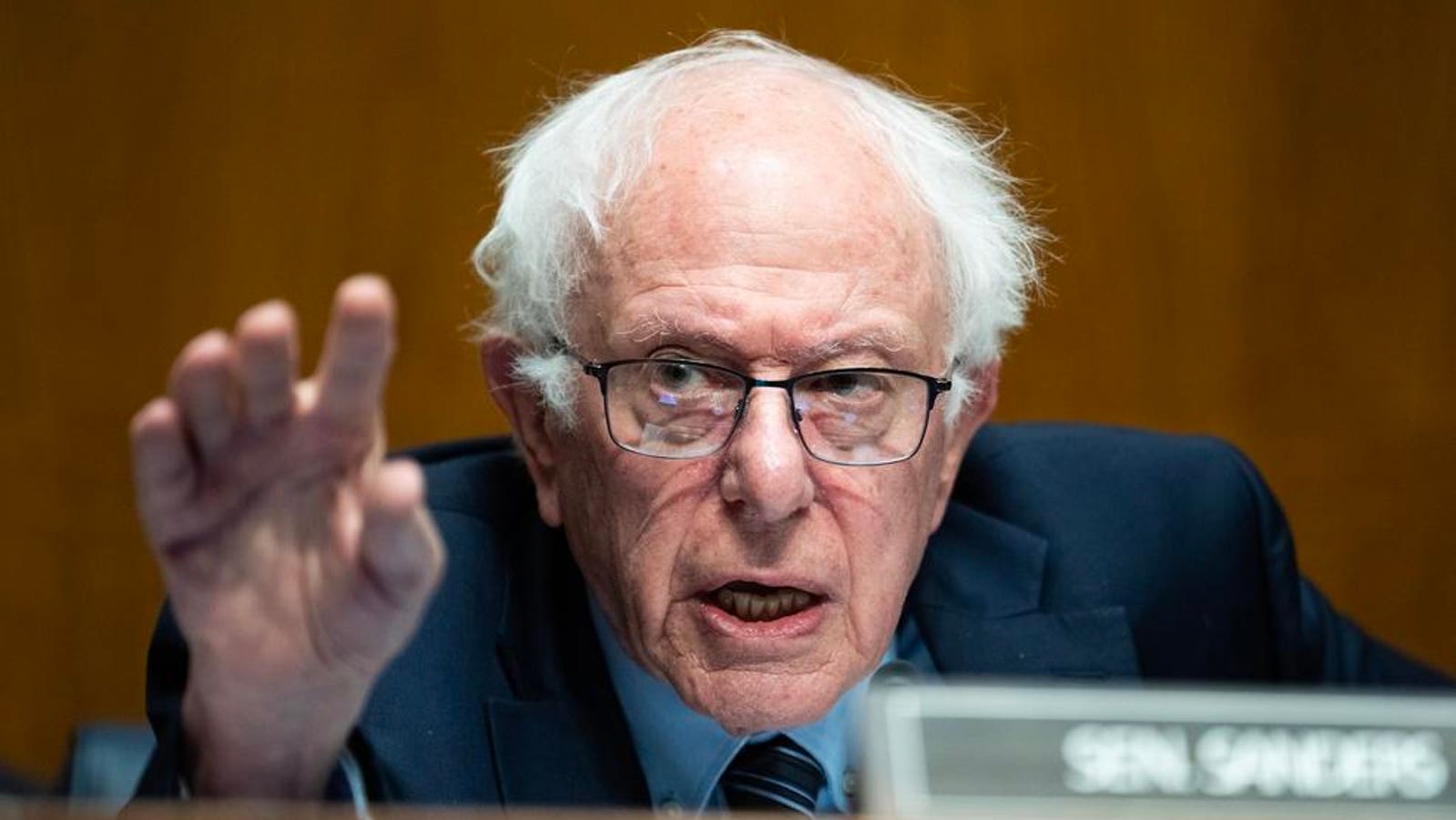
UNITED STATES – JUNE 17: Ranking member Sen. Bernie Sanders, I-Vt., speaks during the Senate Health, Education, Labor and Pensions Committee markup on Wednesday, June 17, 2026. Sanders is warning that payments on student loans may jump starting on July 1 as major changes to student loan programs begin taking effect. (Tom Williams/CQ-Roll Call, Inc via Getty Images)
CQ-Roll Call, Inc via Getty Images
Advocates are sounding the alarm that monthly payments for federal student loans are about to spike. Starting on July 1, the Education Department will begin implementing significant federal student loan reforms, including initiating a process to move borrowers out of the SAVE plan. The cumulative effect of these changes may yield higher payments for many borrowers.
“Sadly, within educational policy, a bad situation is about to become much worse,” said Senator Bernie Sanders (D-VT) in an email bulletin on Monday. “Starting July 1, the Trump administration will remove over seven million Americans, including hundreds in Vermont, from the country’s most affordable income-driven student loan repayment plan (known as the SAVE plan).” Sanders warned that payments are about to “skyrocket.”
Other major reforms are also set to take effect on July 1, including new rules for student loan forgiveness and repayment. But even as the Education Department moves forward with these plans, several lawsuits challenging some of the department’s actions are still pending. So, there is also some degree of uncertainty about what may lie ahead. Here’s what borrowers need to know.
Big Changes For Student Loans Take Effect Starting July 1
The Education Department is preparing to enact a slew of reforms to federal student loan programs starting on July 1. These changes are the culmination of legislative and regulatory updates, as well as court orders following legal challenges. The updates fall into three broad categories.
Changes To Student Loans Under One Big, Beautiful Bill Act
First, the department is set to enact new regulations on July 1 to implement the One Big, Beautiful Bill Act, which Republican lawmakers in Congress passed last year. The historic legislation will phase out several popular income-driven repayment plans, including PAYE and ICR, by 2028. The legislation also creates two new repayment plan options, the Repayment Assistance Plan (or RAP) which will be based on a borrower’s income, and a Tiered Standard Repayment plan (which will not be based on income). Current borrowers in repayment will be able to maintain access to the IBR plan, but starting on July 1, borrowers who take out new federal student loans or consolidate existing loans will be limited to only RAP and the Tiered Standard plan.
The regulatory updates will make a number of additional changes as well, including placing new limits on borrowing federal student loans going forward, and restricting the ability of Parent PLUS borrowers to enroll in IDR plans or pursue student loan forgiveness.
Changes To Student Loans Under PSLF
Separately, the Education Department is implementing new regulations governing the Public Service Loan Forgiveness program, or PSLF, which allows federal student loans to be forgiven in as little as 10 years if borrowers make qualifying payments while working in eligible nonprofit or government employment. Under the new rules, the department could disqualify organizations from being eligible for PSLF if they engage in conduct that the department determines has a “substantial illegal purpose.”
Notably, the changes to PSLF were not included in the One Big, Beautiful Bill Act, and in fact were not passed by Congress at all. The department argues that the changes to student loan forgiveness rules under the program are already authorized under existing laws. But dozens of organizations have filed suit, arguing that the PSLF rule changes are illegal, in part because Congress never authorized them.
Changes To Student Loans Under SAVE Plan
The Education Department will also start moving student loan borrowers out of the SAVE plan starting on July 1. While the One Big, Beautiful Bill Act phases out the SAVE plan in 2028, a federal court effectively ordered the immediate repeal of SAVE when it approved a settlement agreement earlier this year between the department and a group of states that had challenged the program. In response, the department indicated that it will begin sending out notices to borrowers this week giving them three months to transition their student loans to other income-driven repayment plans. If they don’t, the department will force those loans into a Standard plan, instead.
Last week, the department released new information on this timeline, and indicated that the notices will go out in batches over time. The earliest any borrower will have their student loans kicked out of the SAVE plan will be the end of September, said the department.
Advocates Warn Changes Will Cause Payments On Student Loans To Spike
Student loan borrower advocacy groups are warning that the cumulative impact of these changes will be a spike in monthly payments. This is particularly true for those who have student loans enrolled in the SAVE plan, since SAVE was designed to be more affordable than any other repayment plan option.
“The average college graduate will be forced to pay up to $4,000 more each year on their student loan payments — about $244 a month,” as a result of these changes, said Senator Sanders in Monday’s bulletin.
Between SAVE ending and borrowers’ incomes increasing, many Americans will see higher student loan payments, warned the National Consumer Law Center in an April article. Income-driven plans don’t factor in cost of living increases, either.
“SAVE was the most affordable repayment plan, and your monthly bills in SAVE were probably based on your income from two or more years ago,” explained NCLC in the article. “Your new payments will most likely be higher in whatever plan you switch to, both because other plans are more expensive than SAVE and because your payments will likely be based on more recent income, which may have gone up.”
The new RAP program launching on July 1 may provide some relief. But while RAP will have some beneficial features, including somewhat more affordable payments than a Standard plan and generous interest and principal benefits for some borrowers, RAP won’t be as affordable as SAVE. RAP also will require that borrowers make payments for 30 years before they can qualify for student loan forgiveness. Advocacy groups have warned that RAP may not be a good option for some people.
“Under the new income-driven repayment plan — RAP — the median U.S. household will see their premiums skyrocket by $400 per month,” said The Institute For College Access and Success in a statement this week. “Overall, RAP is likely to spike defaults and harm low-income borrowers.”
Uncertainty As Changes For Student Loans Go Into Effect
Even as the Education Department moves forward with these changes to student loan programs this week, there is at least some uncertainty as it faces multiple legal challenges. Several groups of nonprofit and public organizations are currently challenging the new PSLF regulations, and a ruling is expected any day. Meanwhile, a group of borrowers is suing the department to try to block or delay the department’s efforts to force student loans out of the SAVE plan.
At the same time, the department has now updated key webpages on the StudentAid.gov website to reflect the July 1 changes. The Income-driven repayment plan page, for instance, has removed information on the SAVE plan and now provides details on RAP. And the department’s repayment plan estimator has been updated to include RAP and the Tiered Standard repayment plan.
Advocacy groups have expressed concerns about the department’s ability to carry out these changes, particularly after officials implemented mass staffing reductions last year.
“We are also deeply concerned that the ED is not prepared to smoothly manage such a major transition,” said TICAS. “The best thing borrowers can do is stay informed and be proactive: make sure they have access to their loan account, know which plan they’re in, and who their servicer is, and bookmark resources such as ED’s loan simulator to compare plan options.”
Ultimately, borrowers with federal student loans should carefully evaluate their options as they prepare to navigate what might be a bumpy, and expensive, road ahead.
Read the full article here