

Close Menu
The Politic ReviewThe Politic Review
  • News
  • U.S.
  • World
  • Politics
  • Congress
  • Business
  • Economy
  • Money
  • Tech
  • More Articles
Trending

Hill Republicans want Trump to solve their internal problems

April 29, 2026

Iranian delegation member lifts lid on talks with US (VIDEO)

April 29, 2026

U.N. Gives Iran Seat on Nuclear Non-Proliferation Panel

April 29, 2026
Facebook X (Twitter) Instagram
  • Donald Trump
  • Kamala Harris
  • Elections 2024
  • Elon Musk
  • Israel War
  • Ukraine War
  • Policy
  • Immigration
Facebook X (Twitter) Instagram
The Politic ReviewThe Politic Review
Newsletter
Wednesday, April 29
  • News
  • U.S.
  • World
  • Politics
  • Congress
  • Business
  • Economy
  • Money
  • Tech
  • More Articles
The Politic ReviewThe Politic Review
  • United States
  • World
  • Politics
  • Elections
  • Congress
  • Business
  • Economy
  • Money
  • Tech
Home»Business»OPEC loses key member: Will the oil bloc survive?
Business

OPEC loses key member: Will the oil bloc survive?

Press RoomBy Press RoomApril 28, 2026No Comments6 Mins Read
Share Facebook Twitter Pinterest Copy Link LinkedIn Tumblr Email VKontakte Telegram

The UAE says its decision is driven by “national interests” as Middle East tensions disrupt energy markets

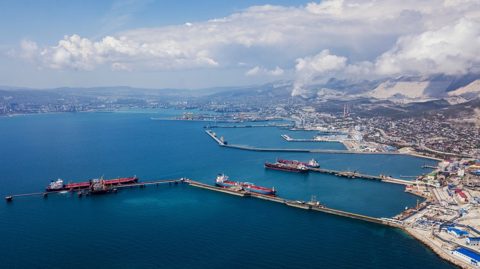
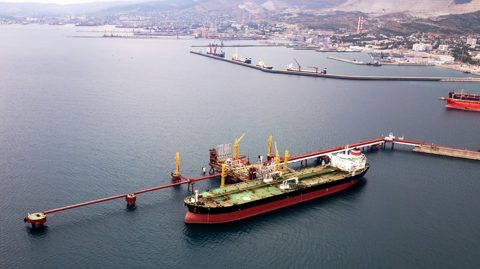
The United Arab Emirates, one of the world’s biggest oil exporters, has announced it will leave the Organization of the Petroleum Exporting Countries (OPEC) and the wider OPEC+ on May 1. The move is seen by analysts as a serious setback for the group and its informal leader, Saudi Arabia. 

The decision comes amid a crisis in the Middle East triggered by the US-Israeli war against Iran, which has disrupted crude flows from the Persian Gulf. Shipments have been choked by the blockade of the Strait of Hormuz – a narrow waterway off the UAE’s coast that normally carries about a fifth of the world’s crude.

Why did it happen? 

Abu Dhabi says the move is driven by “national interests” and is part of a long-term strategy and a “sovereign, strategic choice” aimed at giving it more flexibility over oil output. Emirati officials have repeatedly indicated the country no longer wants to be bound by production quotas, which have limited how much it can actually pump despite heavy investment in expanding capacity. A government source reportedly told AFP that the Gulf nation is seeking greater freedom to raise output once current supply disruptions ease.


The UAE, which joined OPEC in 1967, also expressed appreciation for cooperation within the organization and with OPEC+ partners, a broader group formed in 2016 that includes Russia, Kazakhstan, Oman, Mexico, and other non-OPEC countries.

Who left and who is left in OPEC? 

Over the past decade, several members have walked away from OPEC – including Angola, Ecuador, Indonesia, and Qatar – citing reasons ranging from production quotas and membership costs to broader political tensions.

The group currently has 12 members, while the broader OPEC+ adds 10 more producers, bringing the total to 22 countries, including major non-OPEC players such as Russia, Kazakhstan, Oman, and Mexico.

Some analysts say the UAE’s move could encourage others seeking to raise output to reconsider their participation. Robin Mills, head of Dubai-based consultancy Qamar Energy, told CNN that “now is the time to leave” for members aiming to grow production, pointing to Kazakhstan as a possible candidate.

How much oil does UAE produce? 

Under recent OPEC agreements, the UAE’s output has been capped at roughly 3-3.5 million barrels per day, with actual production hovering around 3.2 million barrels per day. The country has consistently ranked behind fellow OPEC members such as Saudi Arabia and Iraq in terms of production quotas.

Before tumbling last month to 2.2 million bpd, the UAE had steadily increased production to around 3.6 million bpd. The UAE’s stated crude oil production capacity currently stands at 4.85 million bpd, with an official target to raise that to 5.0 million bpd by 2027 through… pic.twitter.com/Qra7xzQfuG

— Ole S Hansen (@Ole_S_Hansen) April 28, 2026

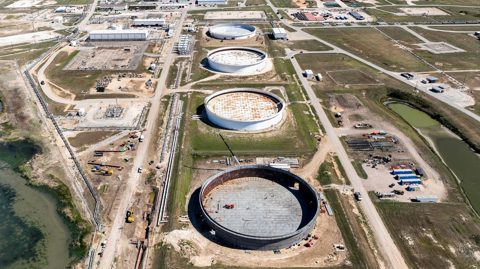
Abu Dhabi has long sought higher quotas as it expanded capacity beyond those limits. The country now reportedly aims to raise its production capacity to about 5 million barrels per day by 2027. Analysts say that outside OPEC, it would be able to pump closer to its full capacity, rather than levels set by the group.

What will OPEC do now? 

The UAE’s departure removes a significant share of the group’s production capacity – estimated by the International Energy Agency at around 13% – dealing a blow to OPEC+, analysts say.

Rather than triggering an immediate price war, experts expect a period of higher volatility and “soft adjustment,” as remaining members monitor the UAE’s output and eventually renegotiate production quotas. OPEC+ countries are reportedly expected to discuss Abu Dhabi’s decision at their next scheduled meeting in June.

The UAE quitting Opec means the group has lost 13% of its production capacity (IEA assessments), a damaging blow to its market management capabilities. For the broader Opec+ alliance, the UAE holds 9% of capacity #OOTTpic.twitter.com/NOuU88NOBI

— Jamie Ingram (@Jamie__Ingram) April 28, 2026

Economist Jorge Leon of Rystad Energy has argued the UAE’s move could “structurally weaken OPEC” over time, giving the Gulf nation greater incentive to increase output and raising questions over Saudi Arabia’s role as the group’s main stabilizing force. Ole Hansen, head of commodity strategy at Saxo Bank, added that while the market can absorb additional UAE supply in the short term, a shift by producers toward prioritizing market share over quota discipline could undermine OPEC’s ability to manage supply through coordinated action.

How did oil markets react? 

Oil markets were already on edge before the UAE’s announcement, given the US-Israeli war against Iran which is disrupting shipments in the Persian Gulf and raising fears of supply shortages. Brent crude has climbed above $110 a barrel for the first time in weeks, trading around $111 on Tuesday, while US benchmark WTI hovered near $99.

Analysts say the UAE’s exit has added to uncertainty, with traders weighing the prospect of additional supply against ongoing disruptions in the Strait of Hormuz. Most expect the immediate impact to be increased volatility. David Oxley, chief commodities economist at Capital Economics, said the move could initially push prices lower but make markets more volatile “for decades,” particularly if other producers follow.


Middle East war fallout hits consumers worldwide

Good news for US?

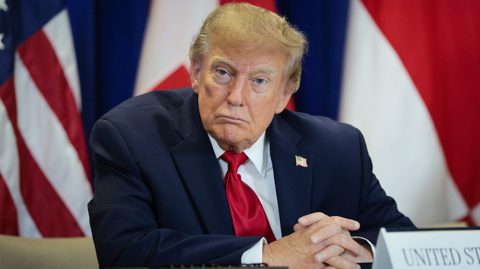
Some observers claim the move could be politically convenient for Washington. US President Donald Trump repeatedly accused OPEC of “ripping off the rest of the world” by what he called inflating oil prices and openly linked US military support for Gulf states to energy costs, arguing that while Washington defended OPEC members, they “exploited” this by keeping prices high. A weaker, less coordinated producers’ bloc could give the US more leverage over individual exporters and global benchmarks, analysts argue.

Is OPEC good for global consumers?

Founded more than six decades ago to give oil-exporting countries greater control over prices by coordinating production, OPEC has often been criticized by analysts for what they described as using quotas and output cuts to influence global markets.

Supporters say this coordination has at times helped stabilize prices, including during the 2008 financial crisis and the Covid-19 demand shock, by preventing a deeper market collapse.

Analysts agree that a weaker and more fragmented OPEC could make global oil markets less predictable and harder to manage, with potentially greater price swings and less coordinated control over supply.


Read the full article here

Share. Facebook Twitter Pinterest LinkedIn Tumblr Email Telegram Copy Link

Related Articles

Business

SpaceX links Musk mega-pay to colonizing Mars – Reuters

April 28, 2026
Business

Key OPEC member to leave bloc

April 28, 2026
Business

US government quadruples its $9bn Intel bet

April 24, 2026
Business

US big tech giants to axe up to 16,000 employees – FT

April 24, 2026
Business

Middle East war fallout hits consumers worldwide

April 23, 2026
Business

Number of billionaires set to soar on AI gains – report

April 23, 2026
Add A Comment
Leave A Reply Cancel Reply

Editors Picks

Iranian delegation member lifts lid on talks with US (VIDEO)

April 29, 2026

U.N. Gives Iran Seat on Nuclear Non-Proliferation Panel

April 29, 2026

Dem Rep. Moulton: Not Funding DHS ‘Making the Country More Safe by Reining in ICE’

April 29, 2026

House panel moves 3 priority bills toward floor vote

April 29, 2026
Latest News

OPEC loses key member: Will the oil bloc survive?

April 28, 2026

Tehran turns to Moscow: Why Russia is crucial for Middle East peace

April 28, 2026

Breitbart Business Digest: Dollar Diplomacy and the Breaking of OPEC

April 28, 2026

Subscribe to News

Get the latest politics news and updates directly to your inbox.

The Politic Review is your one-stop website for the latest politics news and updates, follow us now to get the news that matters to you.

Facebook X (Twitter) Instagram Pinterest YouTube
Latest Articles

Hill Republicans want Trump to solve their internal problems

April 29, 2026

Iranian delegation member lifts lid on talks with US (VIDEO)

April 29, 2026

U.N. Gives Iran Seat on Nuclear Non-Proliferation Panel

April 29, 2026

Subscribe to Updates

Get the latest politics news and updates directly to your inbox.

© 2026 Prices.com LLC. All Rights Reserved.
  • Privacy Policy
  • Terms of use
  • For Advertisers
  • Contact

Type above and press Enter to search. Press Esc to cancel.