








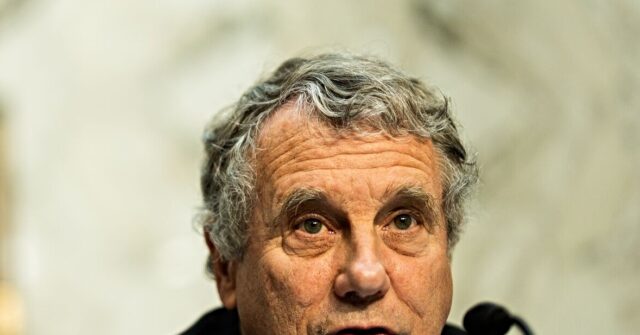
Democrat Sherrod Brown repeatedly opposed $800 million in anti-fentanyl measures until making an election year about-face in his failed 2024 reelection campaign. Brown’s shameless flip-flop follows a pattern of pandering to voters in Ohio as he seeks to return to the U.S. Senate in November.
He is locked in a close race with Sen. Jon Husted, the state’s former lieutenant governor who was appointed to fill the remainder of Vice President JD Vance’s term.
Ohio was one of the states with the highest number of fentanyl and illicit drug overdose deaths in the past decade. In 2021 and 2022, Brown opposed funding to make it easier to detect fentanyl at the southern border. The Ohio Department of Health reported that in those two years, a record 5,174 individuals died from illicit drug overdoses in the state, and 4,915 died in 2022.
The department said illicit fentanyl or fentanyl analogs were involved in 81 percent of unintentional drug overdose deaths in Ohio in 2022.
Yet by 2024, when Brown was up for reelection for the seat he had held since 2007, he conveniently decided to get tough on drug overdose deaths in his home state.
He co-sponsored a bill that year with Virginia Democrat Sen. Mark Warner titled the Stop Fentanyl at the Border Act.
Brown said that year, “The Stop Fentanyl at the Border Act will get additional resources and manpower to the border, make it easier to stop illegal drugs from getting into Ohio, and keep our communities safe.”
He also supported a trio of bills after Republicans won control of the U.S. House of Representatives in 2023 following the disastrous two years of unified Democrat in Congress. Brown belatedly joined the bipartisan FEND Off Fentanyl Act in 2023, and introduced two other bills that went nowhere ahead of his ’24 reelection bid.
Concerningly, Brown appeared to not realize the depth of the fentanyl and illicit drug problem. In a radio interview on 1590 WAKR in January 2024, he said there were only “hundreds of deaths a year” from fentanyl. But even while Brown was posturing in Washington, he had no idea what was truly happening on the ground.
The total drug overdose death total was 4,452 in 2023, numbers Brown would have had ahead of his radio appearance. The Ohio health department said illicit fentanyl or fentanyl analogs were involved with 78 percent of those deaths.
Throughout Brown’s career, he only paid attention to the issue affecting thousands of Ohioans in election years.
In 2017, Brown co-sponsored the INTERDICT Act, the year after President Trump won the state and before his 2018 reelection campaign. That legislation authorized $15 million in narcotics emergency response.
While Brown’s record in Washington shows election-year concerns over critical issues affecting his state, he nonetheless supported Biden-era open border policies, took hundreds of thousands in campaign cash from the opioid giants, and defended defund the police efforts to take resources away from law enforcement.
Read the full article here


