




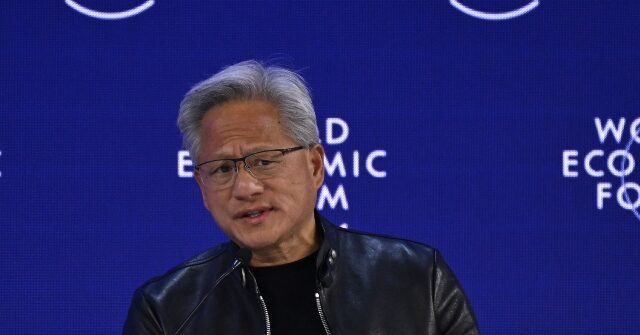
Nvidia CEO Jensen Huang has clarified that the AI giant’s widely reported $100 billion investment in OpenAI was never a firm commitment, describing it instead as an invitation to invest up to that amount.
Bloomberg reports that Nvidia’s chief executive Jensen Huang has publicly walked back previous suggestions that the company would invest $100 billion in OpenAI, explaining that the eye-catching figure represented a potential ceiling rather than a binding commitment. The clarification, delivered to reporters in Taipei on Sunday, marks a significant shift in the narrative surrounding one of the technology industry’s most closely watched partnerships.
According to Huang, the $100 billion figure originated from a letter of intent that described an invitation to invest up to that amount, rather than representing a concrete investment pledge. The CEO indicated that Nvidia would instead approach OpenAI funding opportunities incrementally, evaluating each round individually rather than committing to a massive upfront investment.
The market reaction, while relatively modest at a drop of less than one percent, reflects a fundamental recalibration of investor expectations regarding both Nvidia’s capital exposure to OpenAI and the visibility of future demand for its products. When the original announcement was made in September, with Huang appearing alongside OpenAI CEO Sam Altman to unveil plans for 10 gigawatts of infrastructure, Nvidia’s stock had jumped four percent on the news.
The distinction between the original interpretation and Huang’s latest comments carries significant weight for investors. A $100 billion investment would have represented an enormous balance sheet commitment and effectively guaranteed demand for Nvidia’s graphics processing units for a decade or more. By characterizing the commitment as “huge but not $100 billion,” Huang has transformed the arrangement from a certainty into what analysts now view as a probability play.
The stalled megadeal has also reignited concerns on Wall Street about circular financing arrangements in the AI sector. The practice involves chip suppliers investing billions of dollars in their own customers, who then use those funds to purchase more chips from the investor. Critics argue this arrangement blurs the distinction between genuine market demand and vendor-engineered revenue.
Huang has reportedly expressed private concerns about OpenAI’s lack of discipline and competitive pressures from rivals including Google and Anthropic. These comments suggest internal doubts about whether the originally proposed investment scale made strategic sense for Nvidia.
The company has already committed substantial sums to other major customers in the AI space. Nvidia has pledged $2 billion to CoreWeave and up to $10 billion to Anthropic, both of which are significant purchasers of the company’s chips. Short sellers, including prominent investor Jim Chanos, have drawn parallels to vendor financing schemes from the Enron era, warning that excessive investment in customers could mask underlying weakness in demand if orders were to decline.
Huang dismissed reports of friction between Nvidia and OpenAI as nonsense and insisted the company would still make a huge investment in the artificial intelligence firm, potentially the largest investment Nvidia has ever made. However, the public backtracking signals an internal reassessment of how much the company can reasonably commit to pre-financing customer AI initiatives, even with Nvidia’s massive financial resources.
Read more at Bloomberg here.
Lucas Nolan is a reporter for Breitbart News covering issues of free speech and online censorship.
Read the full article here


