




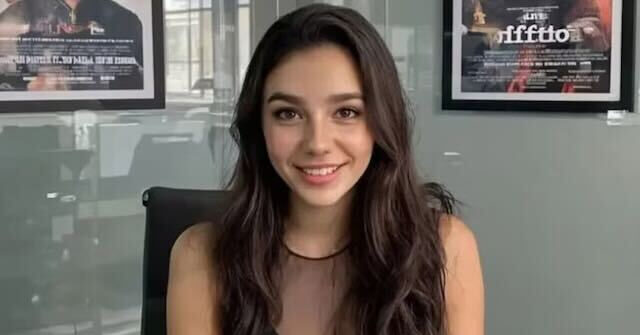
The latest (dumb) idea floating around to protect actors from AI is something called the Tilly Tax, or a tax that tries to remove the incentive of choosing an AI-generated actor over a human actor.
Over at Forbes, Dr. Lance B. Eliot, an AI scientist, has written a truly superb article that looks at this tax scheme from all angles. Unlike most of the analysis you see about AI vs. Hollywood, Eliot’s write-up is informed, comprehensive, and loaded with the kind of context the entertainment media are afraid to highlight.
AI actors replacing human actors is becoming a real thing and a real threat to the movie and television acting profession. As Eliot points out, “AI is getting so good at devising human-like video actors that it is nearly impossible to discern whether the movie screen contains real actors or fake actors.” At the same time the “cost is a fraction of what it once was.”
The Tilly Tax (named after AI actress Tilly Norwood) would work this way… Rachel Zegler wants $10 million to star in your movie. The producers do the math and discover that creating an AI leading lady will cost only $5 million. The Tilly Tax would then kick in and mandate the producer to pay a $5 million tax. The idea of this tax is to remove the financial incentive to use AI.
Obviously, the idea is absurd. From where I sit, AI is just another form of automation, another form of CGI. This would be like charging a tax on whatever savings the auto industry makes using robotic spot welders instead of humans. This would be like charging a tax on the savings that come from using CGI backgrounds instead of shooting on location.
Keep in mind that I say this as someone who could someday be replaced by CGI, but I find this whole actors are so freaken precious they deserve special protection from automation obnoxious, immoral, and off-putting.
Anyway, this comprehensive Forbes article lays out why a Tilly Tax would not be enough to protect the acting profession from being replaced with AI…
“A synthetic AI actor won’t ever show up to work late or be in a foul mood. There aren’t any delays in filming due to the AI actor disagreeing with the director,” Eliot accurately points out. “There aren’t any scandals by an AI actor. Compare this to a human actor who … gets embroiled in some political entanglement or some personally stoked outrage.”
“An AI actor will readily promote the movie,” Eliot adds. “The AI actor can speak in any natural language of interest. You don’t have to hire someone to dub the lines. You can easily make versions for any international market.”
Also, an AI actor is always available for sequels and reshoots.
Let’s return to the Rachel Zegler example. Go back in time and replace Zegler with an AI actress. No feminist pressure to make Snow White a girlboss. No disastrous public relations debacles. No drama. No BS. Instead, Disney makes the movie it wants to make. Can anyone honestly say that what turned out to be an ocean of red ink using a human actress would not have made more money using an AI actress?
On what planet is an AI actress not a better deal than a Rachel Zegler?
Therefore, Eliot’s point is the obvious one: there’s more financial and creative upside to using an AI actor than merely saving on a salary.
I would add only this: Unlike any other time in history, Hollywood is dealing with an overall stable of young actors who lack the appeal of previous generations. There are exceptions, but for the most part, the under-40 crowd is shockingly generic and forgettable. Worse still, many of them lose their appeal due to their obnoxious public behavior. Using AI, producers can 1) go back to molding stars with universal appeal and 2) control their behavior in a way that doesn’t destroy that appeal.
And maybe, just maybe, by using AI actors, the all-important factor of sex appeal could return to the movies. I’m not talking about porn or even nudity, but some hot pants and a little cleavage would be nice. An AI actor or actress wouldn’t be all, I want to be taken seriously for my mind.
Read the full article here


