Donald Trump got his revenge on Sen. Bill Cassidy. The Louisiana Republican says he isn’t planning to return the favor — yet.
Freed from political constraints after decisively losing his battle for renomination Saturday, Cassidy could — if he chooses — gum up major parts of Trump’s agenda on Capitol Hill. To start with, he holds what amounts to veto power over key nominees as chair of the Senate committee overseeing health care, labor and education and as a member of the powerful Senate Finance Committee.
Cassidy, in multiple lengthy chats with reporters Monday around the Capitol, batted down any suggestion he is now liberated to challenge Trump head-on. But he also declined to say how he would handle tricky upcoming votes on the Iran war or an immigration enforcement bill and urged Washington to embrace bipartisanship.
“Am I going to deliberately push back on things? No, I’m going to do what’s good for my country and my state,” he said.
Asked about the nominees coming through the panel he chairs — which could include a new Labor secretary and FDA commissioner — Cassidy noted that there were already nominees who were not able to get through the committee.
“I’m going to continue to do what is best for my state and best for my country and try and make every decision with that consideration,” he said about whether his approach to the administration will change.
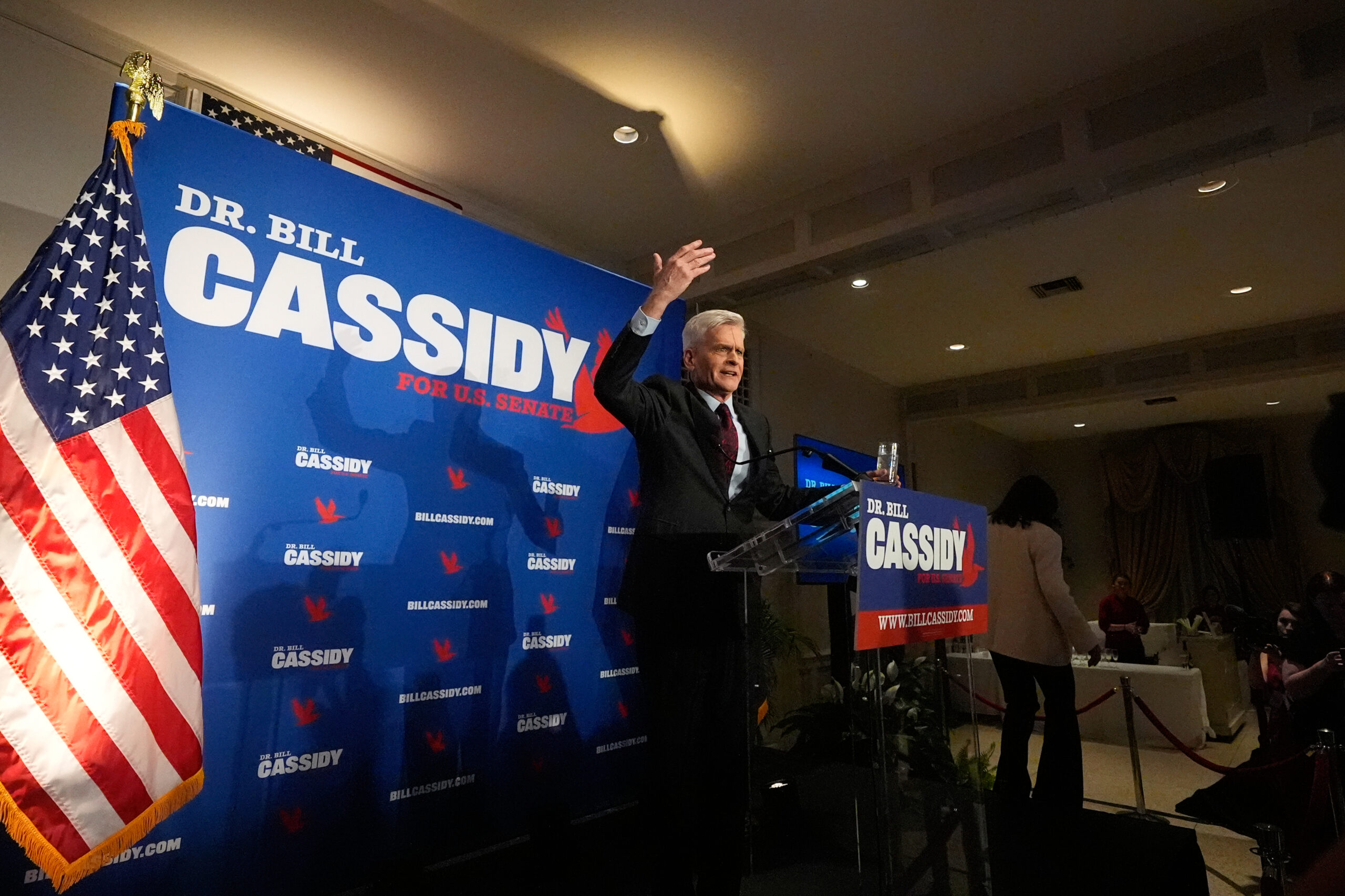
Those comments came after Cassidy delivered a withering, if veiled, condemnation of Trump in his concession speech, raising the possibility that he could become increasingly outspoken in his disagreements with the president over the next seven months.
“Insults only bother me if they come from somebody of character and integrity. I find that people of character and integrity don’t spend their time attacking people on the internet,” Cassidy said during the speech Saturday night.
Cassidy largely avoided addressing Trump directly when speaking with reporters Monday. He declined to say, for instance, if he thought Trump had done something that constituted a high crime or misdemeanor during his second term. He was one of the seven Republicans to vote to convict the president on impeachment charges after the Jan. 6 riot at the Capitol by a mob of Trump supporters.
Instead, Cassidy said he wanted to “give a better vision of how we should do things” and signaled that’s an area where he will speak out on before his term ends in early January.
“I think people want me to say negative things,” he said. “I’m saying positive things, positive things that may reflect upon the current circumstance, but it’s coming from my heart about making my country a better place, and that’s my goal.”
Cassidy’s avowed attitude could be a sigh of relief for Senate Republicans, who need near-complete unity to confirm nominees or advance legislation through the Senate unless they can win over Democratic votes.
Republicans already have several members who are retiring, and while they generally vote with the party, former GOP Leader Mitch McConnell of Kentucky and Sen. Thom Tillis of North Carolina have shown a willingness to break with the president on key issues.
“I don’t see him going in the way of a Thom Tillis, or something like that, to cause unnecessary problems,” said a former Cassidy aide granted anonymity to candidly assess the senator’s thinking. “I think he’ll continue to do what he’s always done, which is just kind of do what he feels is right. I would be surprised if he goes on the warpath.”
Saturday’s loss was the culmination of a politically tortuous year for Cassidy, who stifled his concerns and advanced several controversial Trump nominees — most prominently HHS Secretary Robert F. Kennedy Jr.
He also told colleagues — and POLITICO — last year that the White House had assured him Trump would stay neutral in the primary, something some GOP senators were privately skeptical about given the president’s mercurial nature and lingering anger over the 2021 vote.
Trump instead endorsed a primary opponent, Rep. Julia Letlow, as payback for Cassidy’s 2021 conviction vote. She won a plurality Saturday and will face former Rep. John Fleming in a June 27 runoff.
Cassidy said Monday he had no regrets over the conviction vote.
“I actually voted to uphold the Constitution — that’s a better way to put it,” Cassidy said. “That may have cost me my seat, but who cares?”
The White House did not respond to a request for comment on concerns over Cassidy blocking legislative priorities or nominees.

A former administration official from Trump’s first term said the president’s team understood the risks of not endorsing Cassidy and isn’t worried about the senator going into YOLO mode now.
“This is the outcome they wanted — I think that they had factored all of that in from the beginning,” the person said. “I don’t see any regret coming out of them. Cassidy would have been a thorn in the side all the way through the end. And, to be honest, once he got past an election, I don’t think he would care anymore, because who’s going to be gone first — Trump or Cassidy?”
The person added that Cassidy won’t be the only senator on his way out the door looking to block nominees from the president, suggesting the White House could keep acting officials in place until a new Congress is seated next year.
Several of his colleagues downplayed that Cassidy, who is known within the conference for being a low-key health-policy wonk, would suddenly reinvent himself as a major gadfly for Senate leadership or the White House.
But there are already signs that Cassidy might be freer with his post-election tongue.
Asked Monday about the Justice Department’s establishment of a controversial “antiweaponization” fund to pay settlements to people allegedly targeted by Democratic administrations, the senator said he didn’t see a “legal precedent” for it.
Cassidy’s delegation mate, GOP Sen. John Kennedy said, he is “very nonemotional in the way he makes his decisions.”
“He’s very analytical, and personally, I think Bill will just continue to do what he’s always done, just call it like he sees it,” he added.
Senate Majority Leader John Thune called Cassidy a “team player” who wants to “see our team succeed.”
“He’s got several months here in which he can be a real force for change and a factor in trying to get some things done, and chairs an incredibly significant, powerful committee here, and we look forward to continuing to work with him,” Thune said.
Sen. Josh Hawley (R-Mo.), a member of the committee Cassidy chairs, largely declined to comment on the race but noted that he’s got bills he wants to get through the panel before the end of the year.
“I’m going to be really nice to him,” Hawley said.
Kelsey Brugger, Calen Razor and Hailey Fuchs contributed to this report.
Read the full article here