




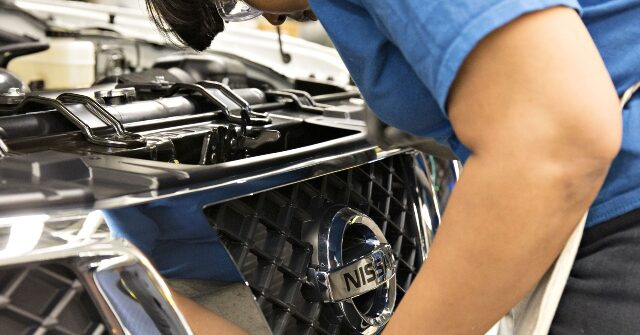
Nissan has officially canceled its plans to manufacture electric vehicles at its Mississippi assembly plant, opting instead to produce a lineup of body-on-frame trucks and SUVs.
Motor1 reports that Japanese automaker Nissan has made a significant strategic pivot, abandoning a previously announced $500 million investment designated for electric vehicle production at its Canton, Mississippi facility. The company informed suppliers of this decision on April 30, marking a dramatic shift from its 2021 commitment to transform the plant into an EV manufacturing hub.
According to the automaker’s official statement, the decision aligns with current market conditions, customer demand patterns, and the company’s updated strategic direction. The Canton facility, which had been earmarked to produce two different electric vehicle models with an ambitious target of 200,000 units annually by 2028, will now focus exclusively on traditional internal combustion engine vehicles.
The new production plan centers on body-on-frame truck and SUV construction. The most notable addition to the lineup is the return of the Xterra nameplate, a body-on-frame SUV that will share its platform architecture with other models in the company’s portfolio. The revived Xterra is scheduled to reach dealerships in 2028 with an anticipated starting price below $40,000.
The strategic shift addresses a significant capacity utilization problem at the Canton facility. The plant possesses the capability to manufacture over 400,000 vehicles annually, yet current production volumes fall far short of this potential. In 2025, the company sold only 158,500 combined units of the Frontier and Altima, the two models currently assembled at the Mississippi location.
This underutilization has sparked various proposals for the facility. Less than twelve months ago, reports suggested the automaker might produce Honda-branded pickup trucks at the Canton plant, though those plans have apparently been superseded by the current truck-focused strategy.
The cancellation represents a broader industry trend of automakers reassessing their electric vehicle commitments in response to market realities. When the company announced its Mississippi electrification plans in 2021, the projection of 200,000 annual EV units appeared ambitious even at the time. Market conditions over the past several years have demonstrated that consumer adoption of electric vehicles has not matched many manufacturers’ optimistic projections.
Breitbart News reported in March that Honda canceled three EV models slated for the U.S. market, taking a massive financial hit instead of building EVs that American consumers are not interested in:
The financial impact of this decision is expected to be substantial. Honda is preparing to record losses that could reach up to $15.8 billion as a result of the cancellations. The scale of these projected losses has prompted action at the executive level, with several top Honda executives agreeing to return or reduce their salaries by up to 30 percent of their monthly compensation for a three-month period.
The Ohio manufacturing facility, which has been undergoing preparation for electric vehicle production, now faces an uncertain future. Honda has not detailed what will happen to the facility or the investments already made in retooling it for EV manufacturing.
Honda has indicated that it will announce a revised mid- to long-term strategy at a press conference scheduled for May of this year. This upcoming announcement is expected to provide more clarity on the company’s future direction in electrification and how it plans to navigate the challenging market conditions it has identified.
Nissan’s Canton facility currently employs thousands of workers, and the shift to increased truck production could potentially provide more stable employment prospects than the uncertain EV market. The ability to produce multiple truck models on shared platforms may offer better long-term production volume stability.
Read more at Motor1 here.
Lucas Nolan is a reporter for Breitbart News covering issues of AI, free speech, and online censorship.
Read the full article here


