




The recent changes instituted by the Navy signal a significant shift toward a more equitable treatment of religious accommodation requests, particularly in light of stark disparities previously highlighted.
An article published by The Gateway Pundit on May 27 brought attention to the case of 1st Lt Schuyler Skipper, who was reportedly being forced out of the Marine Corps due to his religious objections to vaccination. The report underscored a disparity in how the Navy and Marine Corps handle requests for religious accommodations, indicating that the Navy adhered to federal law while the Marine Corps fell short.
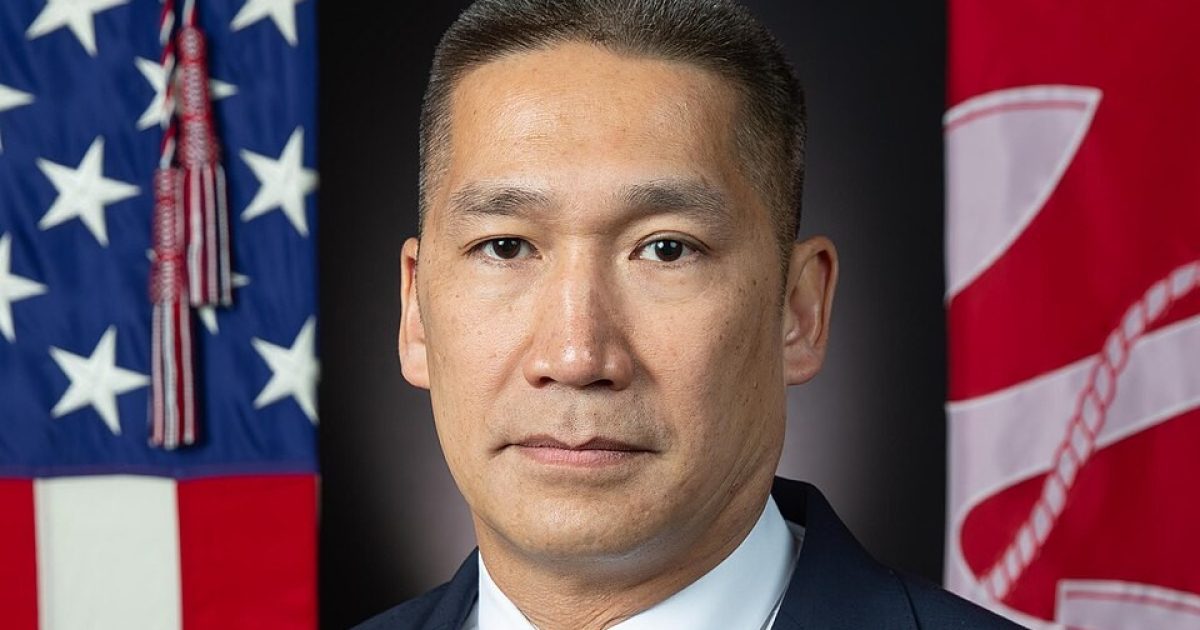
In a significant policy shift, just over a month later, on June 30, Acting Secretary of the Navy Hung Cao formally enacted SECNAVINST 1730.13, which explicitly revoked the prior instruction, 1730.8B CH-1, referenced in the earlier report.
An unnamed service member remarked that “the article served as the direct catalyst for the sweeping changes in SECNAVINST 1730.1, [since] the timeline and the mechanics match up too cleanly to be a coincidence.”
Another individual noted that it is quite uncommon for a piece of investigative journalism or a public legal dispute to prompt “such a swift, precise bureaucratic course-correction.”
According to him, “SECNAVINST 1730.13 reads less like a standard policy update and more like a direct order from the Secretariat to Headquarters Marine Corps to stop the exact practices exposed in this article.”
When the specific grievances highlighted by 1stLt Skipper’s defense attorney, Davis Younts, are compared to the text of the instruction, it nearly reveals a clear, clause-by-clause dismantling of the Marine Corps’ playbook.
The “Two Standards” Disparity
The article by J.M. Phelps revealed that the Navy has consistently approved hundreds of vaccine accommodation requests, in stark contrast to the Marine Corps, which maintained an unyielding, blanket denial policy.
In response to this disparity, the Secretary of the Navy has enacted the new directive that removes the authority of the Service Chiefs—specifically, the Chief of Naval Operations and the Commandant of the Marine Corps—over vaccine appeals. This centralization of decision-making now rests solely with the Secretariat, specifically the Assistant Secretary of the Navy (Manpower and Reserve Affairs), effectively imposing a single, uniform standard across both branches of the military.
Younts brought to light the inconsistencies within the 1st Marine Logistics Group, which has granted more than 50 medical exemptions for vaccinations while claiming a single religious objection was an “impermissible threat” to unit readiness. He characterized this disparity as a clear act of religious discrimination.
According to Enclosure (3), paragraph 8.c.(4), the new instruction explicitly mandates that if a commander denies a religious request, they must provide a written explanation of how the decision is no less restrictive than exemptions based on non-religious reasons (e.g., medical). This development means that the Marine Corps can no longer assert that a religious exemption undermines unit readiness if it continues to dispense medical exemptions for the same vaccine.
Weaponizing Performance Evaluations, Denying Promotions, and Boilerplate Language
In a previous article, the Marine Corps was accused of weaponizing the administrative machinery, marring impeccable fitness reports with adverse marks, and denying selection boards for promotion.
Policy paragraph 5.j. has now prohibited such practices. The instruction states, “A Service Member’s expression of sincerely held religious beliefs may not, insofar as practicable, be used as the basis of any adverse personnel action, discrimination, or denial of promotion, schooling, training, or assignment.”
The courts also determined that the military routinely relied on “pre-written, boilerplate language” instead of performing the individual assessments required by the Religious Freedom Restoration Act (RFRA).
The instruction now forces commanders to provide a rigorous, evidence-based, individualized written analysis. If they deny a request, they must cite specific scientific studies or standards and detail an analysis of alternatives. Furthermore, paragraph 5.c. explicitly shifts the burden of proof from the service member to the adjudication authority to prove their case.
Through their outreach to J.M. Phelps, many service members convey their appreciation to Navy Secretary Cao for his unwavering commitment to safeguarding the rights of military personnel. His leadership has fostered policies that embody a commitment to fairness and the preservation of religious freedom within the ranks.
@SECNAV, I have received emails, text messages, and phone calls from multiple service members expressing their gratitude for your efforts to address the disparities in vaccine accommodations within the Navy and Marine Corps as outlined in SECNAV INSTRUCTION 1730.13. So many of… pic.twitter.com/hIVCydprGl
— J.M. Phelps (@JMPhelpsLC) July 28, 2026
Ad block users: Some site features may not work correctly while an ad blocker is enabled, because they break scripts and content this website depends on. If you can’t see comments below, for example, please disable your ad blocker.
Read the full article here


