

NEW YORK — A coalition powered by Mayor Zohran Mamdani expanded the left’s reach Tuesday, winning younger voters across racial and ethnic lines and once again upending conventional wisdom about elections in New York City.
A series of hotly contested congressional and state elections pit a slate of Mamdani-backed democratic socialists and progressives against establishment candidates who, in several cases, differed little on policy aside from U.S.-Israel relations.
The results were staggering.
Midterm election cycles in deep-blue New York City tend to be sleepy affairs. Both this year and in 2022, just over 500,000 people cast ballots, less than 20 percent of eligible voters. But turnout within a congressional district spanning Upper Manhattan and the Bronx increased by roughly 50 percent between 2022 and Tuesday, with more than 66,000 voters heading to the polls.
In another seat covering parts of Brooklyn and Queens, turnout more than doubled from 2022, though state and federal elections were held on different days that year and the seat was not competitive, which would have reduced the number of voters going to the polls.
Congressional candidates backed by the Democratic Socialists of America were able to replicate the mayor’s success by winning younger Latino voters in Brooklyn and a majority of Black voters in Harlem. Combined with the DSA’s base in relatively wealthy neighborhoods, the result charted the far left’s broadening appeal and a potential reorientation of the electorate that will influence races for years to come.
“This was a big wave for DSA and they did a good job capitalizing on it,” said Evan Roth Smith, a pollster with Slingshot Strategies. “The question now is: Was this a wave cycle that will abate, or is it the start of the takeover?”
Much of Mamdani’s base is concentrated in the so-called “commie-corridor,” a series of neighborhoods along the Brooklyn-Queens waterfront filled with young, educated and affluent voters who’ve propelled several DSA candidates into office. They went gaga over Mamdani’s candidacy and, as Tuesday’s results show, will turn out for candidates he supports.
The area was crucial to Assemblymember Claire Valdez’s crushing 56-38 defeat of Brooklyn Borough President Antonio Reynoso.
“The factor that felt most significant to me were all of these New Yorkers who got activated and politicized in the mayor’s race last year who were looking for the next fight,” said Andrew Epstein, a political adviser to Mamdani who worked on Valdez’ campaign. “Those people didn’t go away. And they want to keep going.”
Valdez also won several heavily Latino areas that were expected to break for her opponent.
Reynoso was born in Brooklyn to Dominican parents and just a few years ago was a City Council member representing Bushwick, a long-gentrifying Brooklyn neighborhood that’s home to Latino families and young hipsters. Valdez was born in Texas, moved to New York City in 2015 and served in the state Assembly for just one term before launching her Mamdani-backed bid for retiring Rep. Nydia Velázquez’s seat.
She ended up winning areas of Bushwick by even greater margins than the total results — in some election districts winning upwards of 80 percent of the vote.
“You don’t win the district by 35 points if you don’t have broad advantages across age and demographic groups,” said Michael Lange, an election analyst and Mamdani supporter who has tracked several contested races with extreme granularity. “Is she blowing him out of the water with Hispanic voters under 50? I see tons of evidence that the answer is yes.”
The age advantage was the common thread across several other races.
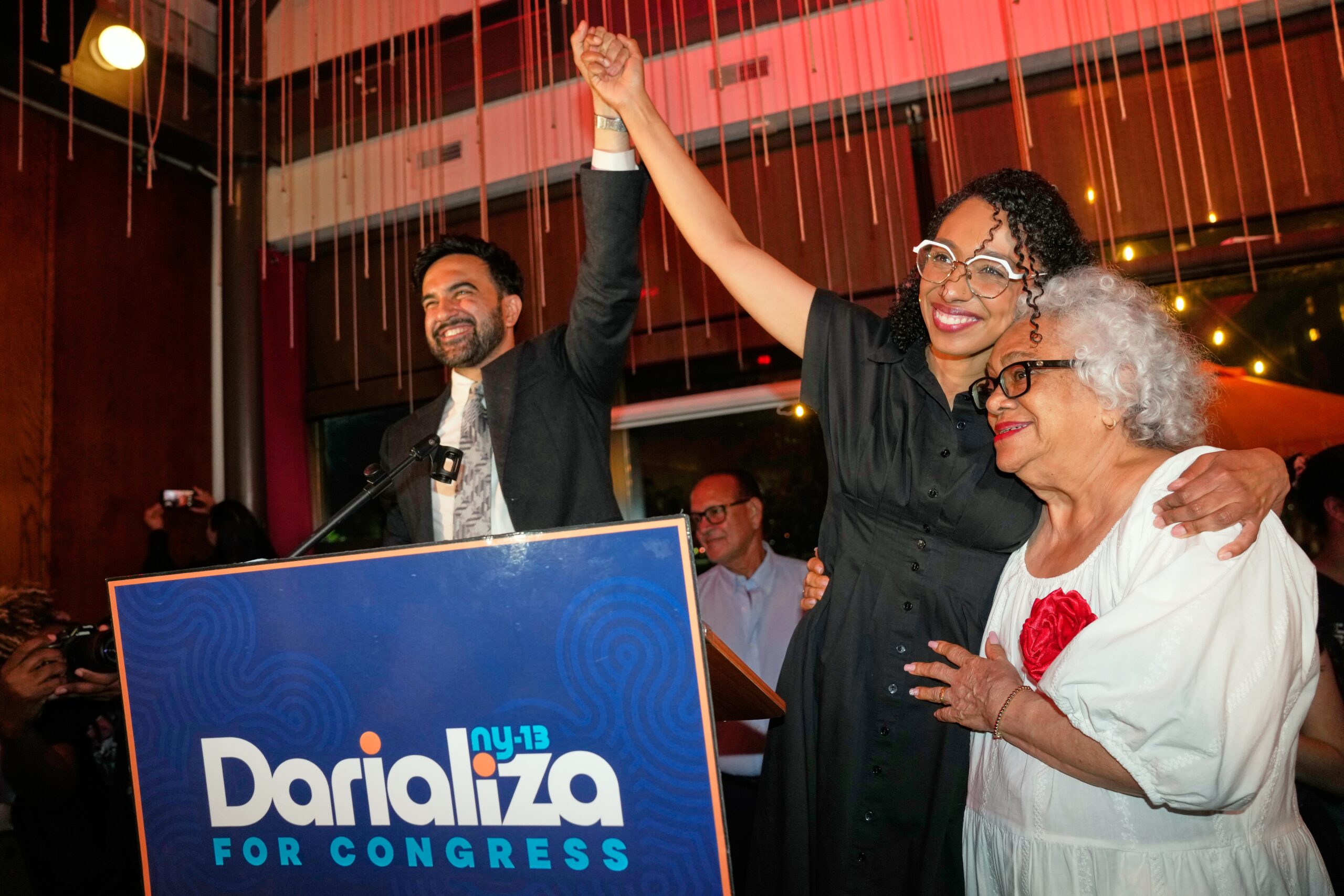
In Upper Manhattan and the Bronx, for example, younger Black voters in Harlem were key to Darializa Avila Chevalier’s win over Rep. Adriano Espaillat, the chair of the Congressional Hispanic Caucus who had built a small political empire in the district.
While gentrifying, the neighborhood remains a seat of Black political power and is home to younger households who tend to rent. That particular demographic is a strong indicator of why Mamdani won the area in 2025, even as he lost the Black vote overall to former Gov. Andrew Cuomo, whose support was concentrated among older Black homeowners in Brooklyn and Queens.
While Espaillat never healed a rift with the Black community in upper Manhattan opened during his election in 2016, which contributed to his weak performance, Avila Chevalier demonstrated Tuesday that a significant share of voters there were not just supportive of Mamdani the person, but of the broader political movement he’s now leading.
Overall, she edged out Espaillat with Black voters 48-46, according to an analysis from The New York Times, which charted demographic breakdowns for several contested races.
Three winning congressional candidates endorsed by Mamdani — including former city Comptroller Brad Lander in Brooklyn, who unseated incumbent Dan Goldman — share several similarities. They won younger, college-educated and wealthier voters by huge margins, in several cases by 30 points or more, and lost lower-income voters to incumbents or candidates affiliated with incumbents — a sign that the movement seeking to boost struggling New Yorkers has not won them over.
While the DSA was able to win three state races without the support of Mamdani — a testament to the organizing prowess of the left that was essential to reactivating the mayor’s coalition — there were limits to the city’s leftward shift.
Rep. Grace Meng won her reelection race, though she only vanquished challenger Chuck Park by 14 points, an uncomfortable margin for an incumbent of her stature. Park, who ran to Meng’s left, was boosted by a huge turnout in Woodside, Queens, a multiethnic neighborhood that went heavily for Mamdani in last year’s mayoral race.
Elsewhere in the Bronx, however, incumbents remained strong. Rep. Ritchie Torres handily won reelection with 72 percent of the vote, though it was a low-turnout affair more consistent with an uncompetitive midterm. Nevertheless, House Minority Leader Hakeem Jeffries touted the results — even as he watched a series of his endorsed candidates fall to the DSA in Brooklyn, his home borough, in a preview of the intraparty battles to come.
“In some higher-income districts, there was an outsized focus on the Middle East. In other districts, for instance, in the South Bronx, Ritchie Torres ran against somebody who was heavily critical of his position on Israel, and he won by fifty points,” Jeffries told MS NOW on Wednesday.
Read the full article here