




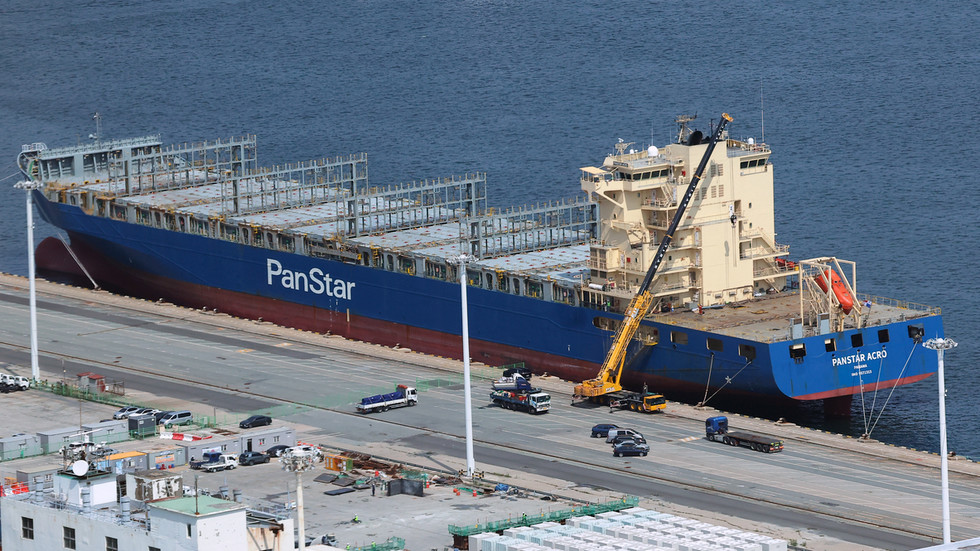
South Korea has begun a trial voyage via the Northern Sea Route amid disruption to traditional shipping lanes
South Korea has launched its first trial container ship voyage to Europe via the Northern Sea Route (NSR), as disruption to traditional shipping lanes drives growing interest in Russia’s Arctic trade corridor.
The NSR stretches roughly 5,600 km along Russia’s Arctic coast, mostly through waters under its jurisdiction. The route relies on domestic port and navigation infrastructure. State atomic energy corporation Rosatom oversees its development and operates the world’s only nuclear-powered icebreaker fleet.
The PanStar Acro departed from Busan New Port on Saturday and will sail through the NSR before calling at Felixstowe in the UK, Rotterdam in the Netherlands, and Gdansk in Poland.
The ship is expected to reach Felixstowe in around 18 days. The journey between Busan and Rotterdam via the Arctic is around 13,000 km, 35% shorter than the roughly 20,000 km route via Suez, with South Korean estimates suggesting the NSR could cut around ten days from a typical Asia-Europe voyage.
According to Reuters, Western diplomats have raised concerns over South Korea’s plan, which involved consultations with Russia and permits for the ship’s passage. The agency cited a European diplomat as saying Western governments want to isolate Moscow over the Ukraine conflict, not pursue “engagement” with it.
READ MORE:
China to launch regular shipping to Europe via Russia’s Northern Sea Route – Rosatom
There are questions over sanctions risks linked to payments for Russian navigation and other services. Seoul says consultations with relevant countries and agencies have been completed, and Korean media report that the sanctions risks have been resolved.
The country’s Ministry of Oceans and Fisheries has said it aims to establish a new trade corridor, with the voyage marking the country’s return to the Arctic after a decade-long hiatus and its first use of a container ship on the NSR.
South Korean companies conducted five trial voyages along the NSR between 2013 and 2016, but regular services did not follow due to limited cargo volumes and a less developed route. Russia has since significantly expanded its Arctic infrastructure and navigation capabilities.
Moscow has sought to turn the NSR from a corridor primarily serving its Arctic projects into a major international trade artery linking Asia and Europe. China has already launched a regular container service to Europe via the NSR, while India is considering sending its first cargo vessel along the route in 2027 and Japan has shown interest as well.
READ MORE:
India to send first ship along Arctic route next year – official
Earlier this month, Rosatom CEO Aleksey Likhachev linked growing demand for the NSR to the “persistently difficult situation” in the Persian Gulf. The Iran conflict has also fueled instability affecting Red Sea shipping, with Houthi attacks and threats around the Bab el-Mandeb strait prompting some operators to avoid the Suez Canal route.
You can share this story on social media:


Read the full article here


