




Left-wing British politicians have already begun to seize upon the killing of Brexit hero Ann Widdecombe to push for more censorship on social media to combat “hate”, despite police having made no public indication that the suspected killer was radicalised online.
The political, media, and law enforcement establishments were quick to condemn British citizens for “speculation” over the potential motives behind the killing of former Conservative government minister and Brexit Party Member of European Parliament Ann Widdecombe, while accusing her long-time allies, like Nigel Farage, of seeking to exploit her death for political purposes.
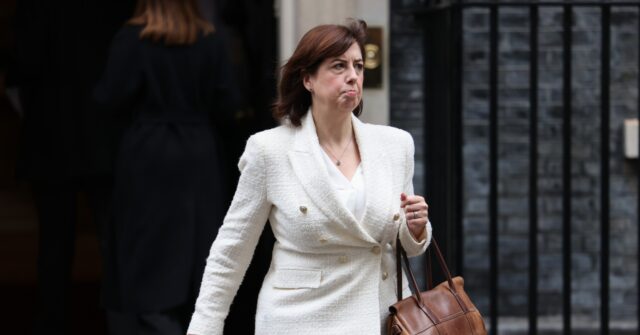
However, contrary to Widdecombe’s long career in public life, in which she stood as a strident defender of free speech, Deputy Leader of the Labour Party, Lucy Powell, took to the floor of the House of Commons to give a speech concerning Widdecombe’s death to advocate for more government speech restrictions.
“We do need to tackle some of the online algorithms and business models which heighten this kind of polarisation and hate towards those in public life, and we must do more to tackle this with urgency,” she said.
While Powell claimed to have “greatly admired and respected her outspokenness, her fearlessness, and her ability to not take herself too seriously,” the Labour politician has herself directed hate towards Widdecombe’s party, previously describing Reform UK as a “poison and cancer” which must be defeated.

Widdecombe herself has long faced accusations of spreading “hate” over her deeply held religious beliefs, which spurred her opposition to the LGBT movement, including gay marriage, open borders, and abortion, among others. Indeed, the left-wing Labour Party-aligned Guardian newspaper previously described the Brexiteer as a “Tory hate figure”. The Labour ally, the Trades Union Congress (TUC), also accused Widdecombe of “spouting hate speech”.
Although there has yet to be any evidence to back up Powell’s suggestion that online “hate” contributed to the killing of the former MP, there does appear to be some evidence that far-left ideology played a role, with communist literature allegedly being found at the home of the current suspect.
In the immediate aftermath of the killing of Widdecombe, Farage and others faced heavy criticism for suggesting that it was a “premeditated murder”. Rather than keeping their options open, police repeatedly briefed against such ideas, but that stance was dramatically walked back when Counter Terrorism Police South East took over the case on Monday.
The attempt by the left to weaponise Widdecombe’s death for the purposes of pushing for even more state control of the internet is reminiscent of the Tory effort to do the same following the Islamist terror killing of former Conservative MP David Amess.
Despite radical Islam being the apparent motivation for the killer of Amess at the time — and was later confirmed in court — then-Tory MP Mark Francois introduced “David’s Law” to end online anonymity in a bid to combat so-called hate speech on social media. However, the legislation was ultimately abandoned after steep public backlash.
Follow Kurt Zindulka on X: Follow @KurtZindulka or e-mail to: kzindulka@breitbart.com
Read the full article here


