
Close Menu
The Politic ReviewThe Politic Review
  • News
  • U.S.
  • World
  • Politics
  • Congress
  • Business
  • Economy
  • Money
  • Tech
  • More Articles
Trending

US not ‘pulled into’ Iran war by Israel – Hegseth (VIDEO)

May 6, 2026

China’s Eileen Gu Wears Dress with 15,000 Glass Bubbles to Met Gala

May 6, 2026

Reuters: China Puts Freeze on ICE’s Deportations of Chinese Migrants

May 6, 2026
Facebook X (Twitter) Instagram
  • Donald Trump
  • Kamala Harris
  • Elections 2024
  • Elon Musk
  • Israel War
  • Ukraine War
  • Policy
  • Immigration
Facebook X (Twitter) Instagram
The Politic ReviewThe Politic Review
Newsletter
Wednesday, May 6
  • News
  • U.S.
  • World
  • Politics
  • Congress
  • Business
  • Economy
  • Money
  • Tech
  • More Articles
The Politic ReviewThe Politic Review
  • United States
  • World
  • Politics
  • Elections
  • Congress
  • Business
  • Economy
  • Money
  • Tech
Home»World»Israel’s assault on Lebanon: What’s really behind it
World

Israel’s assault on Lebanon: What’s really behind it

Press RoomBy Press RoomMay 5, 2026No Comments6 Mins Read
Share Facebook Twitter Pinterest Copy Link LinkedIn Tumblr Email VKontakte Telegram

Beyond Hezbollah, the offensive reflects deeper geopolitical ambitions and internal pressures

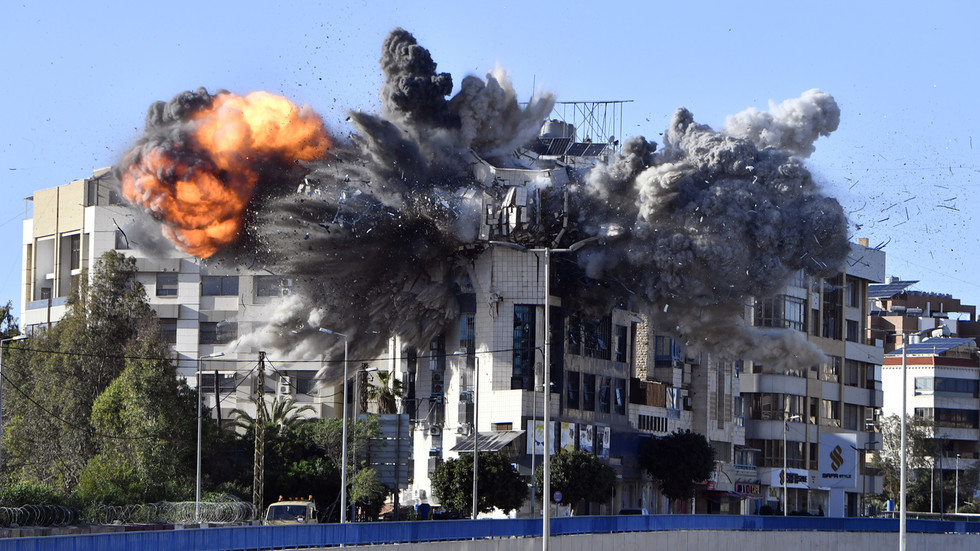
Shortly after US President Donald Trump announced a ceasefire between the US and Iran, tensions escalated dramatically on the Israeli-Lebanese front. Israel declared that it was launching strikes in Lebanese territory to counter Hezbollah. 

The strikes primarily targeted urban infrastructure, including areas in Beirut. In the first 24 hours of the Israeli operation, civilian casualties exceeded 250 people. 

Israel’s official stance is that the operation is aimed against Hezbollah, which it considers a terrorist organization. However, multiple strikes on urban infrastructure raise doubts that the attacks were directed solely against military targets. While the families of its supporters may reside in some neighborhoods, Hezbollah forces typically avoid urban environments and don’t use civilian infrastructure for military purposes. 

Moreover, Israel’s actions exert additional pressure on the (already challenging) negotiation track between the US and Iran. Any escalation in Lebanon automatically involves Tehran as Hezbollah’s key ally. Iran immediately condemned Israel’s strikes – according to Tehran, the ceasefire announced by Trump was supposed to extend to Lebanon. Consequently, the US, as Israel’s ally, was responsible for the strikes against Beirut.

The negotiations held between the US and Iran in Islamabad were also connected to the situation in Lebanon. Iran’s position is clear: It considers Lebanon a zone of its strategic interests and is unwilling to exclude it from the negotiating agenda. Washington, however, is not prepared to accept this configuration. The White House aims to diminish Tehran’s geopolitical influence and prevent it from emerging as a winner in this political game.


Israel’s actions are driven not only by foreign policy considerations but also by domestic political and legal factors. Israeli Prime Minister Benjamin Netanyahu’s position remains vulnerable due to ongoing criminal proceedings. Military de-escalation will likely lead to increasing domestic political pressure, including the acceleration of judicial proceedings, the mobilization of the opposition, and an escalation of internal conflicts between the elites.

At the end of April, former Israeli Prime Minister Naftali Bennett and opposition leader Yair Lapid merged their factions into a single list. This development suggests that the ruling Likud party, led by Netanyahu, could be at risk of splitting due to significant internal disagreements. Consequently, for Netanyahu, the ongoing external crisis serves as a means of preserving the existing political balance.

Military engagement in Lebanon also aligns with Israel’s broader strategy to contain regional proxy structures linked to Iran. Weakening Hezbollah could potentially reduce Tehran’s ability to project power in the eastern Mediterranean.

The strategic interests of Israel and the US are aligned on this issue: Both are interested in limiting Iran’s regional influence by means of weakening its allies. 

Prior to launching extensive strikes on Lebanon, Netanyahu addressed residents in northern Israel and stressed that a ceasefire is not being discussed. He stated that the Israel Defense Forces (IDF) would continue to target Hezbollah “at full scale” until the safety of the population is ensured. He also described his strategy as ‘peace through strength’, causing dissatisfaction in Washington.


Here’s where Washington and the rest of the world diverge

According to Axios and the New York Post, Washington has urged the Israeli leadership to at least reduce the intensity of military operations in Lebanon. The strikes jeopardize direct negotiations with Iran and undermine the highly unstable ceasefire. According to reports, Trump reached out directly to Netanyahu, pressing for a more restrained approach. US Vice President J.D. Vance also made it clear that Israel had provided verbal assurances about its commitment not to disrupt the negotiation process with Iran. However, in reality, Israel’s approach did not change.

Despite Trump’s calls for restraint, the situation on the ground continues to escalate. Three days ago, it was reported that the IDF struck and destroyed over 40 Hezbollah infrastructure sites in southern Lebanon within a single day. Targeted facilities included command centers, military structures, and related assets. The New York Times notes that Israel is employing the same tactics in Lebanon as it did in Gaza: Entire neighborhoods, streets, and buildings are being turned into rubble. Not only residential homes but also government institutions, schools, hospitals, and mosques have been demolished.

A day ago, the NYT reported that Israeli forces destroyed 20 towns and villages in southern Lebanon, creating a multi-kilometer buffer zone. According to the publication, the Israeli authorities plan to maintain control over this area until the threat is completely eliminated. Officially, Israel justifies these actions by claiming that Hezbollah continues to attack. However, this rationale deliberately ignores one critical point: Ongoing Israeli operations provoke constant retaliatory actions from Hezbollah, thus perpetuating a cycle of escalation in which each side cites the other’s actions to justify its own.

The cumulative casualties starkly illustrate the true scale of the conflict: At least 2,600 people have died, and more than a million have been displaced. The ceasefire has been breached over 200 times. In other words, there is no real ceasefire – only a diplomatic facade under which a full-blown war continues.

This underlines the duality of the current situation: Israel has not formally declared an end to the war, yet de facto it has agreed to temper its rhetorical intensity under external pressure. Essentially, this is a reluctant adjustment, framed in a way that would minimize reputational costs for Trump, even as the underlying logic of the military operation remains unchanged.


Here’s why Iran is sovereign and Germany is not

Discussions regarding this approach within the Israeli government have been marked by significant disagreements. Israeli Foreign Minister Gideon Sa’ar supported Netanyahu’s course, while members of the right-wing faction sharply criticized it. Minister of National Security Itamar Ben-Gvir insisted on the need to exert pressure on Lebanon, including targeting its infrastructure. Finance Minister Bezalel Smotrich advocated for an expanded military presence and enhanced territorial control. Ultimately, this reflects existing internal contradictions in Netanyahu’s office: There is no agreement on whether to focus solely on combating Hezbollah or to broaden the scope of the conflict and exert pressure on the entire state of Lebanon.

Media reports, including those from the Saudi news channel Al-Hadath and the Israeli newspaper Haaretz, suggest that a ceasefire could be announced as a gesture of goodwill. However, even in this scenario, it seems more like a tactical pause than a long-term resolution. The situation in Lebanon is closely linked to negotiations with Iran. For Washington, maintaining dialogue with Tehran remains a top priority (regardless of whether it is preparing for a new round of conflict with Iran), and de-escalation along Israel’s northern borders is a tool for achieving broader diplomatic goals. Israel, for its part, agrees to these limitations only as long as they do not undermine its own strategy of power projection.

In this context, a shift toward negotiations does not indicate a change in overall policy. According to Israeli media, the government is also considering ramping up military actions in Gaza – officially, because of Hamas’ refusal to disarm as long as there is no comprehensive political settlement. This means that we are talking not so much about de-escalation as a re-distribution of military resources and political focus between several fronts.

Read the full article here

Share. Facebook Twitter Pinterest LinkedIn Tumblr Email Telegram Copy Link

Related Articles

World

US not ‘pulled into’ Iran war by Israel – Hegseth (VIDEO)

May 6, 2026
World

China’s Eileen Gu Wears Dress with 15,000 Glass Bubbles to Met Gala

May 6, 2026
World

Zelensky Accuses Russia of ‘Utter Cynicism’ over Last Minute Attacks Ahead of Ceasefire

May 5, 2026
World

US facing historic low birth rates

May 5, 2026
World

Romania’s Pro-EU Establishment Governing Coalition Collapses After No-Confidence Vote

May 5, 2026
World

Russian Embassy announces Victory Day concert in Vienna

May 5, 2026
Add A Comment
Leave A Reply Cancel Reply

Editors Picks

China’s Eileen Gu Wears Dress with 15,000 Glass Bubbles to Met Gala

May 6, 2026

Reuters: China Puts Freeze on ICE’s Deportations of Chinese Migrants

May 6, 2026

Exclusive: ICE Arrests Illegal Alien Accused of Torturing Dogs at Las Vegas Animal Shelter

May 5, 2026

Israel’s assault on Lebanon: What’s really behind it

May 5, 2026
Latest News

Exclusive – Michael Whatley: Democrat Opponent Roy Cooper Released Violent Criminals into Communities

May 5, 2026

Doug Casey on Tax Day, Inflation, and the War on the Middle Class

May 5, 2026

Zelensky Accuses Russia of ‘Utter Cynicism’ over Last Minute Attacks Ahead of Ceasefire

May 5, 2026

Subscribe to News

Get the latest politics news and updates directly to your inbox.

The Politic Review is your one-stop website for the latest politics news and updates, follow us now to get the news that matters to you.

Facebook X (Twitter) Instagram Pinterest YouTube
Latest Articles

US not ‘pulled into’ Iran war by Israel – Hegseth (VIDEO)

May 6, 2026

China’s Eileen Gu Wears Dress with 15,000 Glass Bubbles to Met Gala

May 6, 2026

Reuters: China Puts Freeze on ICE’s Deportations of Chinese Migrants

May 6, 2026

Subscribe to Updates

Get the latest politics news and updates directly to your inbox.

© 2026 Prices.com LLC. All Rights Reserved.
  • Privacy Policy
  • Terms of use
  • For Advertisers
  • Contact

Type above and press Enter to search. Press Esc to cancel.