




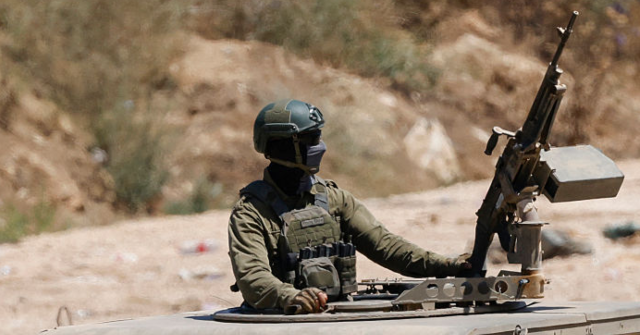
Israeli Defense Minister Israel Katz said on Wednesday that the Israel Defense Forces (IDF) will not withdraw from the security buffer zone in southern Lebanon, “even if there is an American demand.”
“Twenty thousand residents will not return,” Katz insisted, referring to the Lebanese civilians who were evacuated from the border area after Hezbollah once again attacked Israel in March.
“Because, what happened in past security zones, where there was also a civilian population, was roadside bombs and attacks against the soldiers, and therefore we will not allow that. We are not withdrawing,” Katz explained.
Prime Minister Benjamin Netanyahu also said Israel will not abandon the “buffer zone” it has created.
“As long as I am prime minister, we will maintain the security zone in southern Lebanon,” Netanyahu said on Wednesday.
“The greatest achievement of Israel in this war is having overcome fear. We will be the first in the world to solve the problem of explosive drones,” he vowed.
Netanyahu said Israel would apply the lessons of Gaza to resolving the threat of Iran-backed Hezbollah in Lebanon.
“We were the target of a horrific attack during the Oct. 7 massacre. When we launched the campaign against Hamas, people told me: ‘Prime Minister, stop, do not go into Rafah.’ Today, we control nearly 70 percent of the Gaza Strip and we are suffocating Hamas,” he said.
Israel continued to strike Hezbollah targets on Tuesday and Wednesday, including an airstrike in Nabatiyeh and artillery fire in the village of Yater. Israeli drones were sighted over several parts of south Lebanon, and the IDF fired what appeared to be warning shots at a fishing boat that approached the “yellow line” drawn by Israel.
The Israeli military published a map last week illustrating the Lebanese territory it intends to retain control of — a somewhat larger area than the “buffer zone” occupied by the IDF in April. The new map showed an “operations zone” extending about 10 kilometers into Lebanon, where the IDF would remain deployed to “eliminate the threats and improve the defense of the inhabitants of northern Israel.”
The map also removed a few bits of Lebanese territory from the April buffer zone, implying that Israeli forces were prepared to fall back from about 30 square kilometers of Lebanese territory. The IDF did not explain why these areas might be vacated.
Israeli and Lebanese officials said on Wednesday that a “pilot program” to permanently cede some buffer zone territory to Lebanese military control was under consideration with support from the United States.
Israeli officials said the Lebanese troops would be U.S.-trained and thoroughly vetted to ensure they had no personal ties to Hezbollah or Iran. They would be tasked with keeping their slice of southern Lebanon free of Hezbollah terrorists and weapons, allowing Israel to reduce the amount of territory it needs to occupy.
Hezbollah has rejected the idea of such pilot zones, but Lebanese officials were notably interested in pursuing the idea which could be unveiled in detail as early as Thursday.
Read the full article here


