Maryam Rajavi, president-elect of the National Council of Resistance of Iran (NCRI), on Monday welcomed the emerging U.S.-Iran understanding aimed at ending hostilities while asserting that peace poses a greater threat to the survival of the Islamic Republic than military confrontation.
Rajavi said the NCRI supports efforts to end the conflict and alleviate the suffering of the Iranian people.
“The Iranian Resistance, which for nearly five decades has sought freedom and peace, and has, through 133 revelations in the past 35 years, acted as the most important barrier in preventing the ruling theocracy from acquiring the bomb, welcomes any understanding to end the war and the suffering of the Iranian people,” Rajavi said in a statement.
“In Iran, no one except the remnants of the mullahs and the Shah has wanted or wants war,” she added.
Rajavi’s remarks came one day after President Donald Trump announced that the United States and Iran had reached a memorandum of understanding establishing a 60-day framework for negotiations over Tehran’s nuclear program while paving the way for the reopening of the Strait of Hormuz and the lifting of the U.S. naval blockade. The agreement is expected to be formally signed Friday in Switzerland.
Rajavi said the regime’s pursuit of nuclear weapons, support for terrorist proxies, and efforts to destabilize the Middle East are central pillars of its strategy for preserving clerical rule.
“The effort to produce nuclear weapons, warmongering, and meddling in the countries of the region are part of the survival strategy of the religious fascism ruling Iran, and it will not abandon them as long as it can,” Rajavi said.
She said peace and de-escalation threaten the regime by weakening one of its most effective tools for suppressing dissent and deflecting attention from mounting domestic unrest.
“War is this regime’s shield against popular uprisings, while peace and a ceasefire are, as Khomeini put it, like ‘poison’ for it,” Rajavi said. “The overthrow of the regime is the responsibility of the Iranian people and their organized Resistance.”
Rajavi also urged that any future agreement with Tehran address the regime’s ongoing human rights abuses.
“I reiterate once again that any international agreement to end the war must include an end to the execution of political prisoners and the killing of protesters,” she said.
Her comments come amid growing concern over Tehran’s accelerating execution campaign. The NCRI reported that Iran carried out more than 2,200 executions in 2025, describing it as the bloodiest year of Ayatollah Ali Khamenei’s rule, while warning that political prisoners, dissidents, and anti-regime activists continue to face the threat of execution and severe repression.
The opposition coalition has argued that Tehran has increasingly relied on executions and intimidation as it confronts mounting economic pressures, domestic unrest, and growing challenges to its rule.
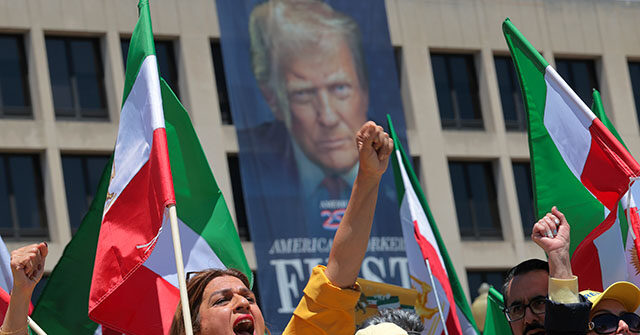
Rajavi’s statement also comes days before a major NCRI-backed gathering scheduled for Saturday in Paris, where organizers say tens of thousands of Iranian expatriates and supporters from across Europe and North America are expected to call for an end to political executions and express support for a democratic republic in Iran.
According to organizers, the event is expected to draw lawmakers, former heads of state, diplomats, military officials, human rights advocates, and other international figures from across Europe and North America.
The NCRI has long promoted Rajavi’s Ten-Point Plan for a future Iranian republic, which calls for free elections, separation of religion and state, gender equality, abolition of the death penalty, an independent judiciary, protections for minorities, and a non-nuclear Iran living in peace with its neighbors.
The plan has drawn support from thousands of lawmakers worldwide, along with former heads of state, senior government officials, military leaders, and dozens of Nobel laureates who have endorsed its vision for a democratic Iran.
The NCRI is best known internationally for exposing Iran’s clandestine nuclear activities, including its 2002 revelation of the Natanz enrichment facility, a disclosure that helped expose Tehran’s covert nuclear program and played a central role in triggering years of international scrutiny and sanctions targeting the regime’s atomic ambitions.
Joshua Klein is a reporter for Breitbart News. Email him at jklein@breitbart.com. Follow him on Twitter @JoshuaKlein.
Read the full article here