


Despite claims by mainstream media, combined airstrikes by the United States and Israel over the past two weeks were highly successful, inflicting significant damage on Iran’s nuclear program and eliminating key military leaders, including high-ranking officers of the Islamic Revolutionary Guard Corps (IRGC), a U.S.-designated terrorist organization that operates directly under Supreme Leader Ayatollah Ali Khamenei.
Iran held a massive state funeral in Tehran on Saturday for 60 individuals killed during its 12-day war with Israel, including top military commanders, nuclear scientists, and their family members. State media claimed that over one million people attended, with government offices closed to allow public employees to join the procession. The scale of the turnout underscored the severity of the blow to Iran’s military and scientific leadership during the coordinated U.S.-Israeli strikes.
In total, the combined attacks resulted in over 1,000 deaths, including at least 417 civilians, according to a U.S.-based human rights organization. Iran’s retaliatory campaign involved firing more than 550 ballistic missiles at Israel, killing 28 people before a ceasefire was declared.
Chants of “Death to America” and “Death to Israel” echoed throughout the procession, reflecting the domestic political pressure on Iran’s leadership in the aftermath of its strategic losses.
Among the dead were some of Iran’s most powerful military and scientific figures, representing the most significant loss of senior leadership since the Iran-Iraq War of the 1980s. Intelligence sources confirm that approximately 30 senior commanders were killed, including Major General Hossein Salami, head of the Islamic Revolutionary Guard Corps (IRGC), and Mohammad Bagheri, chief of staff of Iran’s armed forces. Also killed was Major General Gholamali Rashid, commander of the IRGC’s Khatam al-Anbiya Central Headquarters and former deputy chief of staff of the armed forces.
Amir Ali Hajizadeh, commander of the IRGC Aerospace Force and architect of Iran’s missile program, was among those eliminated. He had overseen Iran’s ballistic missile attacks on Israel in April 2024 and the 2020 missile strike on a U.S. base in Iraq. He also admitted responsibility for the 2020 downing of a Ukrainian passenger plane.
The strikes also targeted Iran’s nuclear apparatus. At least 11 nuclear scientists were confirmed killed, including figures from Iran’s Atomic Energy Organization and top universities. Notable casualties include Fereydoun Abbasi, former head of the Atomic Energy Organization (2011–2013), and Mohammad Mehdi Tehranchi, president of Islamic Azad University in Tehran. Other slain scientists include Abdolhamid Manouchehr, Ahmad Reza Zolfaghari, Amirhossein Feghi, and Motalibizadeh.
The campaign also eliminated key regime figures, including Ali Ghanaatkar, the notorious Evin Prison prosecutor known for imprisoning dissidents such as Nobel Peace Prize laureate Narges Mohammadi.
Israeli and U.S. strikes extended beyond Tehran, systematically targeting regional IRGC command structures and proxy networks. Saeed Izadi, longtime commander of the Palestine Corps of the Quds Force and a key coordinator between Iran and Hamas, was described by Israeli officials as “one of the main orchestrators of the October 7 massacre.”
Behnam Shahriyari, commander of the Quds Force’s Weapons Transfer Unit, was also killed; he was responsible for weapons shipments to Iran’s proxies across the Middle East. Multiple other intelligence chiefs and field commanders tied to Iran’s proxy network were reportedly eliminated.
According to the Institute for Science and International Security, the coordinated U.S.-Israeli strikes inflicted unprecedented destruction on Iran’s nuclear infrastructure. At Natanz, the “workhorse” of Iran’s enrichment program, underground halls housing over 18,400 centrifuges were severely damaged, rendering them inoperable. The above-ground Pilot Fuel Enrichment Plant, which contained roughly 1,700 advanced IR-4 and IR-6 centrifuges enriching uranium to 60%, was completely destroyed. This facility had served as Iran’s primary site for centrifuge research and development.
Following Israeli strikes, U.S. forces conducted precision “double tap” attacks using GBU-57 Massive Ordnance Penetrator (MOP) bombs, with successive bombs directed through the same penetration points. At Fordow, twelve MOPs targeted deeply buried enrichment halls, collapsing infrastructure around the cascade area. The Israel Atomic Energy Commission assessed the Fordow site as destroyed and inoperable.
The Isfahan nuclear complex was hit in three separate waves. Attacks destroyed the enriched uranium metal conversion plant, caused severe damage to uranium hexafluoride production facilities, and collapsed tunnel entrances to underground storage sites.
Conservative estimates place immediate Iranian losses from these nuclear strikes at $2–4 billion in direct damage, with potential reconstruction costs reaching $5–10 billion. This includes $200–500 million in lost centrifuge hardware, $1–2 billion for underground facility reconstruction, and $500 million to $1 billion in lost enrichment capacity and delays. Recovery will be further hindered by inflation, heightened security needs, and international procurement restrictions.
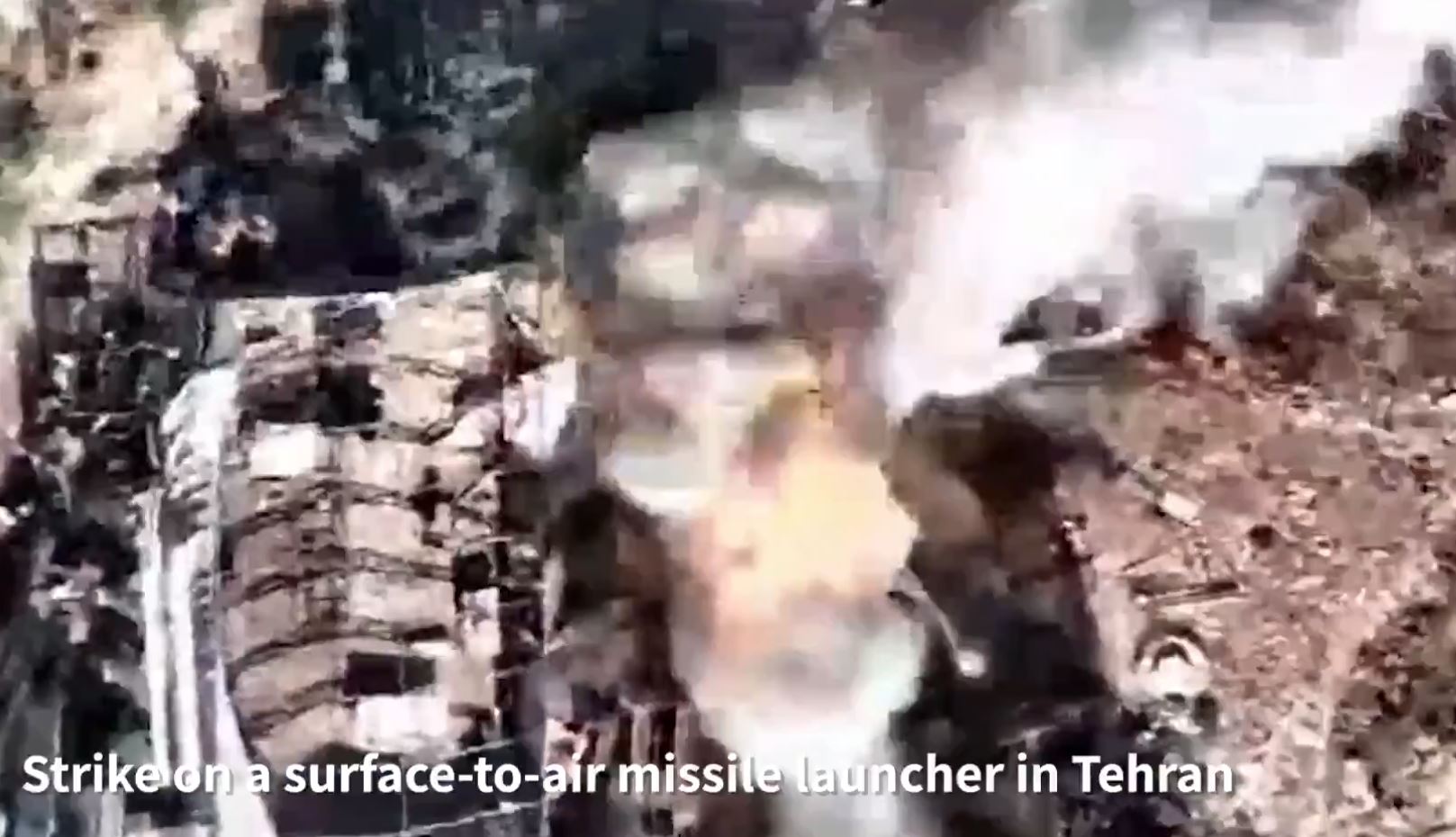
Beyond the nuclear program, the campaign devastated Iran’s broader military infrastructure. Multiple ballistic missile production facilities, storage sites, radar stations, air defense systems, and Quds Force command centers were destroyed. Intelligence assessments confirm that dozens of missile launchers and underground silos across Kermanshah, Tabriz, Isfahan, Tehran, and western Iran were eliminated. IRGC-run ammunition depots, radar installations, and key power infrastructure, including substations and backup generators, were also taken offline.
The Institute concluded that the strikes “effectively destroyed Iran’s centrifuge enrichment program,” estimating that it will be a long time before Iran can recover its previous capability. IDF Chief of Staff Lt. Gen. Eyal Zamir echoed this, stating: “We significantly damaged the nuclear program, and I can also say that we set it back by years—I repeat, years.”
Read the full article here