






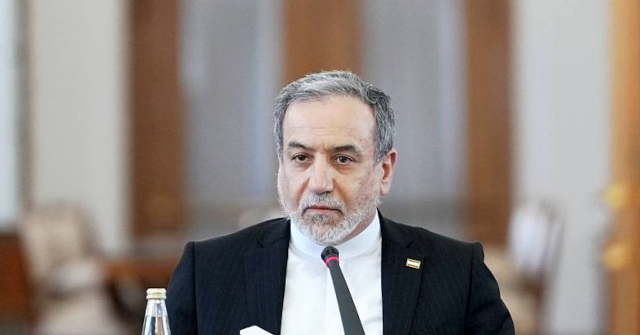
Iran’s Foreign Ministry on Monday dismissed “fabricated” reports in American media of secret “backchannel” negotiations between the U.S. government and Iran’s Islamic Revolutionary Guard Corps (IRGC).
The report on backchannel communications, published by Axios on Sunday, said that former Director of National Intelligence (DNI) Tulsi Gabbard set up the line of communications in May, using the president of Iraqi Kurdistan, Nechirvan Barzani, as a go-between.
According to the report, Barzani used his ties with the IRGC to get in touch with its leader, Gen. Ahmad Vahidi. Vahidi said he supported the work of Iran’s negotiators, including Foreign Minister Abbas Araghchi and Parliament Speaker Mohammad Bagher Ghalibaf.
Barzani relayed the message back to Gabbard, providing important information at a time when many observers thought the IRGC was working to sabotage negotiations. It was also unclear at the time whether Aragchi, or any other representative of Iran’s secular government, had any real power to make an agreement with the United States.
The report said the Trump administration wanted to open this channel of communication wider, developing Barzani into an intermediary, and possibly even arranging direct talks between American and Iranian representatives in Erbil, the capital of Iraqi Kurdistan. The Iranians allegedly balked at this proposal, in part because they feared Israel might try to assassinate any representatives they sent to Erbil.
The alleged “backchannel” seems to have closed over the past two months. Gabbard resigned as DNI at the end of June to help her husband battle an “extremely rare” form of cancer. All negotiations with Iran collapsed after the Iranians violated the June Memorandum of Understanding (MOU) by attacking ships in the Strait of Hormuz. The Iranians claim the U.S. violated the MOU by responding to its attacks.
As of Monday, the Iranians claim their only negotiations are bilateral talks with Oman over controlling the Strait of Hormuz and extorting “fees” from ships that pass through it. President Donald Trump said he is content to let pressure from the U.S. blockade build up against Iran and threatened to use force against Oman — a longstanding U.S. regional ally — if it makes a deal with Iran to control Hormuz.
One of Axios’ sources said Barzani told the White House that he could use his IRGC connections in an effort to restart negotiations between the U.S. and Iran.
A spokesperson for Barzani substantially confirmed the Axios report to Iran International on Sunday, pointing to Iraqi Kurdistan’s good diplomatic relations with countries across the Middle East, and Barzani’s personal connections to IRGC leaders developed when he studied political science at the University of Tehran in the 1980s.
“The Kurdistan Region of Iraq, before the war, during the war, and afterward, has consistently emphasized that dialogue and negotiations are the only way to resolve existing disputes and tensions,” Barzani’s spokesperson said.
Another source within the Kurdistan Regional Government (KRG) told Iran International that Barzani “had been asked to play the role because of his good relations with both the United States and Iran.” However, Iranian Foreign Ministry spokesperson Esmaeil Baqaei said on Monday the Axios report was false, and concocting it was a sign of “desperation” by the United States.
“News of a secret meeting between Iran and the U.S. in Erbil is totally fabricated. The other news report is a media trick and psychological warfare aimed at creating division among decision-making bodies in the Islamic Republic of Iran,” Baqaei said.
Read the full article here


