


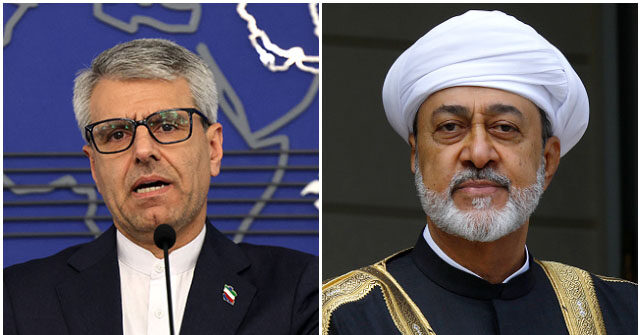
Iranian Foreign Ministry spokesman Esmail Baqaei said on Wednesday that Iran and Oman have reached the “final stages” of a deal for mutual control of the Strait of Hormuz after two months of negotiations.
Baqaei hinted that not even such a deal would prevent Iran from launching terrorist strikes on civilian vessels.
According to Baqaei, Iran and Oman have “agreed upon geographic coordinates for navigation routes in the Strait of Hormuz.”
A small motorboat passes anchored vessels in the Strait of Hormuz off Bandar Abbas, Iran, Thursday, June 11, 2026.(Amirhosein Khorgooi/ISNA via AP)
After rejecting Oman’s proposals last week, Tehran reportedly insisted on a scheme that would route outbound traffic from the Persian Gulf through Omani waters, while inbound ships would hug the Iranian coast.
Baqaei stressed that the “bilateral understanding” between Iran and Oman would not “guarantee safe navigation” for any ships. Instead, he said “the security situation remains tied to ongoing U.S. blockade, as well as other aggressive and threatening actions against Iran and its interests.”
The Iranian spokesman insisted the Strait of Hormuz is currently “closed as a result of the military aggression launched by the United States and the Israeli regime against Iran.”
Baqaei claimed a joint statement from Iran and Oman will soon be released, “provided no external party interferes with the process.”
CNBC reported on Thursday that investors are nervous about the emerging Iran-Oman deal, especially since Iran and its terrorist proxy in Yemen, the Houthis, are still attacking ships.

Houthi supporters hold a rally in Sanaa, Yemen, Friday, July 17, 2026, against the Saudi-led coalition. Banner in Arabic reads, “All Saudi oil facilities are targets to our missiles and drones.” (AP Photo/Osamah Abdulrahman)
“Traders still remember the short-lived Memorandum of Understanding signed in June, so there is understandable anxiety that any new deal could prove equally fragile,” said KCM Trade chief market analyst Tim Waterer.
The left-wing newspaper New York Times (NYT) on Wednesday quoted Iranian officials who said the agreement with Oman will not include “tolls,” but there would be a “service fee to cover the environmental effect of the shipping, security for the cargo ships and tankers, and staffing.”
U.S. officials responded that Iran’s account of the emerging deal was “not accurate,” and there would be no feels or tolls on shipping through the strait — at least not during the “temporary” grace period after reopening, which was set at 60 days by the original Memorandum of Understanding (MOU) in June.
U.S. Central Command (CENTCOM) said on Thursday that the blockade against Iran remains in effect, with 49 commercial vessels redirected, two disabled, and two boarded.
Read the full article here