

Close Menu
The Politic ReviewThe Politic Review
  • News
  • U.S.
  • World
  • Politics
  • Congress
  • Business
  • Economy
  • Money
  • Tech
  • More Articles
Trending

First, the Loss – Now, the Judicial Costs: Prince Harry May Have an 8-Figure Bill To Settle After Losing Privacy Suit in the UK Against Daily Mail

July 30, 2026

U.S. Launches ‘Powerful’ Strikes on Iran After Trump Vows to ‘Hit Hard’ over Attacks

July 30, 2026

Rearmament: UK Govt Pushes For New Generation of Explosives Factories to Fix Post-Cold War Deindustrialisation

July 30, 2026
Facebook X (Twitter) Instagram
  • Donald Trump
  • Kamala Harris
  • Elections 2024
  • Elon Musk
  • Israel War
  • Ukraine War
  • Policy
  • Immigration
Facebook X (Twitter) Instagram
The Politic ReviewThe Politic Review
Newsletter
Thursday, July 30
  • News
  • U.S.
  • World
  • Politics
  • Congress
  • Business
  • Economy
  • Money
  • Tech
  • More Articles
The Politic ReviewThe Politic Review
  • United States
  • World
  • Politics
  • Elections
  • Congress
  • Business
  • Economy
  • Money
  • Tech
Home»Congress»Inside the lobbying fight threatening Congress’ college sports overhaul
Congress

Inside the lobbying fight threatening Congress’ college sports overhaul

Press RoomBy Press RoomJuly 30, 2026No Comments9 Mins Read
Share Facebook Twitter Pinterest Copy Link LinkedIn Tumblr Email VKontakte Telegram

Efforts to pass legislation governing the nation’s $19 billion college sports industry are teetering amid a fierce lobbying fight over media rights and antitrust protections.

The Protect College Sports Act advanced out of the Senate Commerce Committee on a 19-9 vote last month that pulled in seven Democrats. It was a hopeful moment for advocates of the Senate’s yearslong legislative push to regulate college athletics after the 2021 landmark Supreme Court decision that ultimately led to the NCAA allowing college athletes to profit off of their name, image and likeness.

But nine people close to the process say Senate Commerce Chair Ted Cruz (R-Texas) and ranking member Maria Cantwell (D-Wash.) have struggled to secure support among key industry players, including the Big Ten Conference and the Southeastern Conference, and universities are pushing for major changes to the bill before it’s brought to the floor.

With just a handful of legislative days left before the Senate leaves town for August recess, universities are on the cusp of starting another school year governed by a patchwork of state laws and court rulings that they say is financially unsustainable.

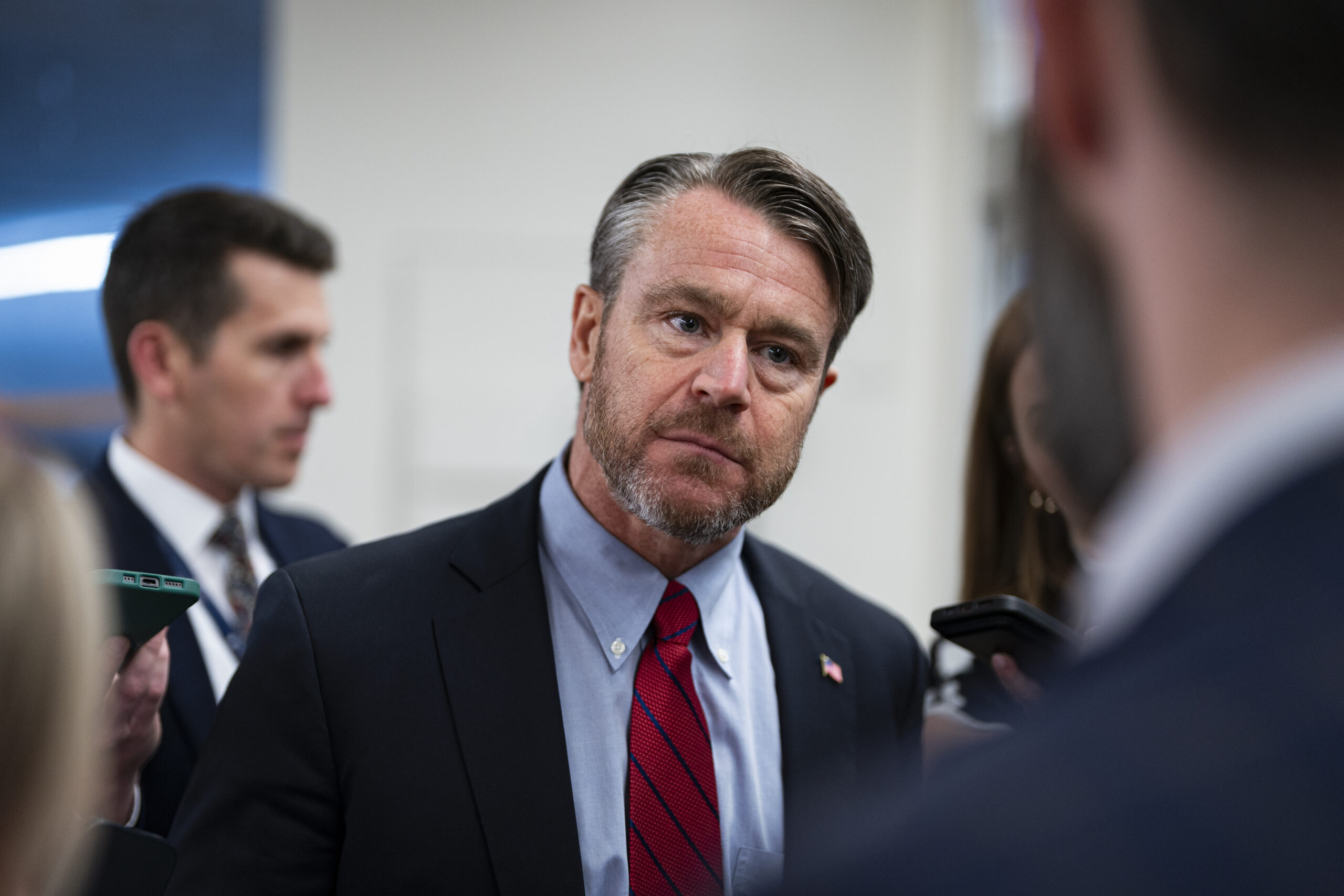
“It would be challenging for me to imagine supporting it if the Big Ten Conference and our two member universities in the state aren’t supportive,” Sen. Todd Young (R-Ind.) said of Cruz’s bill.

The bill, which lays out guidelines for everything from student athlete pay to negotiating broadcast rights, has languished amid pushback from the Big Ten and the SEC, the nation’s two most powerful college sports conferences. They’re zeroing in on a section allowing conferences to jointly negotiate their media rights, insisting it include explicit language clarifying that such action is voluntary.

Supporters of that “media pooling” provision argue it would bring stability to the industry by distributing streaming revenue more evenly across conferences, helping them absorb costs associated with the new era of paying student athletes outright. But the Big Ten and the SEC, which stand to lose the competitive edge their member schools reap from lucrative TV contracts, worry it would force them to share revenue with rival conferences — and they’re not the only ones taking issue with the section.

“We were unclear why the [media pooling provision] needed to be in this bill,” said Big East Commissioner Val Ackerman, who represents schools that could stand to profit from jointly negotiating media rights. “We’re not convinced that’s the magic wand.”

Ackerman said she had not yet seen modeling that proved media pooling would significantly increase revenue, adding that she had “all sorts of questions” around the provision that the committee had not answered.

Lawmakers have inched closer to bringing the SEC and the Big Ten on board in recent days, according to people directly engaged on the bill, but a deal remains elusive. Cruz and Cantwell hosted a call Sunday night with several commissioners and Notre Dame Athletic Director Pete Bevacqua.

“For how many conversations we have had with the Cruz and Cantwell team, I would say we’ve made stunningly little progress,” said one lobbyist directly engaged on the bill who was granted anonymity to describe private deliberations.

But Cruz regularly projects optimism that the bill is nearly ready. Asked if he was concerned about Republican votes for the bill if the two major conferences were not on board, he said no, adding that 70 percent of the committee voted for it.

“I think we will see something comparable on the floor next week,” he told POLITICO on Wednesday. “I believe we’re going to pass this bill, and we’re going to see a large bipartisan vote on the floor of the Senate.”

Cruz has poured renewed energy into the effort to get the bill across the finish line in recent days, penning an op-ed in USA Today and meeting with other lawmakers including House Majority Whip Steve Scalise, according to one person familiar with the matter.

Two people granted anonymity to share private discussions said Senate Majority Leader John Thune has expressed interest in moving the bill to the floor once it can get 60 votes.

Thune told reporters last week he thinks it’s unlikely PSCA will pass the Senate before August amid other major priorities on the Hill. But on Monday, he struck a slightly different tune, saying talks were “steering in a really good direction.” In a Wednesday interview with POLITICO, Thune didn’t rule out teeing up the bill for the fall before the August break.

The Commerce panel has made some concessions to the conferences, including clarifying that schools can’t face litigation for declining to participate in media pooling, according to three people granted anonymity to describe private talks.

The lawmakers are also offering to provide schools with an additional $20 million pool of funds for retaining student athletes, in addition to $5 million specifically for name, image, likeness promotional opportunities in women’s sports, according to the people.

But new legislative text sent to the two conferences on Tuesday afternoon lacks several key demands that the SEC and the Big Ten say are critical to winning their support, including a provision clarifying that postseason tournaments and contests would be excluded from media pooling, according to a draft obtained by POLITICO.

Complicating things further, the draft includes a blank section called “IGNITE HBCUs Sports and Media Act.”

“Major concessions were made overnight,” a committee aide told POLITICO on Wednesday. “At this point, with every passing minute, odds are slimmer that we can move the bill before the August recess. We’ve been working night and day to make the revisions they said they needed, and we need an answer.”

The SEC has also pressed lawmakers on another priority: to insert “critical amendments” broadening antitrust and preemption language, according to University of Tennessee Chancellor Donde Plowman, who chairs a coalition of presidents and chancellors across the Southeastern Conference. This would shield the NCAA and conferences from certain antitrust lawsuits and block states from setting their own rules governing college athletics and athlete pay.

But the latest draft of the bill failed to meaningfully change those pieces of the legislation and, as of Wednesday night, the conferences had not yet issued new positions on the updated text of the bill. Still, a committee spokesperson downplayed the high-stakes back and forth.

“Much of this ranges from inaccurate to downright misleading, but what I can confirm is that the number of lobbyists who have spoken to the Committee about this bill in recent days equals zero,” Commerce Committee spokesperson Blair Taylor said in an email, a statement that conflicts with communications viewed by POLITICO. “We negotiate with fellow Senate offices or discuss directly with stakeholders.”

Cruz and Cantwell are also unlikely to win the support of a broad group of southern GOP senators without the backing of the SEC — a goal they continue to pursue regardless.

Sen. Katie Britt (R-Ala.) said Tuesday she plans to offer an amendment ensuring some of its provisions apply to high school sports. Britt has yet to publicly declare her position on the package amid opposition from Auburn University and The University of Alabama, the largest universities in her home state.

“We don’t need to solve one problem in order to then create or leave a gap in another,” Britt said in an interview. “Additionally, I want to make sure that we still protect people’s ability to allow their programs and conferences to thrive, and I don’t think we’ve hit the mark on that just yet. But I certainly hope we can find a pathway forward.”

Sen. Katie Britt has yet to publicly declare her position on the Senate's college athletics package.

Britt’s fellow GOP senator from Alabama, Tommy Tuberville — the former head football coach at Auburn, University of Mississippi, Texas Tech and University of Cincinnati — has been vocal in his opposition to the bill.

Cruz and Cantwell have touted support for the legislation across two dozen conferences and more than 250 individual universities, plus organizations like the NFL Players Association and the U.S. Olympic and Paralympic Committee.

But many of these same groups are also expressing some qualms with the package’s current form.

One of those groups is Ackerman’s Big East conference, which consists of 11 universities including Georgetown and Villanova. Ackerman said while Big East ultimately thinks “it’s better to have the bill than not to have the bill,” several crucial sticking points had not been addressed.

That includes the fact that Cruz and Cantwell’s bill doesn’t address whether college athletes can be considered employees with bargaining rights — an omission Ackerman called “disappointing.”

The House’s college sports bill, the SCORE Act, explicitly barred college athletes from attaining employee status. It had the support of many of the industry’s largest conferences, including Big East, but failed to make it across the finish line amid opposition from hard-liners who argued the bill was too favorable to the NCAA.

“We’re trying to strike the right balance” with the remaining sticking points, said Missouri Sen. Eric Schmitt, one of the bill’s GOP cosponsors who has been in many of the recent meetings with Cruz and Cantwell. “There’s a lot of things going on. But I feel good about it — we’re trying to build as broad a coalition as possible.”

Cruz and Cantwell have also touted backing from Louisiana State University, pointing to its board chair Lee Mallett and president Wade Rousse as signatories on a June 1 letter expressing “enthusiastic support” for the bill.

But Mallett and Rousse later said they did not support Cruz and Cantwell’s Senate legislation. Mallett said he meant to support the House’s SCORE Act, not the Senate’s version, and Rousse said he never agreed to have his name signed onto the letter.

“While we appreciate all the efforts surrounding the Protect College Sports Act, we believe key issues remain with the legislation and we do not support the bill in its current form,” Rousse and Mallett wrote in a separate letter to the Commerce panel on July 13. Louisiana Republican Sen. Bill Cassidy shared the letter on social media and said “LSU is right” to oppose the bill.

Supporters of the Protect College Sports Act applaud its provisions requiring agents to register with states and capping how much they can charge student athletes, along with the sections governing athlete compensation.

“The bill is not perfect, but it does address some very vital components in my mind that would improve the health of the college sports ecosystem,” West Coast Conference Commissioner Stu Jackson said in an interview.

Jackson, whose conference includes Pepperdine University and the University of Portland, said he would like to see the bill include limitations on expansion for larger conferences and a higher salary cap for student athletes, but he said talks with the Commerce panel about the bill had been “very productive.”

Jordain Carney contributed to this report.

Read the full article here

Share. Facebook Twitter Pinterest LinkedIn Tumblr Email Telegram Copy Link

Related Articles

Congress

How John Thune is trying to manage Trump’s summer squeeze

July 30, 2026
Congress

Todd Blanche won’t get Thursday vote in Senate Judiciary Committee

July 30, 2026
Congress

Trump: ‘Maybe John Cornyn is upset with me’

July 29, 2026
Congress

White House pitches Senate GOP on ‘tight’ party-line bill focused on military, farm aid

July 29, 2026
Congress

Cruz drops plans to advance AI bills next week

July 29, 2026
Congress

Republicans start pondering another debt limit hike as midterms loom

July 29, 2026
Add A Comment
Leave A Reply Cancel Reply

Editors Picks

U.S. Launches ‘Powerful’ Strikes on Iran After Trump Vows to ‘Hit Hard’ over Attacks

July 30, 2026

Rearmament: UK Govt Pushes For New Generation of Explosives Factories to Fix Post-Cold War Deindustrialisation

July 30, 2026

China Brings Back Masking for Vulnerable People as Summer Coronavirus Spike Sweeps South

July 30, 2026

Inside the lobbying fight threatening Congress’ college sports overhaul

July 30, 2026
Latest News

Trump Takes a Swipe at Cornyn as RINO Senator Refuses to Vote to Confirm Blanche – Cornyn Responds (VIDEO)

July 30, 2026

Fetterman: We’re Better Off Now Than Under Iran Nuclear Deal

July 30, 2026

President Trump Following Iran Attack on U.S. Forces: We’re Going to ‘Beat the F**king Sh*t Out of Them’

July 30, 2026

Subscribe to News

Get the latest politics news and updates directly to your inbox.

The Politic Review is your one-stop website for the latest politics news and updates, follow us now to get the news that matters to you.

Facebook X (Twitter) Instagram Pinterest YouTube
Latest Articles

First, the Loss – Now, the Judicial Costs: Prince Harry May Have an 8-Figure Bill To Settle After Losing Privacy Suit in the UK Against Daily Mail

July 30, 2026

U.S. Launches ‘Powerful’ Strikes on Iran After Trump Vows to ‘Hit Hard’ over Attacks

July 30, 2026

Rearmament: UK Govt Pushes For New Generation of Explosives Factories to Fix Post-Cold War Deindustrialisation

July 30, 2026

Subscribe to Updates

Get the latest politics news and updates directly to your inbox.

© 2026 Prices.com LLC. All Rights Reserved.
  • Privacy Policy
  • Terms of use
  • For Advertisers
  • Contact

Type above and press Enter to search. Press Esc to cancel.