




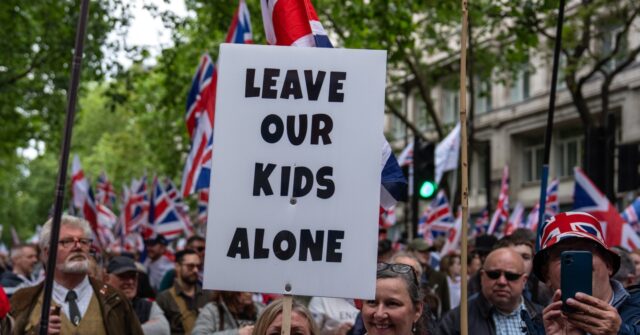
A crowdfunded independent inquiry into predominantly Pakistani grooming gangs in the United Kingdom concluded this week, calling for major legal changes to put abusers in prison for life. But major gaps still remain from this latest unofficial investigation into the decades-long scandal of systematic child rape, countless cover-ups, and internal evidence of the inaction of public servants in the face of horrific abuse of mostly young white working-class girls.
The Rape Gang Inquiry Report has called for the establishment of a specialist national prosecutor to focus on the systematic grooming and gang rape of young girls in the United Kingdom by predominantly Pakistani men, and for considerably harsher punishments for those found guilty.
The report was particularly critical of the British state, given testimony from survivors stating the authorities were often aware of the rapes, but either turned a blind eye or even sided with abusers. It stated: “The perpetrators operated with impunity because the state enabled them… The rape gangs did not operate in the shadows, but with the active or passive consent of the British state.”
In damning accusations, the Inquiry Report this week stated:
The demographic and cultural drivers are clear. Perpetrators from Pakistani Muslim and other Muslim backgrounds operated under an honour- and shame-based clan code that treated non-Muslim girls, especially white working class girls, as property available for sexual use…
…every one of our institutions failed them catastrophically. Police forces ignored repeated reports, criminalised victims instead of perpetrators, destroyed evidence, and allowed known rapists to walk free on bail. Social care services undermined protective parents, placed children in trafficking hubs inside children’s homes, closed cases despite clear indicators of exploitation, and retaliated against whistleblowers.
The NHS recorded genital injuries, multiple sexually transmitted infections in children as young as 13, pregnancies caused by rape, and suicide attempts, yet discharged victims back to their abusers without safeguarding referrals or trauma care. Schools observed older men collecting girls at the gates, heard disclosures of rape on school premises, and responded by excluding victims rather than protecting them. Taxi licensing authorities renewed permits for drivers who formed the logistical backbone of the networks and collapsed in the face of organised protests when basic safety measures were proposed.
The crowdfunded inquiry, which is not an official government investigation but rather an independent process headed up by MP Rupert Lowe, the leader of a small sovereigntist-right party, Restore Britain, commenced in 2025 and held public hearings of evidence in February 2026. The remarkable testimonies of survivors, in which extreme acts of sexual brutality against young children were alleged, have doubtless played an important role in keeping public attention on the grooming scandal, which the British government has been reluctant to fully address.

The inquiry also raised new concerns that hitherto had been little discussed in public. As reported during the evidence-hearings, the committee was told that “countless” British women and girls had allegedly been trafficked to Pakistan as sex slaves. Given that it was alleged to have been a widespread practice but has yet to be conclusively proven, the inquiry report called on the government to establish a specialised task force to search for missing British girls who may have been abducted and taken abroad by grooming gang abusers.
As a result of the Inquiry’s independent nature, it lacked the statutory backing of Parliament, meaning those testifying were not under oath, and it could not compel anyone to appear, nor any organisation to turn over evidence. Consequently, there remains much to be investigated. Perhaps one of the most significant missing pieces of the picture is how grooming gangs were able to operate, allegedly in full sight of the authorities, for decades.
Civil servants, police officers, medical professionals, and children’s services professionals have long been alleged to have been involved in the years-long cover-up, yet none were compelled by law to testify and turn over evidence to Lowe’s inquiry.
As reported earlier this month, Reform UK leader and potential future Prime Minister Nigel Farage called for a full Parliamentary inquiry for just this reason, saying it should use powers last activated by the post-global financial crisis Public Accounts Committee to hold the powerful to account for their actions.
Farage said of Parliament’s capabilities, if used properly: “They have powers of subpoena; it means that people can be brought into Committee Rooms like this, under oath, and could face charges of perjury if they do not tell the truth”. This power should be used to force local government, police forces, and social services to turn over 40 years of paperwork to create a “public record that everybody can read”.
Previous government inquiries, critics say, have been deliberately hobbled by the government and have also lacked statutory powers. The present government’s statutory effort has been accused of deliberate “sabotage” and has been abandoned by some survivors, who perceive a betrayal underway.
Decades after the British public first started talking about the problem of the mass rape of young girls, and 15 years after the mainstream media started to report it for the first time, much of the truth remains uncovered. That remains the case today, even after the Rape Gang Inquiry Report this week.
Indeed, even the scale of abuse is still unknown. Attempts have been made to put a number on the total number of girls attacked by grooming gangs, but after years of cover-ups and extremely poor government data collection, such estimations are questionable. The Lowe report set the baseline number of victims at 250,000 girls. However, this is merely an estimate based on a 2019 claim, calculated through imprecise extrapolations of local data to the nation as a whole. The true number of victims may be higher or lower, but will likely remain obscure until a comprehensive and statutory investigation is conducted.
The report this week acknowledged the lack of data and called for greater transparency from the government and better collection going forward. They found: “Current national data frequently lack robust recording of ethnicity and religion is even less systematically captured, limiting evidence-based analysis and responses”.
The report also called for a raft of major changes to aid further investigation and to ensure the punishment of wrongdoers. Sentencing guidelines should be reviewed, the report said, so that “group-based child sexual exploitation carries a starting point of life imprisonment”, with a minimum of 50-year sentences for ringleaders. Sentencing should consider aggravating factors such as “racial or religious motivation, multiple victims, trafficking across counties, pregnancy caused by rape, and use of filming or blackmail,” they said.
The report went on to raise the possibility of consulting the public on bringing back the death penalty “for the most heinous crimes”, something which Inquiry head Rupert Lowe MP has backed.
Given the distinct character of the vast majority of people convicted of grooming gang crimes, the report also called for deportations not just for foreigners and dual nationals convicted of actual rapes, but for those aiding and abetting too. This could include families and friends of offenders who supported, harboured, or turned a blind eye to abuse. The report also called for the dissolution of Mosques and other community organisations that harboured offenders or turned a blind eye.
To get past the alleged old status quo where investigations into rape gangs were throttled out of concern for upsetting “communities”, the report also called for the establishment of a new specialist national prosecutor under the Crown Prosecutor, arguing that “charging decisions must no longer be influenced by ‘community impact’ or fear of racism allegations”. Additionally, all frontline professionals, including police, social workers, teachers, doctors, nurses, government officials, and youth workers, should receive mandatory annual training on spotting and reporting child rape gangs, the report suggested.
Public discussion of the grooming gang scandal was strongly discouraged in the United Kingdom for decades and was attached to significant social stigma. While acknowledging its existence is now considered socially acceptable, speaking out on these issues is still subject to an omerta in some parties. Local Cambridge independent news outlet CambsNews stated Daisy Blakemore-Creedon, an erstwhile local government councillor from the region who had been drummed out of the Labour Party after speaking out, had contributed to the Grooming Gangs Report.
She is reported to have said: “A year ago I started talking about dangers in taxis after the Casey report came out – a year later I submitted evidence for the rape gang enquiry”. Blakemore-Creedon had been the youngest councillor elected in Britain when she first took a seat for the Labour Party in 2024, but she later said she’d witnessed “a culture where power can too easily go unchecked” within the local government and said she had suffered “sustained bullying and marginalisation” against her by her party colleagues.
She was accused of “targeting fellow Asian Labour councillors” and quit the party a year after her election. She said: “I feel as though I have sustained bullying and marginalisation within the group after raising serious concerns… I was deeply disturbed to find myself accused of racism, with suggestions that I and my family were ‘targeting fellow Asian Labour councillors’.”
Blakemore-Creedon’s experience in local government hit national headlines when Labour politician Dennis Jones was suspended after it was revealed he had written to the young councillor, apparently referring to the victims of rape gangs in the notorious grooming town of Rotherham: “poor white trash in Rotherham… get a fucking grip Daisy. You are aiming for populist votes and attention… politically, I wish you no luck at all”.
The leader of the local Labour group, councillor Shabina Qayyum, dismissed Daisy’s claims, stating the local Labour party had governed in “as transparent as possible” way.
On the same day as the Rupert Lowe report was released, the government announced its process to re-investigate historic closed cases of grooming rape gangs had led to the first cases being passed back to police. Breitbart News reported in November 2025 that the National Crime Agency began reviewing over 1,200 historic cases to determine whether they may have been “incorrectly closed with no further action taken.”
The first batch, so-called, of these cases has now been handed back to police, with broadcaster Sky News stating the NCA said in a statement: “At this early stage, the reviews have identified closed cases from eight force areas that may have viable lines of inquiry. The forces have been directed to reopen these cases, to determine the next steps in relation to any reinvestigation.”
Read the full article here


