








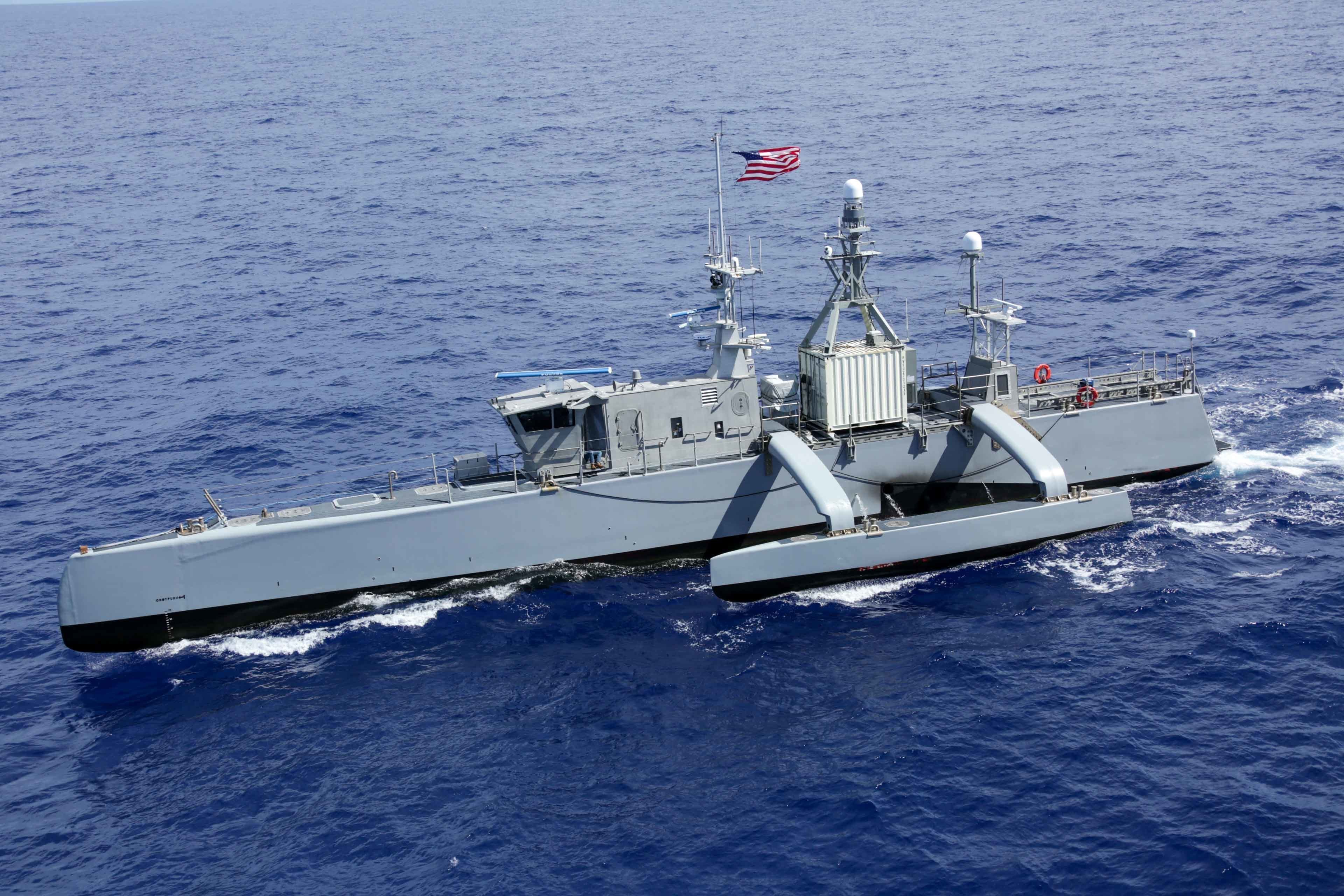
On July 20, the Houthis declared a naval blockade against Saudi Arabia in the Red Sea, retaliation for what they called a Saudi “siege” on Yemen, the group’s formal entry into the wider US-Iran war. Days later, the Houthis claimed missile and drone strikes on the Saudi oil tankers Encelia and Layla; Saudi authorities confirmed the Encelia was hit, with the crew safe, while the Layla strike remains unconfirmed.
Saudi Arabia briefly suspended oil shipments through Bab el-Mandeb on July 26, resuming them the following day after coalition protective measures were put in place. By July 27 to 28, UKMTO and JMIC reported explosions and missile positioning near the strait.
The United States possesses the world’s most powerful military, and the U.S. Navy is the dominant maritime force. Yet when confronting Iran’s Islamic Revolutionary Guard Corps (IRGC) in the Strait of Hormuz or the Iran-backed Houthis in the Red Sea, particularly around the Bab el-Mandeb Strait, the U.S. faces an asymmetric challenge.
The Houthis cannot mount a flotilla capable of confronting a U.S. carrier strike group. Instead, they rely on asymmetric tactics that exploit the geography of the region. Naval mines, explosive-laden drone boats, anti-ship missiles, and drones launched from small vessels can make key shipping lanes too dangerous for commercial traffic.
Rather than defeating the U.S. Navy at sea, the Houthis seek to raise the cost and risk of maritime commerce, threatening one of the world’s most important trade routes.
The Houthis are one of three primary proxy forces backed by Iran, alongside Hezbollah and Hamas. Their principal activity has been restricting shipping through attacks on vessels transiting the region. When the conflict between the U.S. and Iran began, the Houthis, like Iran’s other allies, issued statements of support but did not immediately join the fighting. After one or two early engagements, they went quiet for roughly five months before resuming attacks in recent days.
Iran’s broader network of allies has largely avoided direct confrontation since the fighting escalated: Hezbollah was reportedly ordered not to attack Israel, and neither China nor Russia has intervened overtly, though China has offered support “behind the scenes.”
The Houthis, unlike Iran’s other allies, have joined the fight, possibly because they recognize that the local geography favors their style of asymmetric warfare. The Red Sea presents an easier target than the Strait of Hormuz. The entrance to the Red Sea near Yemen, extending to the Suez Canal, is narrower and closer to the Saudi Arabian Peninsula, making it one of the world’s most consequential waterways to block, particularly for European shipping.
Yemen’s terrain and tribal structure have historically frustrated larger, better-equipped militaries. Egypt’s intervention in the North Yemen civil war between 1962 and 1970 is the clearest example. President Gamal Abdel Nasser deployed roughly 70,000 troops in support of the republican government, a commitment Nasser himself described to the U.S. ambassador as his “Vietnam.”
The war ultimately cost Egypt more than 10,000 men and billions of dollars, and Egyptian forces withdrew in 1967 without securing a decisive victory over Yemeni royalist and tribal fighters. The Houthi movement itself did not emerge until decades later, but the outcome underscores a broader pattern. Yemen’s fighters, regardless of era or faction, have consistently proven difficult for outside powers to subdue on their own terrain.
Saudi Arabia and the United Arab Emirates encountered a similar pattern more recently, leading a coalition against the Houthis beginning in 2015 that failed to dislodge the group from northern Yemen despite years of airstrikes and ground operations.
At the same time, Britain’s limited naval presence in the region has likewise done little to curb Houthi attacks on shipping. The recurring outcome across six decades of foreign intervention, including Egyptian, Saudi, Emirati, and British involvement, points to a country that has proven exceptionally difficult to conquer, however outmatched its fighters may be in conventional military terms.
The conflict “lends itself to asymmetric warfare,” since it doesn’t take many mines or drone attacks to make a strait impassable, and these weapons can be launched from rubber boats, fishing boats, or other small craft. A formal Houthi navy would be quickly destroyed in open confrontation with U.S. forces, but intercepting every small boat and recovering every mine is a far more difficult task.
Iran’s network of proxies does not function as a unified alliance, but rather as a set of actors whose objectives periodically align, particularly when opposing the U.S. or Israel. The Houthis have seized on a window of opportunity for personal gain, which also indirectly supports Iran. It is possible that other Iranian allies will do the same if an opportunity for personal benefit arises.
The concept of asymmetric warfare explains why some analysts are skeptical of President Trump’s warnings that U.S. troops will cut off Iran’s oil exports by invading and holding Kharg Island. The island’s terminal handles the vast majority of Iran’s oil exports. Iran has reinforced the island with layered air defenses, MANPADS, and mines, making it a heavily defended, fixed target. Any attempt by American forces to seize and hold the island would expose them to Iranian drone and missile strikes. A naval blockade, by contrast, could achieve the goal of cutting off Iranian oil exports without requiring U.S. troops to seize and hold Iranian territory indefinitely.
Comparisons to Afghanistan and Vietnam are unavoidable. In both conflicts, the U.S. achieved its initial military objectives relatively easily. However, holding territory and bringing about lasting democratic government proved far more difficult.
The 20-year U.S. war in Afghanistan ended with the completion of the U.S. withdrawal on August 30, 2021. In the end, the Taliban returned to power after a conflict that cost nearly 2,500 American service members’ lives and roughly $2 trillion.
Vietnam followed a similar trajectory. The U.S. won nearly every major battle while losing tens of thousands of American service members and killing millions on the other side. Yet U.S. combat troops withdrew in 1973 under the Paris Peace Accords, and the communists consolidated the country under their rule.
Both wars stand as cautionary examples of the United States’ ability to win battles, and even wars, while highlighting the difficulty of what comes afterward. Military victory does not necessarily translate into a stable government that the U.S. can support and defend over the long term.
Furthermore, both the Vietnam and Afghanistan conflicts took place before today’s level of technological development. At that time, asymmetric warfare relied primarily on improvised explosive devices and suicide bombers. Today, however, drones have completely rewritten the calculus. These unmanned explosive delivery systems give relatively small and unsophisticated fighting forces enough destructive power to challenge a ground invasion or prolonged occupation.
Ad block users: Some site features may not work correctly while an ad blocker is enabled, because they break scripts and content this website depends on. If you can’t see comments below, for example, please disable your ad blocker.
Read the full article here


