



Haiti’s Provisional Electoral Council (CEP) on Monday announced that the country will hold its first presidential elections in a decade in December.
Haiti has not held any kind of election since the November 2016 presidential election that resulted in the victory of late President Jovenel Moïse, who postponed 2019’s legislative elections and was ruling by decree until his assassination in July 2021.
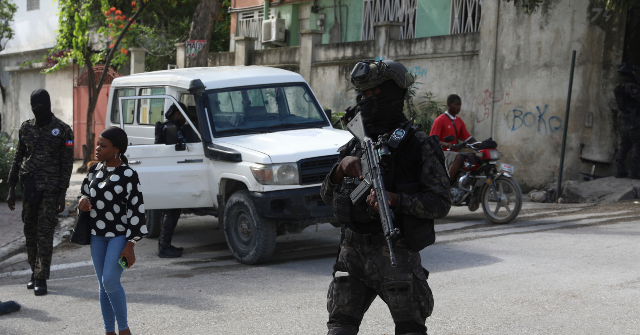
Moïse’s death led to violent gangs overrunning the nation and taking control of large swaths of territory, including areas of the capital city of Port-au-Prince. A new surge of gang violence halted initial efforts to hold an election this year, prompting Acting Interim Prime Minster Alix Didier Fils-Aime to suspend a planned August election.
The CEP, Haiti’s top electoral authority, published its 2026-2027 electoral calendar on Monday marking December 13, 2026, as the date for the first round of new presidential and legislative elections, with a runoff slated for February 21, 2027. Additionally, the plan called for a referendum on proposed constitutional changes and local representative elections.
Per the electoral authority’s plans, registration of political parties and coalitions as well as a window for voter registration will run from July to August. CEP reportedly published a list of over 300 political parties approved to compete this month. Prospective candidates will have between August 20 and October 2 to register. An electoral campaign window for both the presidential and legislative elections is scheduled to take place between October 5 and December 12.
Results for both the presidential and legislative elections will be published on March 7, 2027. Results for the local elections will be published on March 12.
CEP, however, emphasized that meeting the deadlines presented in its plan “depends on establishing an acceptable security environment and securing the necessary financial resources to carry out the electoral process.”
“The CEP also reiterates that organizing these elections is a shared responsibility among all stakeholders. It requires the commitment of the government, various actors, and partners, both national and international,” CEP’s statement read in part.
The electoral calendar presented by CEP on Monday replaces the original plans published last year that called for the now-cancelled August 30, 2026, general elections.
The confirmed electoral calendar calling for the December elections was first reported by Le Nouvelliste last week. The Haitian newspaper, which obtained a copy of CEP’s letter, affirmed at the time that CEP submitted the calendar to the office of Prime Minister Fils-Aimé on July 23.
At press time, Haitian government authorities have not publicly disclosed security details and financial resources required for the upcoming December elections.
“The electoral calendar will be published before the end of July. But first, there must be clear commitments from the authorities regarding the municipalities controlled by armed groups and currently inaccessible to the CEP. Can elections be organized only in accessible municipalities?” an unnamed CEP source reportedly told Le Nouvelliste last week.
“We have two scenarios: the restoration of a minimum level of security in these areas to allow our team to do its work; we recall the creation, during the 2005 elections, of a mega voting center for the population of gang-controlled Cité Soleil,” the source continued.
Following President Moïse’s assassination in 2021, Haiti was under the administration of former interim Prime Minister Ariel Henry. Henry, who found himself stranded in Puerto Rico in 2024 after gangs took control of the nation’s main airport, resigned at the time a “Transitional Council” backed by the administration of former U.S. President Joe Biden was installed.
The Council, which saw little to no progress in restoring stability to Haiti throughout the time it was active, ended its two-year tenure in February — but not before unsuccessfully attempting to unseat current Acting Prime Minister Fils-Aimé.
Christian K. Caruzo is a Venezuelan writer and documents life under socialism. You can follow him on Twitter here.
Read the full article here


