


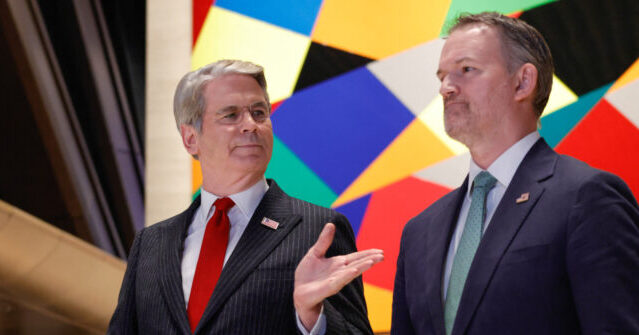
Treasury Secretary Scott Bessent and U.S. Trade Representative Jamieson Greer reported progress in talks with Chinese officials ahead of this week’s meeting between President Donald Trump and Chinese President Xi Jinping, while leaving unresolved the terms of an extension to the countries’ trade truce.
Greer indicated Monday that Washington could support extending the agreement by three to six months, according to Bloomberg News. The two sides will continue negotiating, with the duration of an extension remaining a point of disagreement.
“The focus is on stability between the US and China and we are continuing that,” Greer said, Bloomberg reported.
Bessent described Sunday’s discussions with Chinese Vice Premier He Lifeng in New York as “very successful,” according to Bloomberg. The talks covered trade, investment and artificial intelligence, setting the stage for Trump and Xi’s scheduled Thursday summit in Washington.
The existing trade truce expires November 10. In a Monday interview with CNBC, Bessent said an extension had been discussed but did not announce an agreement, Reuters reported.
Disagreements extend beyond the timetable. The United States believes China has not fully honored commitments on rare earth exports.. Those concerns remain part of negotiations over preserving the arrangement reached following last year’s Trump-Xi meeting in Busan, South Korea.
Officials also advanced work on a bilateral Board of Trade intended to facilitate commerce in products that do not raise national security concerns. Greer said the mechanism was now operational, with the countries working to identify goods that could receive separate treatment in future trade disputes.
Potential products include Chinese consumer goods and low-technology items, alongside American energy, agricultural products and possibly medical devices. Greer described the objective as establishing a limited group of products that could be traded on balanced terms and help stabilize the broader relationship.
The initiative builds on a process announced by Greer’s office in June, when it sought public comments on the board’s operation and products that might qualify for tariff changes. USTR said the arrangement would pursue reciprocity while retaining tariffs to protect American economic and national security interests.
Before Sunday’s meeting, Greer said the administration would focus on enforcing China’s existing commitments, expanding trade in nonsensitive goods and improving access for American farmers, manufacturers and workers, according to a statement issued by his office Friday.
Artificial intelligence emerged as another area for continued discussions. Bessent said Washington proposed a notification mechanism for AI incidents with potential national security consequences, the Associated Press reported.
“We want a shared vision of common goals and common threats,” Bessent told reporters after Sunday’s meeting, according to the AP. He said greater transparency between the world’s two leading AI powers was important as the technology develops.
Bessent told CNBC that officials would meet again in about two months in Shenzhen, China, to discuss AI dangers and communication protocols, Reuters reported. Potential concerns include uncontrollable AI agents and cyber threats involving nonstate actors.
Chinese officials also offered a positive assessment of the weekend discussions. China’s top trade negotiator, Li Chenggang, described the atmosphere favorably, while the official Xinhua News Agency characterized the exchanges as constructive, Bloomberg reported.
The comments left both governments signaling an interest in maintaining stable relations ahead of Thursday’s summit, with further negotiations needed to settle the trade truce’s duration and address American concerns over Chinese compliance.
Read the full article here