




Gatekeepers of the Law Must Be Non-Biased with No Conflicts of Interest.
Legal Insurrection shared a great piece on this topic this month.
The platform was discussing the use of mad science to push government funding, which is proven to be incorrect, and using it in court cases.
…a coalition of 24 state attorneys general, spearheaded by Montana’s Republican Attorney General Austin Knudsen, urged the Trump Administration to scrutinize every dollar of federal funding flowing to the National Academies of Sciences, Engineering, and Medicine (NASEM).
The attorneys general cite what they describe as pervasive left-wing bias masquerading as “independent” scientific expertise.
Specifically, this letter focuses on the climate science section of the Reference Manual on Scientific Evidence (created to help both lawyers and judges understand and manage complex scientific and technical evidence in court cases). It asserts that “The Chapter” was created to sway judges in high-stakes climate lawsuits. The states’ AGs argue that its preparation was funded by groups that support climate-related litigation, written by scholars who reportedly lack strong expertise in climate science and have connections to advocacy groups involved in such cases, and was influenced by a lawyer representing climate plaintiffs.
Now President Donald Trump has called for a review of the “Reference Manual on Scientific Evidence”.
The National Academies receives more than $200M annually in federal funding.@POTUS has ordered a comprehensive review of NASEM’s conduct.
Why should an institution that attempts to undermine the independence of the judiciary continue to receive millions in taxpayer dollars? pic.twitter.com/PB1qE6tsgh
— Carrie Severino (@JCNSeverino) July 20, 2026
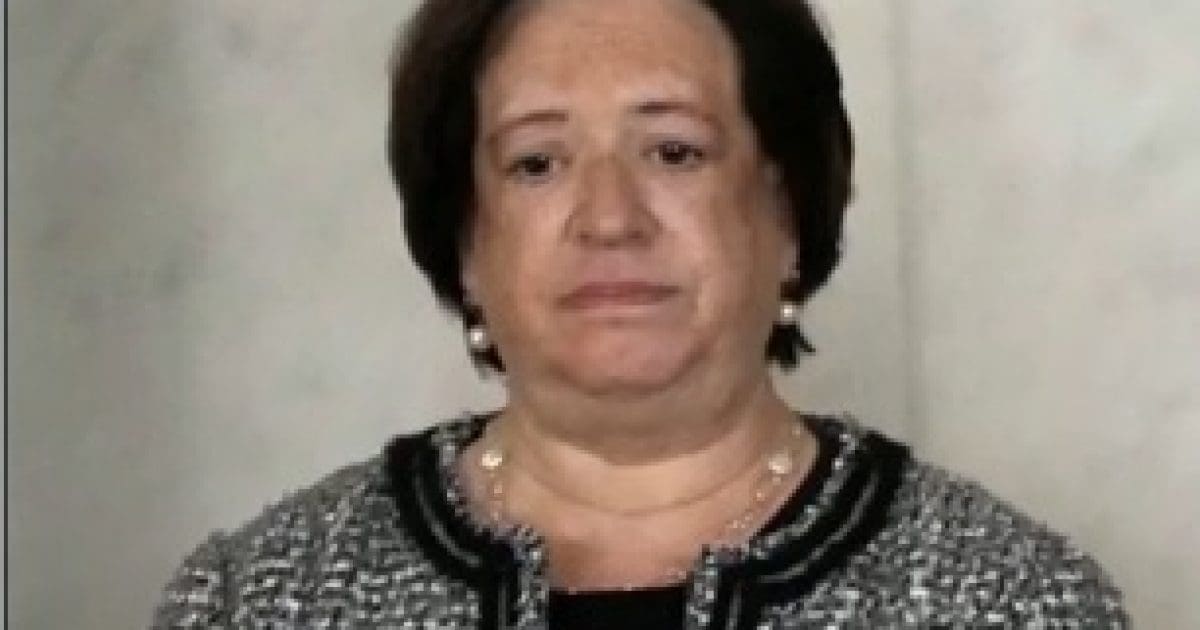
There are potential ramifications for the Supreme Court, as Justice Kagan wrote the foreword to the manual.
Dozens of American state and local governments, mostly in Democratic-led municipalities, have sued oil companies over their role in climate change, but those cases all remain in preliminary stages. None have gotten close to trial yet.
The Supreme Court is scheduled to hear arguments over a legal question in one of the cases, brought by the city and county of Boulder, Colo., in its next term. The issue is whether federal law blocks the case from proceeding, and the decision could have major ramifications for the entire batch of litigation.
Conservative groups have argued that Justice Elena Kagan should recuse herself from the Boulder case because she wrote the foreword to the judges’ manual.
This isn’t the first time Kagan has had a conflict of interest. In 2010, she ignored it. According to The Gateway Pundit:
Justice Elana Kagan cheered the passage of Obamacare in the US House.
According to US law a justice must recuse himself from a case anytime he has “expressed an opinion concerning the merits of the particular case in controversy.” Clearly, Kagan expressed an opinion on Obamacare. Now there’s proof.
CNS News reported:On Sunday, March 21, 2010, the day the House of Representatives passed President Barack Obama’s Patient Protection and Affordable Care Act, then-Solicitor General Elena Kagan and famed Supreme Court litigator and Harvard Law Prof. Laurence Tribe, who was then serving in the Justice Department, had an email exchange in which they discussed the pending health-care vote, according to documents the Department of Justice released late Wednesday to the Media Research Center, CNSNews.com’s parent organization, and to Judicial Watch.
“I hear they have the votes, Larry!! Simply amazing,” Kagan said to Tribe in one of the emails.
The Justice Department released a new batch of emails on Wednesday evening as its latest response to Freedom of Information Act requests filed by CNSNews.com and Judicial Watch. Both organizations filed federal lawsuits against DOJ after the department did not initially respond to the requests. CNSNews.com originally filed its FOIA request on May 25, 2010–before Elena Kagan’s June 2010 Supreme Court confirmation hearings.
Kagan is not the only Justice on the Supreme Court with a conflict of interest who regularly votes against President Trump in key rulings (remember Obamacare?).
NEVER FORGET that Chief Justice Roberts lived a WEEK in Obama lawfare boss Norm Eisen’s 150-room Czech Palace.
Eisen is the MASTERMIND of the President Trump impeachments and endless lawfare.
Roberts is COMPROMISED by the Obama swamp.
SCOTUS is rigged. pic.twitter.com/LPqNk4sYaO
— Liz Churchill (@liz_churchill10) April 5, 2026
In the corporate world individuals must recuse themselves with even the appearance of a conflict of interest. Our Supreme Court surprisingly not held to the same standard.
There should be stronger penalties for judges who don’t recuse themselves when they have clear conflicts of interest.
Read the full article here


