





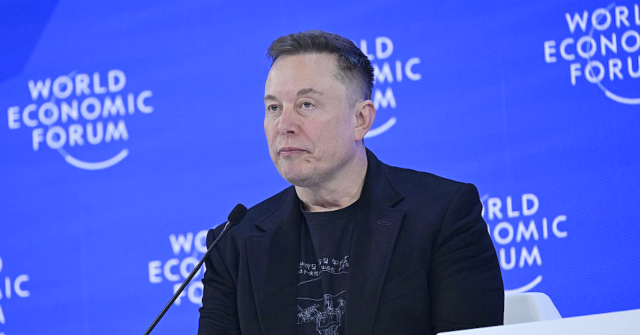
The Federal Trade Commission (FTC) is negotiating a potential settlement with major advertising companies to resolve a dispute that alleged that the advertisers violated federal antitrust laws by coordinating boycotts against platforms as Elon Musk’s X, according to a report.
The FTC started an investigation last year, seeking information into whether the world’s largest advertising firms such as Publicis Groupe, WPP, Dentsu, Havas, and Horizon Media, along with many advocacy groups, engaged in anticompetitive behavior by withholding advertising dollars from certain destinations.
A potential agreement would bar the advertisers from directing advertising dollars away from media platforms based on the political content on those sites. Individual advertisers would still be allowed to avoid specific websites for their ads. The settlement would not involve admitting guilt or wrongdoing on the part of the advertisers.
After Elon Musk acquired Twitter in late 2022, many major advertisers chose not to advertise on the platform, now X, citing concerns over Musk’s preference to allow more free speech and less onerous content moderation policies.
X sued the trade group and many large companies, such as CVS Health, Colgate-Palmolive, and Mars, stating that the group illegally boycotted X and violated antitrust laws. A federal court dismissed X’s lawsuit.
The potential settlement follows after FTC Chairman Ferguson in June 2025 announced, as part of a merger between two of the largest advertising giants, that the advertisers agreed not to collude or discriminate based on political or ideological views.
Ferguson explained that there had been a history of “collusion in the [advertising] market for media-buying services, and the increased potential for collusion post-merger make this a rare instance where the imposition of a behavioral remedy is appropriate.”
He explained:
Specifically, the proposed decision and order prohibits Omnicom and IPG from entering into or maintaining any agreement or practice that would steer advertising dollars away from publishers based on their political or ideological viewpoints. To be sure, coordinated action by advertising agencies against politically disfavored publishers is tantamount to an agreement not to compete on quality — but obtaining such a ruling in litigation could take years. Today’s decision and order eliminates the potential for costly litigation while ensuring that Omnicom and IPG abide by the antitrust laws post-merger. [Emphasis added]
In his June 2025 statement, the FTC chair noted Global Alliance for Responsible Media (GARM), which he said that Omnicom and IPG founded, once described the right to free speech as “an extreme global interpretation of the U.S. Constitution” and “‘principles of governance’ … from 230 years ago (made by white men exclusively).”
A 2024 House Judiciary Committee report found that GARM discussed putting center-right outlets such as Breitbart News, Daily Wire, and Fox News on its advertising exclusion lists.
John Montgomery, the then-executive vice president of Global Brand Safety, wrote to Rob Rakowitz, the leader of GARM:
There is an interesting parallel here with Breitbart. Before Breitbart crossed the line and started spouting blatant misinformation, we had long discussions about whether we should include them on our exclusion lists. As much as we hated their ideology and bullshit, we couldn’t really justify blocking them for misguided opinion. We watched them very carefully and it didn’t take long for them to cross the line. [Emphasis added]
Ferguson added that GARM aimed to “destroy publishers of content which they disapproved.”
Read the full article here


