A pair of former presidential advisers — one Democrat and one Republican — have joined together to put their seal of approval on the merger plans between Paramount and Warner Bros. Discovery, and they say the merger is good for Hollywood.
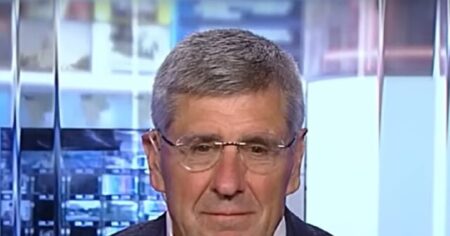
The merger was analyzed by Stephen Moore, a former Trump economic adviser, and Robert Wolf (pictured, left), who was Barack Obama’s adviser and served on his Economic Recovery Advisory Board and Jobs Council, and they feel that the plans do not endanger jobs or quash competition on the film industry, despite the fears of many Hollywood activists and Democrat politicians.
In an op ed for The Wrap, the pair of advisers aver that the claims of activist politicians — such as California Attorney General Rob Bonita — who say the merger is a danger to Hollywood, are simply not correct in their assessment. Indeed, Moore and Wolf feel that the merger will “create a stronger competitor in entertainment and media, bringing new investment and dynamism to sectors under pressure while expanding choices and opportunities for consumers, workers, filmmakers, writers, directors, actors and theater operators who depend on a healthy production pipeline.”
The pair note that competition is already growing in the entertainment industry with the growth of steaming and the array of content providers. This being true, the merged entity would face heavy competition instead of beating it down.
“A combined Paramount-Warner Bros. Discovery would face strong rivals not only in streaming but across film production and theatrical distribution,” they said. “Sony, Universal, Lionsgate, A24 and independent producers compete alongside Netflix, Disney, Amazon, Apple and Comcast/NBCUniversal, while YouTube, TikTok and other digital-first platforms compete intensely for consumer attention and advertising dollars.”
Their analysis points out that YouTube accounts for 13 percent of streaming and that Warner Bros and Paramount account for 14 percent combined, so a permanent merger would hardly make the combined entity all that overpowering. The advisers add that “the combined company would operate amid substantial competition from Disney, Netflix, NBCUniversal, Fox, Amazon, Roku, and others.”
The pair also say that, despite coupling two huge studios and film catalogs, a merged company would still have to “compete against global platforms.”
“If a merger enables two weaker firms to compete more effectively against larger rivals, that is procompetitive rather than anticompetitive. Blocking this transaction simply because the result would be a larger company confuses size with market power,” the pair say.
The U.S. Justice Department has already ruled that blocking this merger would not strengthen competition, in fact, the ruling noted that a merger would “increase competition across the media and entertainment ecosystem, with benefits for American consumers and workers.”
The advisers also say that a merger would protect jobs in Hollywood, not eliminate them. And with jobs already being lost by the thousands every year, that is key, they say.
“The entertainment industry is fragmenting across viewing platforms, not consolidating into a single monopoly. This merger would strengthen the combined company’s ability to compete against numerous firms, several with larger global footprints,” they said.
The pair end their piece by scolding those who are attacking the merger because it is big.
“The proper standard is careful, evidence-based review – not automatic resistance to scale. On that standard, the merger deserves approval. The federal government has ruled that way, and to benefit consumers, shareholders, and consumers, the states should follow suit,” they wrote.
Follow Warner Todd Huston on Facebook at: Facebook.com/Warner.Todd.Huston, Truth Social @WarnerToddHuston, or at X/Twitter @WTHuston
Read the full article here