






New York Times shareholders led by Florida Attorney General James Uthmeier filed a lawsuit against The New York Times Company on Wednesday over the paper allegedly failing to tell the truth in its coverage of Israel. According to Uthmeier, the Times’ bias had been demonstrated by “72 recent errors where the company admitted in its own correction column, in a very single coverage area in just eight months, all pro-Hamas style reporting that had to be clawed back as incorrect.”
The State Board of Administration of Florida (SBA) led by Florida AG James Uthmeier acting as trustee and the National Center for Public Policy Research (NCPPR) filed the suit in the New York County Supreme Court. According to the Free Press the suit “asks a judge to force the Times board of directors to hand over internal records the company has refused to produce for four months, the majority of which pertain to the paper’s coverage of the Israel-Hamas war.”

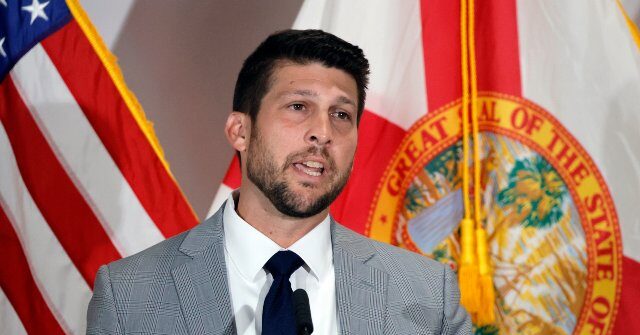
Uthmeier made the announcement in a Wednesday press conference, laying out the shareholder petition against the New York Times.
“We recently announced that that we’re investigating this and looking into a situation where they had to make countless numbers of retractions in certain reporting. On today’s petition, I want to make clear it’s not a lawsuit or challenge to any certain article or editorial discretion. Businesses certainly have First Amendment rights, Uthmeier said, explaining that the lawsuit is about “corporate governance” at its core.
“But when you are a publicly traded company, and the New York Times is, you have legal responsibilities and duties to your shareholders. And we saw some very dangerous trends that appear to call into credibility the sound business sense of what that company is doing,” Uthmeier said, providing some examples of the bias by detailing “72 recent errors where the company admitted in its own correction column, in a very single coverage area in just eight months, all pro-Hamas style reporting that had to be clawed back as incorrect.”
The Free Press reports several examples of the Times‘ anti-Israel bias in action:
In a September 15 article, the Times referred to Sharif Labad, who was killed in a drone strike, as “a Civil Defense rescue service worker,” and made no mention of the fact that the Israel Defense Forces identified Labad as one of the members of the Hamas Nukhba force who invaded Israel on October 7. The story has not been updated.
The same day, an article on the Donald Trump administration’s decision to supply bombs to Israel ran with a photo caption misstating the weapons’ size as 40,000 pounds. The bombs actually weigh 2,000 pounds—a twentyfold overstatement.
The Times was also forced to issue an editors’ note on a story about NAZA, a documentary about Gaza, after the original piece stated that Israelis “still largely view themselves as the victims of Oct. 7.” The paper called that line an “editing error” that had “inadvertently suggested” the deaths of 1,200 people and the taking of 250 hostages were a matter of perception rather than fact.
Because the SBA invests in a retirement fund for over 1.2 million employees, Uthmeier said they want to make sure the companies they invest in are “bringing in rate of return that that investment is going to grow.”
“When you’re a news agency, your credibility is everything. The New York Times tells its own investors that its brand and reputation are its most important assets. The New York Times has told investors that perception of unreliable or biased journalism is a material risk to that asset. These are the company’s own words, and its own filings with the Securities and Exchange Commission. The company has also published written editorial standards to check facts, verify quotations, preserve the integrity of photographs, correct errors as soon as you become aware of them,” the state attorney general said.
“As investors, we have a legal right to these corporate governance documents, so we ask for them. Might not surprise you out there. We didn’t get any. They didn’t give them to us. So today’s legal petition is our formal process to legally demand documents that are required to us under the law,” he said, adding, “I would like to still see them comply at the end of the day.”
He added, “I think it’s important for all investors out there, not just Florida, our pension, all the government employees that depend on it, but all investors out there need to know as a news organization what are your governance standards.”
Uthmeier also said that a business can have a bias or agenda, even deciding to be pro-Hamas, but if that is going to be the case, they must disclose that to “the governance and ultimately to the shareholders.”
“So today we bring this petition. Our corporate governance oversight committee at SBA is going to continue to keep an eye, and we will go and take action against any business out there that is publicly traded that has legal obligations and fails to meet those, because my job is to protect this pension, to protect the investments,” he added.
One of the witnesses in the lawsuit include is a former Times employee, who is Jewish and had concerns about antisemitism over a dozen times from 2019 to 2026. “The public deserves a better picture of how the Times manufactures the news when Jews or Israel are involved,” the whistleblower told the Free Press.
David Benger, who is representing the National Jewish Advocacy Center attorney, told the outlet, “Many New York Times readers have perceived a consistent anti-Jewish and anti-Israel bias for quite some time. Shareholders are entitled to see whether the board was watching at all.”
Read the full article here


