




Regulatory actions taken in Nigeria have caught the attention of the U.S. House Foreign Affairs Committee for potentially affecting American investments, with Chairman Brian Mast (R-FL) addressing a letter to the country’s ambassador to the United States.
Nigeria’s airtime and data lending market, largely dominated by Nairtime Nigeria Limited (NNL), allows customers to borrow airtime or data and pay after their next recharge — but now faces new rules under the government’s Digital, Electronic, Online and Non-Traditional Consumer Lending Regulations (DEON Regulations), administered by the Federal Competition and Consumer Protection Commission (FCCPC).
Under the DEON Regulations, airtime and data advances are now treated as a form of consumer credit, rather than just a telecommunications service. As a result, telecom operators have suspended or restricted some of their airtime-lending arrangements while assessing compliance requirements.
“Nigeria’s airtime and data credit market is undergoing a significant regulatory reset,” explained a May article from Nigerian law firm Tope Adebayo LP. “What was once treated largely as a telecoms value-added service is now being regulated within the broader digital consumer lending ecosystem.”
NNL operates as a subsidiary of Optasia, a South African-owned publicly-traded financial technology company with reported investments from major American firms like BlackRock and State Street.
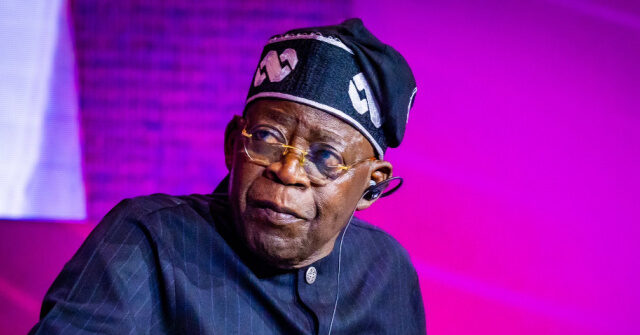
President Bola Ahmed Tinubu directed the FCCPC to “dismantle” NNL’s “12-year monopoly” after the commission persuaded him that the move would “align with the administration’s Nigeria First economic agenda,” the Abuja-headquartered Premium Times reported on June 6.
The FCCPC then published a list of nine government-approved airtime/data lenders, not including NNL.
At this point, the disruption in lending services had reportedly affected millions of Nigerian customers.
The Wireless Application Service Providers Association of Nigeria (WASPAN) challenged aspects of the regulations in court, arguing that telecom-related services should primarily fall under the authority of the Nigerian Communications Commission rather than the FCCPC.
On April 15, the Federal High Court of Nigeria reportedly issued interim injunctions restraining the FCCPC from continuing enforcement actions related to the matter until it is solved in future court proceedings.
Still, reports from BusinessDay Nigeria indicated that services still remained delayed despite court orders.
The FCCPC has “denied involvement in media reports claiming presidential backing for its position or portraying the case as a fight against a foreign monopoly,” the outlet reported.
As chairman of the House Committee on Foreign Affairs, Rep. Mast wrote Ambassador Lateef Kayode Kolawole Are a letter exclusively obtained by Breitbart News saying that “major U.S.-linked asset managers and pension-related investment vehicles may face financial harm through this abrupt and legally uncertain regulatory intervention.”
“We are particularly concerned that the actions taken by Nigerian regulatory authorities may be in disregard of judicial rulings and may materially impair the value of U.S. investor capital, including retirement, pension, and managed institutional assets entrusted to globally active American financial institutions,” the Florida Republican continued.
Based on information the committee has reviewed, Mast requested clarification on if the recent actions have materially damaged U.S. shareholder value and have complied fully with Nigerian judicial orders.
“Nigeria remains an important commercial and strategic partner to the United States, and this inquiry is intended to preserve—not undermine—that relationship by ensuring continued confidence in Nigeria as a lawful, transparent, and reliable destination for U.S. investment capital,” Mast clarified in his letter. “American institutional investors—including pension beneficiaries, retirement holders, and asset managers—must be able to trust that foreign markets in which they deploy billions of dollars operate under predictable legal frameworks and respect for commercial fairness. Where that confidence is threatened, Congress has an obligation to understand the facts and assess broader implications for U.S. economic interests abroad.”
In the conclusion of his letter to the Nigerian ambassador, Mast requested the following:
- Clarification of responsible entities required to enforce protections in place for foreign investors impacted by regulatory disputes;
- Assurance that the Government of Nigeria remains committed to transparent, rules-based governance for all market participants; and
- A written response within thirty (30) days addressing the concerns outlined above.
“I appreciate your prompt attention and look forward to continued U.S.-Nigeria cooperation grounded in mutual economic confidence, legal transparency, and investor protection,” Mast added.
Nigerian investigative journalist David Hundeyin has alleged that allies of President Tinubu are connected to the regulatory changes in a move to capture the country’s airtime lending market.
Hundeyin took to social media on June 2 to accuse Idris Alubankudi Saliu, Tinubu’s special adviser on technology and the digital economy, and his brother of building “one of the biggest and most powerful state corruption enterprises in the entire history of Nigeria.”

“These men are attempting to capture the systemically important foundations of the entire Nigerian economy – specifically telecoms and ICT – and turn their 3 year-old corruption enterprise into a sort of Nigerian chaebol,” Hundeyin continued, referring to a South Korean conglomerate typically controlled by a family. “You have never seen anything like it before.”
Alubankudi Saliu did not respond to Breitbart News’s request for comment.
Olivia Rondeau is a politics reporter for Breitbart News based in Washington, DC. Find her on X/Twitter and Instagram.
Read the full article here


