




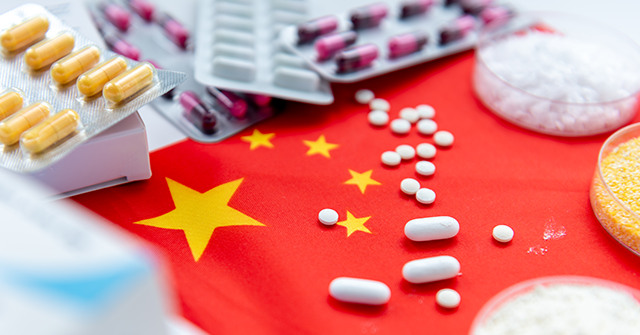
China is building a weapon that could bring the United States to its knees without firing a single shot. It’s taking over global pharmaceutical development – and gaining unprecedented control of the medical innovations Americans depend on.
Chinese companies account for nearly a third of drugs currently in development, and China recently surpassed the United States in conducting clinical trials. By 2040, China is projected to be responsible for over a third of new FDA approvals.
If one of those trials produces a life-saving breakthrough – like a cancer cure or pandemic vaccine – China could hold it hostage to extract concessions from the United States. America can’t afford that risk. We need to build a biotech sector that can outcompete China and not depend on it.
Our first step should be to end the foreign free-riding that is steadily undermining America’s biotech sector.
For decades, wealthy nations have used price controls to suppress what they pay for innovative medicines. As a result, drugmakers struggle to recoup the massive costs of research and development – which often exceed $2.6 billion for just one new drug – and are forced to shift much of that burden onto the U.S. market.
That has produced a global imbalance. America drives the lion’s share of pharmaceutical innovation, but American patients pay far more than foreign ones for the same drugs.
That imbalance isn’t just unfair. It adds to America’s biotech vulnerability. When foreign governments underpay for U.S.-invented medicines, they effectively drain revenue from American innovators, preventing these companies from investing in the research and manufacturing capacity needed to outpace China.
The United States must demand that trading partners pay their fair share. It should start by launching a Section 301 investigation into other countries’ abusive drug pricing practices. That would immediately signal that Washington is serious about ending free-riding and unlock a broader suite of trade enforcement tools to bring foreign countries to the negotiating table.
From there, the United States could pursue more agreements like President Trump’s recent deal with the United Kingdom, in which the UK committed to paying more for innovative medicines. If other wealthy countries like Japan and Germany agree to do the same, it would both strengthen the financial foundation of U.S. biotech and allow domestic prices to fall.
At the same time, policymakers must reject the impulse to simply copy other countries’ price controls. That wouldn’t end free-riding but instead would entrench it – with devastating consequences for innovation.
Adopting foreign-style price caps would inevitably force drugmakers to scale back research and development, ceding the next generation of treatments to China. It would also strip away America’s negotiating leverage, preventing negotiators from securing fair pricing abroad.
There are better ways for policymakers to reduce drug costs. Ending foreign free-riding would allow prices to fall naturally.
China’s growing advantage in biotechnology is a glaring strategic gap. But there is still time to close it.
If U.S. policymakers act now to strengthen America’s biotech sector and end foreign free-riding, they can ensure America stays competitive – and continues to lead the world in medical innovation.
Ambassador Jeffrey Gerrish served as the Deputy U.S. Trade Representative for Asia, Europe, the Middle East, and Industrial Competitiveness from 2018 to 2020, and he serves as an adviser to the Alliance of U.S. Startups & Inventors for Jobs.
Read the full article here


