


As a former congressman and medical doctor, I would like to alert the public and policymakers to a report that recommends shutting down current regulatory policy – specifically the “Green List” – which grants preferential treatment to some “trusted” foreign firms that import active pharmaceutical ingredients (APIs) into the United States. The report details why that trust-based system is frighteningly obsolete.
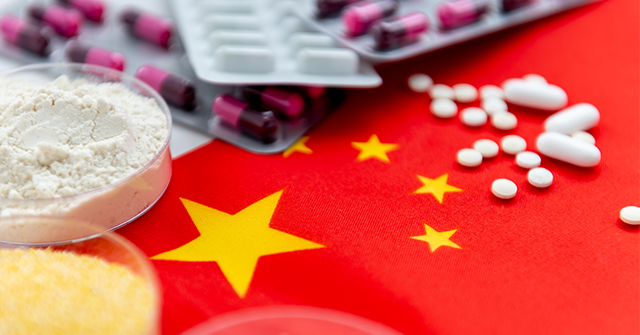
Americans seeking legitimate GLP-1 treatment are increasingly being targeted by a parallel market in illicit and unapproved active pharmaceutical ingredients, often sourced from China and other overseas suppliers, that have not been reviewed by FDA for safety, effectiveness, or quality. Some have been associated with contamination, unknown ingredients, incorrect potency, or unsafe handling. These are not simply cheaper versions of the same medicine.
They also compete with and undercut legitimate U.S. pharmaceutical manufacturing and FDA-approved medicines produced for the American market under rigorous manufacturing and quality standards. Misleading advertising makes that competition especially dangerous: websites, telehealth platforms, social-media sellers, and other marketers can blur the distinction between an FDA-approved medicine and an unapproved copy, leaving Americans to believe they are receiving the real product when they are not.
Thirty-eight bipartisan attorneys general warned FDA about precisely this problem in February 2025. In a joint letter, they urged the agency to take decisive action against bad actors unlawfully profiting from demand for FDA-approved GLP-1 medicines and warned that counterfeit products were entering the U.S. supply chain from China, Turkey, India, and other foreign sources.
The attorneys general were explicit about the risk: the products could contain contaminants, unknown drugs, or dangerously high amounts of active ingredients. They separately warned that online retailers were illegally selling GLP-1 active ingredients directly to consumers, often marketing them on social media as an easier or cheaper alternative even though those ingredients came from unregulated, undisclosed sources in countries including China and India. They called on FDA to work with Homeland Security, state pharmacy boards, and other enforcement partners to stop the conduct before more consumers were harmed.
Congressman Michael C. Burgess (R-TX) speaks during a forum sponsored by the Congressional Health Care Caucus, of which Burgess is chairman, on September 29, 2009, on Capitol Hill in Washington, DC. (Scott J. Ferrell/Congressional Quarterly/Getty Images)
Earlier this year, I warned that the Food and Drug Administration’s GLP-1 Green List had become a liability rather than a safeguard.
At the time, the evidence was already troubling. FDA had disclosed that Harbin Jixianglong Biotech, a Chinese API manufacturer that had been placed on the Green List, obtained unapproved “semaglutide” active pharmaceutical ingredient from a facility that was not on the list, relabeled that material under its own name, altered manufacturing and retest information, and shipped it into U.S. commerce.
I wrote then that FDA should shut the Green List down.
Since that warning, the case for doing so has only grown stronger.
For more than three decades, as a physician and as a member of Congress, I have watched the federal government wrestle with a basic responsibility: making sure the medicines Americans rely on are safe, effective, and what they claim to be. The illicit GLP-1 market is now testing that responsibility at scale.
What is most frustrating is that the danger is no longer hypothetical. FDA, state regulators, attorneys general, researchers, and patients have all supplied warning signs. Yet the enforcement architecture still allows unapproved foreign API to exploit gaps that legitimate manufacturers operating under FDA oversight do not enjoy.
The Green List was naively presented as a way to protect patients from the most dangerous unapproved active pharmaceutical ingredients entering the United States from overseas. Foreign manufacturers of unapproved API that the FDA had evaluated would receive different treatment at the border; other shipments would face heightened scrutiny.
But Harbin exposed the central weakness in that model.
The Green List places trust in the identity of a company. Drug safety, however, depends on the identity and integrity of the material actually crossing the border: where it was manufactured, who handled it, whether the records are authentic, whether the product was properly tested, and whether its chain of custody can be verified.
Harbin demonstrated that the company named on the paperwork and the company that actually manufactured the ingredient can be two different things.
FDA itself said the conduct may have been an attempt to circumvent the safeguards of Import Alert 66-80. Yes, I’d say that’s obvious.
That should have triggered a reconsideration of the system itself.
Instead, the Green List remains in place.
Worse, the public still does not know the identities of most of the manufacturers receiving Green List treatment. FDA’s current alert discloses countries and products while withholding the names of the companies receiving this preferential border treatment.
That opacity makes meaningful independent oversight nearly impossible. Purchasers cannot independently verify the status and affiliations of suppliers. State regulators and researchers cannot determine whether supposedly distinct Green List companies share owners, facilities, brokers, exporters, or contract manufacturers. Congress and the public cannot adequately examine the networks behind these firms.
That matters particularly because numerous entries involve manufacturers in the People’s Republic of China.
Since my earlier warning, FDA has also disclosed additional information that makes continued reliance on firm-level trust even harder to justify. In its August 2026 revision of Import Alert 66-80, FDA reported that it had evaluated 48 sites making unapproved GLP-1 API and found 21 percent to be noncompliant. The agency also described manufacturers registering to supply GLP-1 ingredients to the United States, refusing FDA requests for records, and then deregistering shortly thereafter.
That is not a supply chain in which presumptive trust should be the organizing principle.
The program has also expanded beyond the shortage conditions that helped frame its original justification. FDA has now extended Green List treatment to manufacturers of orforglipron API, the active ingredient in a newly approved oral GLP-1 drug that was not part of the semaglutide and tirzepatide shortage crisis.
And the legal landscape has become clearer still.
On August 27, 2026, the U.S. Court of Appeals for the Fifth Circuit affirmed FDA’s determination that the shortages of Novo Nordisk’s semaglutide injection products, Ozempic and Wegovy, had ended. In Outsourcing Facilities Association v. FDA, the court held that FDA’s determination was not arbitrary or capricious.
The court’s reasoning is important.
FDA did not simply rely on a manufacturer’s assertion that supply had recovered. The agency evaluated production, inventory, wholesaler information, demand estimates, and submissions from compounders and other market participants. FDA estimated reported compounded semaglutide production at roughly 520,000 packages per month. Novo Nordisk, by comparison, reported the ability to supply approximately 5.8 million packages per month, with millions of additional finished and semi-finished packages in inventory.
The Fifth Circuit held that FDA was entitled to give greater weight to that specific, current, and comprehensive supply-and-demand information than to isolated reports of individual patients having difficulty obtaining a product.
The same day, the Fifth Circuit upheld FDA’s determination that the shortage of Eli Lilly’s tirzepatide products, Mounjaro and Zepbound, had also ended.
The shortage justification is therefore no longer merely outdated. FDA’s determinations have now been tested against the administrative record and sustained by a federal appellate court.
Yet unapproved GLP-1 ingredients continue to enter the marketplace.
Retatrutide has not even been submitted to FDA for approval, but versions of it are already being marketed to Americans before physicians or regulators possess a complete FDA-reviewed safety and efficacy profile.
Meanwhile, adverse-event reports associated with compounded GLP-1 products continue to accumulate, and traditional 503A pharmacies do not face the same federal adverse-event reporting obligations as manufacturers of FDA-approved drugs. As a result, the federal government has less visibility into this market than it does into approved medicines.
FDA has issued alerts, warning letters, and safety communications. But the 37 attorneys general asked for more than warnings: they urged FDA to work with Homeland Security to intercept counterfeit GLP-1 products, pursue unlawful online sellers, increase enforcement against compounding pharmacies operating outside the law, and coordinate with state pharmacy boards. A warning that is not followed by meaningful enforcement does little to deter sellers that have already decided the rules do not apply to them.
We have seen the tragic aftermath of regulatory blind spots before.
In 2012, contaminated compounded drugs produced by the New England Compounding Center caused a fungal meningitis outbreak that sickened more than 700 Americans and was associated with at least 64 deaths. Congress responded by rewriting federal compounding law.
We should not need another deadly catastrophe before acting on a vulnerability that is already visible.
My position has not changed since I first wrote about the Green List. What has changed is the amount of evidence supporting it.
The answer is not to close America to legitimate pharmaceutical ingredients manufactured overseas. Nor is it to eliminate legitimate patient-specific compounding.
The answer is to stop treating confidential firm status as a substitute for verifiable provenance.
FDA should terminate the Green List exception for unapproved foreign GLP-1 APIs and replace it with a transparent, shipment-specific system in which admissibility turns on evidence tied to the actual material crossing the border: manufacturing origin, lot records, chain of custody, testing, and compliance history.
This report that follows explains why.
It traces the regulatory history that brought us here, examines the Harbin case and the weaknesses it exposed, reviews what laboratory testing and adverse-event data tell us, and considers how an opaque trusted-supplier system can be exploited in a global pharmaceutical supply chain.
I raised this warning before. The evidence now gives FDA even less reason to ignore it.
When it comes to medicines injected or swallowed by American patients, trust should follow verification—not replace it.
Dr. Michael C. Burgess is a former U.S. representative from Texas. He was a member of the GOP Doctors Caucus and Chairman of the Health Subcommittee of The Committee for Energy & Commerce.
Read the full article here