







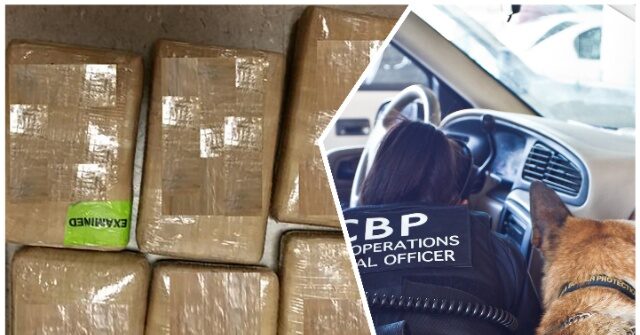
U.S. Customs and Border Protection (CBP) officers at the Brownsville-Matamoros International Bridge in South Texas shut down a cartel smuggling attempt to import nearly $300,000 in cocaine on July 7. The port is part of CBP’s Laredo Field Office, which is currently the second-busiest region behind San Diego for narcotics seizures this fiscal year.
The seizure unfolded when CBP Field Operations officers inspected a 2016 Nissan vehicle attempting to enter the United States from Matamoros, Mexico. The vehicle was driven by a 20-year-old female who resides in Brownsville, according to information provided to Breitbart Texas by CBP. The unnamed suspect arrested during the event is a United States Citizen.
After the vehicle entered the port of entry, officers selected it for enhanced screening and inspection. During the enhanced screening at a secondary inspection area, officers deployed a canine team and utilized nonintrusive inspection technology to search the inside of the vehicle. The search led to the discovery of nine packages containing more than 22 pounds of cocaine hidden within the vehicle. According to CBP, the cocaine has an estimated street value of $294,948.
The Brownsville-Matamoros International Bridge is one of eight ports of entry spanning the South Texas-Mexico border that fall under the jurisdiction of the Laredo Field Office. The region stretches from Del Rio, Texas, in the north, running 450 miles through Laredo and onward to Brownsville, the southern tip of Texas.
The ports are responsible for inspecting millions of vehicles, pedestrians, rail cars, and commercial trucks each year. More than $200 billion in imported products are processed at the ports, making the region a powerhouse in legitimate trade and travel into the United States. The high volume of legitimate trade and travel makes the region an attractive environment for Mexican Drug Trafficking Organizations (DTOs) to exploit.
According to CBP, the Laredo Field Office ports of entry were responsible for seizing more than 25,000 pounds of hard narcotics between October 2025 and April 2026. CBP attributes the seizures to an increased focus on counter-drug strategies that involve enhanced intelligence gathering against DTOs and an increase in staffing to deploy canine teams and non-intrusive inspection equipment at ports of entry.
CBP Officers, once relegated to processing more than 1,400 asylum seekers daily as part of the Biden-era CBP One parole program, have been redirected to inspection and enforcement activities after the program was canceled by President Trump immediately after assuming office. CBP officers had also been directed to assist Border Patrol agents in providing humanitarian care and assistance to thousands of illegal aliens entering the United States daily under the Biden administration. The reduction in illegal crossings has allowed CBP to redirect those officers to counter drug strategies at ports of entry.
Randy Clark is a 32-year veteran of the United States Border Patrol. Before his retirement, he served as the Division Chief for Law Enforcement Operations, directing operations for nine Border Patrol Stations within the Del Rio, Texas, Sector. Follow him on X (formerly Twitter) @RandyClarkBBTX.
Read the full article here


