




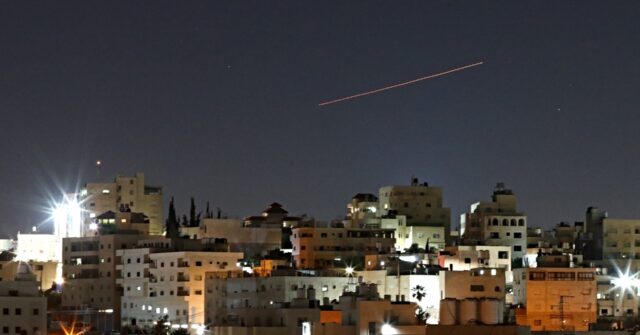
Israel struck military and petrochemical targets inside Iran for the first time since an early-April ceasefire on Monday after Tehran launched ballistic missile barrages at the Jewish state.
The actions launched a new round of direct exchanges that saw Iran fire additional missiles at Israel and the Iranian-backed Houthis resume attacks from Yemen as President Donald Trump pressed to keep negotiations alive.
The Israeli Air Force carried out strikes across western and central Iran, with Iranian and Israeli reports indicating targets included sites near Tehran, Isfahan, Tabriz, Karaj, and the petrochemical complex in Mahshahr, while Iranian missile attacks triggered sirens across large swaths of Israel and damaged several homes in Samaria.
The Israel Defense Forces said the operation targeted military assets belonging to the Iranian regime. Iranian media reported explosions in multiple cities, while the IDF later confirmed strikes against several targets at the petrochemical complex in the Mahshahr area of southwestern Iran.

The strikes marked the first direct Israeli military action against Iran since the ceasefire took effect earlier this year and came despite Trump’s public effort to prevent further escalation.
Hours before the operation, Trump said he planned to call Prime Minister Benjamin Netanyahu and urge him not to retaliate for Iran’s overnight missile barrage, warning that additional military action could jeopardize negotiations he has repeatedly described as nearing a breakthrough.
“I am going to call Netanyahu right now and tell him not to strike back,” Trump said.
The president also emphasized that he still believes diplomacy remains the preferred path forward.
“We are very close to a final deal with Iran. It is going to be a good deal. I don’t want it to blow up because of what is happening now,” Trump said.
Trump later told the Financial Times that Sunday’s missile attack would not alter his determination to pursue an agreement with Tehran.
“I think the deal is going on,” Trump said. “We’ll see what happens.”
The Israeli operation nevertheless moved forward as military leaders signaled they viewed a response as necessary.
Israeli Ambassador to the United States Yechiel Leiter noted that Iran had launched 11 ballistic missiles at Israel and defended Jerusalem’s decision to retaliate.
“Each of these missiles can destroy an entire neighborhood and kill hundreds,” Leiter wrote on X. “No self-respecting country in the world would tolerate such an attack, and neither will Israel.”
Leiter said Israel was targeting Iranian surface-to-surface missile launch sites and other infrastructure while warning Hezbollah against joining the conflict.
“If Hezbollah fires at Israel, its command centers in Dahieh will be hit hard,” he wrote.
As the operation unfolded, IDF Chief of Staff Lt. Gen. Eyal Zamir and senior commanders directed the campaign from the Israeli Air Force command bunker.
“The IDF is alert and ready for continued action on all fronts against those who threaten the State of Israel,” the military said, adding that it remains at full readiness “both offensively and defensively.”
Iran responded by launching additional missile barrages toward Israel throughout Monday morning.
Air-raid sirens sounded across central and southern Israel, including areas around Jerusalem, as air-defense systems worked to intercept incoming missiles. The IDF later assessed that all of the missiles launched during the latest attacks had been intercepted.
The Samaria Regional Council reported that four homes were damaged in a neighborhood during the attacks, though no injuries were reported. Israeli emergency services said they treated one man who was hurt while rushing to a protected shelter.
The Houthis also reentered the conflict for the first time since the ceasefire, launching a ballistic missile from Yemen toward Israel. The missile was intercepted, according to the IDF.
The renewed exchanges prompted heightened security measures throughout the region.
The U.S. Embassy in Jerusalem directed American personnel and their families to shelter in place and announced that consular sections in Jerusalem and Tel Aviv would remain closed. The U.S. Embassy in Jordan similarly issued a security alert after reports of suspicious aerial activity in Jordanian airspace.
U.S. Ambassador to Israel Mike Huckabee sharply condemned Iran’s actions.
“Iran fired missiles at Israel last night and early today,” Huckabee wrote on X. “Iran and its proxy agents of evil want to incinerate America and Israel. Mothership of Satan is in Tehran.”
Iran, meanwhile, continued threatening additional retaliation.
A statement from Iran’s Foreign Ministry described the missile attacks as self-defense and warned that any further Israeli action would be met with a “crushing and comprehensive” response.
The latest escalation began after Hezbollah fired rockets at northern Israel on Sunday, prompting Israeli strikes on Hezbollah command infrastructure in Beirut’s Dahiyeh district. Iranian officials had spent much of the day warning that Israel’s actions in Lebanon would trigger retaliation before Tehran launched its missile barrage later that evening.
Israeli military spokesman Brig. Gen. Effie Defrin said Iran was attempting to establish a new deterrence equation by attacking Israel over its operations in Lebanon.
“We will not allow that,” Defrin said.
The exchanges now threaten to further complicate negotiations between Washington and Tehran that Trump has repeatedly described as nearing completion, even as both Israel and Iran signal they remain prepared for additional rounds of confrontation.
Joshua Klein is a reporter for Breitbart News. Email him at jklein@breitbart.com. Follow him on Twitter @JoshuaKlein.
Read the full article here


