








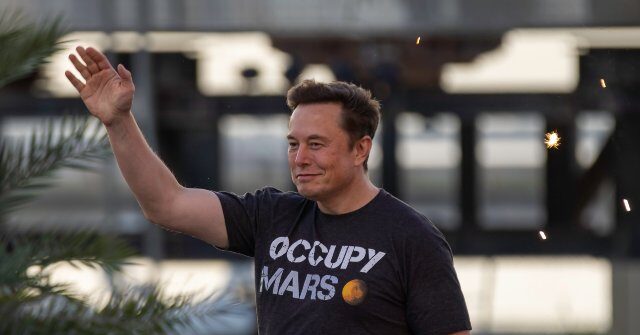
The concept of building AI data centers in orbit has gained renewed momentum following SpaceX’s record-breaking IPO that raised over $85 billion and valued the company in the trillions. Elon Musk’s success and the massive pushback against AI data centers in rural and suburban communities has spurred competitors including Jeff Bezos to develop their own plans for space-based data centers
CNBC reports that the successful public debut of SpaceX, which raised $85 billion and made Elon Musk the world’s first trillionaire, has brought the once far-fetched idea of space-based AI data centers into the realm of plausibility. While significant skepticism remains about the economic viability of the concept, industry experts and investors suggest the massive capital infusion could accelerate development of orbital computing infrastructure.
SpaceX now possesses several key components necessary for space-based data centers, including reliable reusable Falcon rockets, plans for more powerful launch vehicles, its xAI division with substantial computing needs, and the upgradeable Starlink satellite network. The company’s interconnected operations now have billions in new capital to potentially integrate these elements and serve both internal AI operations and commercial customers such as Anthropic.
Breitbart News previously reported that Musk unveiled his plans for orbital AI data centers shortly before the SpaceX IPO:
The AI data center satellite, which Musk characterized as a preliminary version of the final design, will stand 20 meters tall with an expansive wingspan of 70 meters. These dimensions make it the largest satellite SpaceX has ever attempted to launch. The structure features a rack of AI chips flanked by extensive solar panels and liquid radiators for thermal management.
Musk described the current design as a draft iteration of what will become the operational version. He noted that the satellite is considerably less complex than SpaceX’s Starlink satellites, which the company has been deploying since 2019. Much of the technology draws from systems already developed for the satellite internet service.
“We don’t think this is a super hard problem, compared to things we already do,” said Musk.
Duncan Davidson, a partner at Bullpen Capital, stated on CNBC’s The Exchange that “The company comes down to data centers in space. That is the big, long-term play.” Davidson noted that while engineering and technical challenges are being addressed, the economics remain marginal at present. However, he expressed optimism about the long-term business case as launch costs decrease while terrestrial data center expenses continue rising.
The proposed AI1 satellites represent upgraded versions of existing Starlink communications satellites but will require significantly more semiconductors. To meet this demand, SpaceX partnered with Tesla and Intel to create Terafab, a 10-million-square-foot manufacturing facility under construction in Austin. The facility is scheduled to open in 2029 with projected costs reaching up to $119 billion.
The race to establish computing capabilities in space extends beyond SpaceX. Amazon CEO Jeff Bezos has expressed similar ambitions for his rocket company Blue Origin and AI venture Prometheus. In a CNBC interview last month, Bezos described building data centers in space as “very realistic,” though he questioned the aggressive timelines suggested by competitors. “Some of the timelines we hear are very short. People would talk about two or three years,” Bezos said. “That’s probably a little ambitious.”
Blue Origin submitted plans to the FCC in March for Project Sunrise, proposing to launch 51,600 data center satellites into low Earth orbit as part of its TeraWave constellation. The company plans to begin deployment in the fourth quarter of 2027.
Google has entered the competition through Project Suncatcher, a collaboration with satellite manufacturer Planet Labs. The initiative will explore using an interconnected network of solar-powered satellites equipped with Google’s Tensor Processing Unit AI chips. A research paper on the project suggests that if launch costs fall below $200 per kilogram by the mid-2030s, operating orbital data centers could become economically comparable to terrestrial facilities on a per-kilowatt basis.
Several startups are also pursuing space-based computing. Starcloud has already tested an Nvidia H100 GPU in space aboard a SpaceX Falcon 9 rocket. CEO Will Marshall told CNBC that “It will just simply be cheaper to put them in space,” while noting the additional benefit of not competing for water and electricity resources in communities on Earth. AI data centers are facing intense backlash in communities throughout the country based in part on their water and electricity usage. Orbital AI data centers would not require water for cooling, instead relying on radiative cooling that takes advantage of the deep cold of space when not in direct sunlight.
Other companies are working to address the power needs of orbital data centers. Rendezvous Robotics is developing modular spacecraft systems that self-assemble in orbit to generate power for orbital data centers. The company’s spacecraft comprise hundreds of interconnected hexagonal tiles, each approximately five feet in diameter. Company president Joe Landon reported successful testing on Blue Origin’s New Shepard flight and twice on the International Space Station, with another ISS test scheduled for later this year. “In 2028, we’ll be able to deliver full-scale systems,” Landon said.
Rocket Lab, which has launched nearly 90 satellites for NASA and other clients, is constructing a more powerful reusable rocket called Neutron to compete in the orbital data center market. CFO Adam Spice stated, “We would much rather turn customers into tenants of infrastructure that we own rather than help them build out their own.”
Despite the significant investment and development activity, fundamental economic questions persist. Mark Weinzierl, a Harvard economist specializing in space-based businesses, noted that current business models do not yet demonstrate cost-competitiveness with terrestrial alternatives. “One of the biggest questions is, are you sure that we can’t just do that cheaper on Earth?” he said.
However, Weinzierl believes a future scenario where Earth-based costs rise while space-based costs decline could eventually make orbital data centers economically viable. This projection depends on continuing trends in launch cost reductions and satellite technology improvements, though he acknowledged that technological advances in chip efficiency could alter these assumptions.
Growing constraints on terrestrial data centers may favor space-based alternatives. More than 100 proposed moratoriums on data center construction have emerged at various government levels, reflecting mounting public opposition. A May poll by Heatmap News found that 70 percent of Americans would oppose a data center near their residence, up from 40 percent the previous August. Additionally, a study from climate analytics firm First Street found that 79 percent of data center capacity faces elevated risk from climate hazards.
Weinzierl characterized the space-based data center concept as a calculated bet rather than a certainty, but not an unreasonable one. “If you’re optimistic that the cost declines we’ve seen in launch, satellite technology and solar keep happening, then those lines are going to cross sooner. It’s always going to be a bet, but that seems like a reasonable story to me,” he said.
AI data centers continue to emerge as a major issue in political races around the country. Breitbart News social media director Wynton Hall has written his instant bestseller Code Red: The Left, the Right, China, and the Race to Control AI to serve as the definitive guide on how the MAGA movement can create positions on AI that benefit humanity without handing control of our nation to the leftists of Silicon Valley or allowing the Chinese to take over the world.
Read more at CNBC here.
Lucas Nolan is a reporter for Breitbart News covering issues of AI, free speech, and online censorship.
Read the full article here


