







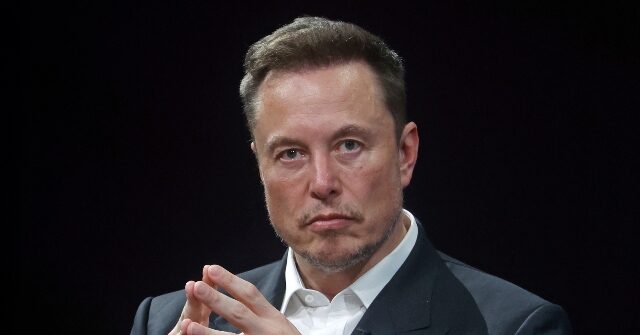
Tesla CEO Elon Musk has revealed that the company’s Terafab Project for producing AI chips will commence on March 21, marking a significant shift for Musk toward vertical integration in semiconductor manufacturing.
Investors Business Daily reports that Tesla’s ambitious plan to manufacture its own AI chips is set to begin in just one week, according to an announcement from CEO Elon Musk on his social media platform X.
While Musk’s weekend post provided limited specifics about the initiative, context from Tesla’s January 28 fourth-quarter earnings call sheds light on the strategic rationale behind the project. During that call, Musk expressed concerns that Tesla’s current chip suppliers would be unable to meet the company’s growing semiconductor demands across its electric vehicle lineup, robotics division, and AI operations.
“To remove the probable constraint in three or four years, we are going to have to build a Tesla TeraFab,” Musk stated during the earnings call. “A very big fab that includes logic, memory and packaging, domestically.”
The company currently relies on major semiconductor manufacturers including Taiwan Semiconductor, Samsung Electronics, and Micron Technology for its chip supply. Taiwan Semiconductor produces Tesla’s existing A14 chip and is expected to begin high-volume production of the A15 chip in mid-2027. Samsung will also manufacture the A15 chip at its forthcoming Texas facility, though production is not anticipated until 2027. Samsung has additionally been tapped to produce the A16 chip, potentially arriving in 2028 or later.
The financial implications of such an undertaking are substantial. Industry experts estimate that constructing a state-of-the-art chip fabrication plant could cost Tesla between twenty and thirty billion dollars, with costs potentially escalating significantly higher if domestic production is pursued.
Tesla has already outlined plans to invest $20 billion in capital expenditures for 2026, representing more than double the previous year’s spending of $8.53 billion, which itself reflected a twenty-five percent decrease compared to 2024. Notably, the $20 billion dollar forecast does not include expenses related to the Terafab project or a potential solar manufacturing facility, suggesting that actual capital requirements could substantially exceed current projections and potentially impact Tesla’s cash reserves.
During the first quarter earnings call, Tesla CFO Vaibhav Taneja indicated that the company might pursue borrowing to finance its extensive capital expenditure requirements.
Tesla’s move toward greater vertical integration distinguishes it from most traditional automakers, with Chinese electric vehicle manufacturer BYD serving as a notable exception in the industry. While BYD produces many of its own semiconductor components, it does not manufacture cutting-edge AI processors comparable to what Tesla envisions for its Terafab facility.
However, observers note that Musk’s announced timelines have historically proven overly optimistic. Beyond potential obstacles in establishing the chip fabrication facility itself, any setbacks in Tesla’s electric vehicle production, Optimus robot development, or other AI initiatives could delay the urgency for in-house chip manufacturing capabilities.
The battle for control between conservatives and the ultra-leftists of Silicon Valley is just one of many topics discussed in CODE RED. Hall explores aspects of AI that will impact the nation, the economy, and your own family.
The challenges CODE RED will help you address include:
- Why AI is wired for woke indoctrination—and how to resist it.
- How elites plan to weaponize AI job losses to push dependency.
- How America can beat China without becoming China.
- How to prepare your kids for the blinding speed of AI disruption.
- The new national security threats AI unleashes—and how we defend against them.
- Why “AI girlfriends” are luring millions—and what it will take to preserve authentic human connection.
- How AI will test faith and meaning—and why spiritual renewal may be its most surprising outcome.
Read more at Investors Business Daily here.
Lucas Nolan is a reporter for Breitbart News covering issues of free speech and online censorship.
Read the full article here


