




Egypt on Monday tentatively agreed to South Sudan’s plans for the Grand Fula Dam project, but renewed its feud with Ethiopia over another project known as the Grand Ethiopian Renaissance Dam (GERD).
Egypt and Ethiopia are both members of the BRICS organization, which has done little to resolve the increasingly bitter dam feud between them.
According to Egyptian Minister of Water Resources and Irrigation Hani Sewliam, Egypt opposes the GERD project as a “unilateral and illegal” abuse of water resources. Although Ethiopia has touted GERD as a vitally needed hydropower plant, Sewliam criticized the dam as a scheme to control the water flows to downstream nations.
The Egyptian minister said the Grand Fula Dam, on the other hand, has been properly planned and vetted under the Nile Basin Initiative, Egypt’s decades-old multilateral framework for coordinating water projects in the region. Egypt has been strongly critical of Ethiopia for refusing to fully join the Nile Basin framework, instead pushing ahead with unilateral plans for GERD.
Ethiopia began working on GERD in 2011 and completed the $5 billion initial phase of the project in 2025, over strenuous objections from Egypt.
The dam straddles the Blue Nile upstream of Egypt and Sudan, using the water flow to generate 5,150 megawatts of power for Ethiopia. The Egyptians consider a constant and reliable flow of water into the Nile Basin to be vital to their national security.
Egypt went all the way to the United Nations Security Council (UNSC) with complaints that Ethiopia violated international law, and the water rights of other countries, by refusing to make GERD subject to multilateral oversight and regulation. To Cairo’s dismay, the Sudanese were not as strongly opposed to the project, in part because they hoped to benefit from Ethiopian hydropower, but Sudan said it would like to see more “transparency” and international cooperation in planning future projects.
Future projects are at hand, as Ethiopia in March announced plans for three more dams on the Blue Nile to be constructed over the next four to seven years at a cost of $3.5 billion each. Those three dams would give Ethiopia more control over freshwater flows in the Blue Nile than any other nation, to Egypt’s great concern.
The Egyptians have already spent billions adjusting to GERD’s impact on the Blue Nile and could be looking at billions more in restructuring costs to handle the three additional dams, not to mention putting a great deal of their freshwater irrigation supply at the mercy of Addis Ababa.
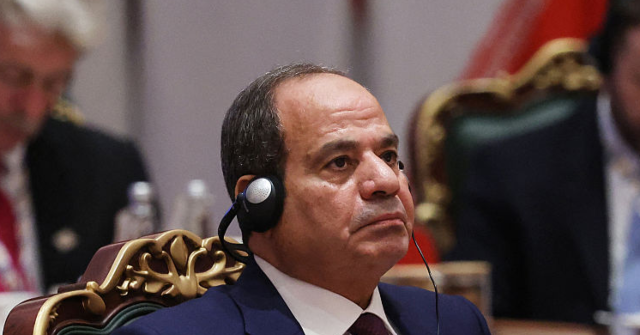
Egypt pulled out all the diplomatic stops against Ethiopia’s dams, even enlisting the aid of the United States as President Donald Trump attempted to mediate a regional water control framework at the request of Egyptian President Abdel Fattah el-Sisi in January.
Sisi also tried to rally Turkey and Somalia against the dam projects, and when that didn’t work, he began moving ships and ground troops into position around Ethiopia, to send the message that Egypt might be prepared to play rough.
The Ethiopians have countered Egypt’s concerns by noting that Cairo has no serious problems with Sudan’s Grand Fula Dam project on the White Nile, which converges with the Blue Nile in Sudan. As Sewliam stressed on Monday, Egypt feels the two projects are very different, because Sudan worked within the Nile Basin framework and consulted with Egypt.
Egypt and Ethiopia are both members of BRICS, the China-dominated anti-American economic bloc. Both countries joined BRICS as full members in January 2024. The bloc’s failure to resolve the dam dispute has been an embarrassment.
Ethiopian Prime Minister Abiy Ahmed announced the completion of major GERD construction just two weeks after joining BRICS, while the Egyptians seethed. BRICS has sponsored trilateral talks with Egypt, Sudan, and Ethiopia several times over the ensuing years, but the Ethiopians refused to budge an inch from their position.
“The dam is illegitimate and will remain so. Egypt has the right to take appropriate action to remove the harm caused to it,” Sewliam threatened on Monday.
“We gave Ethiopia more than one opportunity and tried every possible way to reach understandings, but it did not respond and also violated the Declaration of Principles,” he said.
Sewliam repeated Egypt’s longstanding accusation that Ethiopia plans to use its dams for water control and political influence, not just hydropower generation.
“Ethiopia’s actions and statements by its officials indicate that the primary purpose of building the dam is not electricity generation,” he asserted.
Read the full article here


