







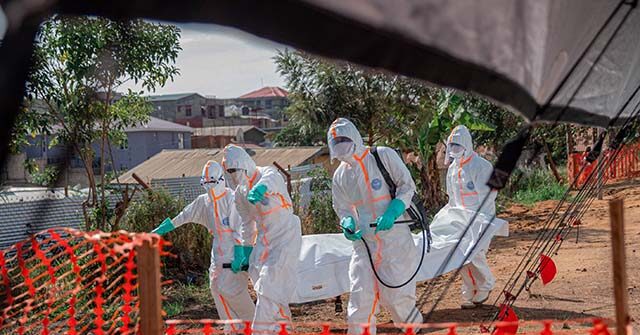
Health officials in the Democratic Republic of the Congo (DRC) reported a spike in new Ebola cases on Sunday, one of the largest daily increases since the official beginning of the outbreak last month.
The DRC health ministry said on Sunday that 72 new cases were reported over the previous 24 hours, for a new confirmed case total of 782. The report included 29 new fatalities, bringing the confirmed death toll to 181.
“One month on, the Ebola disease outbreak is outpacing the response effort. No one knows the true scale or exactly where the disease is spreading in DRC,” warned Doctors Without Borders (MSF) emergency medical coordinator Kate White.
“What we do know is that most treatment centres in Ituri province are overwhelmed; many of our patients arrive at a late stage of the disease, and the majority were never identified or monitored as contacts before seeking care,” she said.
“Testing remains one of the most significant weaknesses in the response, despite recent improvements in laboratory capacity and the arrival of hundreds of mobile test kits in eastern DRC, designed specifically for the Bundibugyo virus,” she warned.
The Congolese health ministry was a bit more optimistic, claiming the spike in daily cases was partly due to improved surveillance picking up cases that would otherwise have been missed.
“Community members are reporting suspected cases, and response teams are investigating them,” the ministry said.
Even as it said surveillance was improving, the DRC health ministry reported an unexplained drop in contact tracing – the task of finding and testing everyone who has come into close contact with an infected patient.
The major obstacle to contact tracing in the eastern Congo is the severe political instability in the area, so this week’s drop could be due to increased hostility from insurgents. Also, health officials have said the mineral-rich Ituri province has a large population of itinerant miners, who are difficult to track down as they move from one job to the next.
Another bit of unwelcome news was that Ebola has been detected in two new health zones, one in the Ituri province and one in South Kivu. Ebola has now been found in 20 of Ituri’s 36 health zones, with Ituri accounting for about 95 percent of reported cases.
Epidemiologists warn the full extent of the Ebola Bundibugyo outbreak has yet to be determined, because the disease was spread for weeks – or even months – before the crisis was officially declared one month ago. The same factors that make contact tracing difficult have also hindered efforts to figure out exactly when, and where, the outbreak began.
MSF said it has “observed fear and mistrust among communities, with some being wary of the sudden arrival of Ebola response teams.”
NPR on Monday spoke with Eliezer Kasongo, a young community volunteer in Ituri’s capital city of Bunia who has been going door-to-door to raise awareness and teach safety protocols. Kasongo, a onetime skeptic of Ebola, said volunteers are still meeting “resistance” from people who do not believe the disease is real, or do not trust medical personnel to give them good advice.
“There’s fear. People are dying every day,” he said.
“We’re not afraid, we’re very afraid,” said hospital director Patient Mazirane of the Clinique Universelle in Bunia. Mazirane said an alarming number of staffers in Ituri’s already overwhelmed hospitals are thinking about quitting their jobs because they are afraid of contracting Ebola.
Read the full article here


