







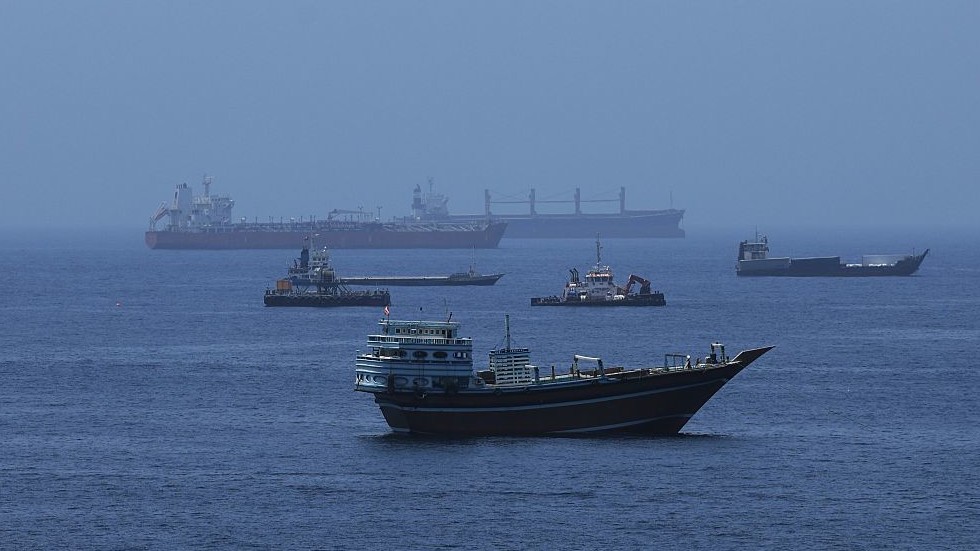
Tankers sailing with transponders off are reportedly helping prevent a sharper oil-price surge by moving crude through the disrupted strait
Gulf states are covertly shipping oil through the Strait of Hormuz on tankers with their transponders switched off despite severe disruptions to normal traffic and intermittent attacks, Bloomberg reported on Sunday, citing people familiar with the shipments.
The de facto closure to normal traffic through the strait due to the US-Iran conflict has affected a strategic waterway that has historically been the route for around a quarter of the world’s seaborne oil trade. The conflict initially sent global oil prices soaring to nearly $120 a barrel. Some energy experts have warned that oil prices could reach $150 over the coming months.
The volumes shipped through the heavily disrupted passage exceed market estimates of 4 million barrels per day, people familiar with the matter told Bloomberg on condition of anonymity, without specifying by how much. The UAE, Iraq, Qatar, and Kuwait have reportedly been moving barrels through Hormuz using “dark” tanker transits, with crude later transferred to other vessels in the Gulf of Oman.


The combination of covert shipments, pipeline workarounds, stockpile releases, and reductions in demand across the world has helped keep oil prices in the $80-$90-a-barrel range, according to traders and analysts cited by Bloomberg.
The risks remain significant, with ADNOC telling Bloomberg that 23 of its vessels have come under attack since the US-Iran conflict began, leaving one crew member dead and 20 others injured. Last week, ADNOC reported that two of its vessels came under attack in Hormuz, with all crew members reported safe. UAE authorities blamed Iran for the attacks, calling on Tehran to reopen the strait.
Saudi Arabia also appears to be preparing to use the route, with 16 supertankers positioned off Oman’s coast and three more expected in the coming days, the news agency noted, adding that the vessels can carry up to 38 million barrels of oil.
Insurers say they are seeing a steady stream of requests for coverage from Gulf producers despite the dangers. “It’s a dark trade,” Pankaj Khanna, CEO of Heidmar Maritime Holdings, told Bloomberg, describing it as the only option even as many shipowners remain unwilling to take the risk.
You can share this story on social media:



Read the full article here


