


Donald Trump picked up fresh bipartisan support for a federal film tax credit Tuesday, while an adviser to one of his Hollywood ambassadors told POLITICO that legislation could come within weeks.
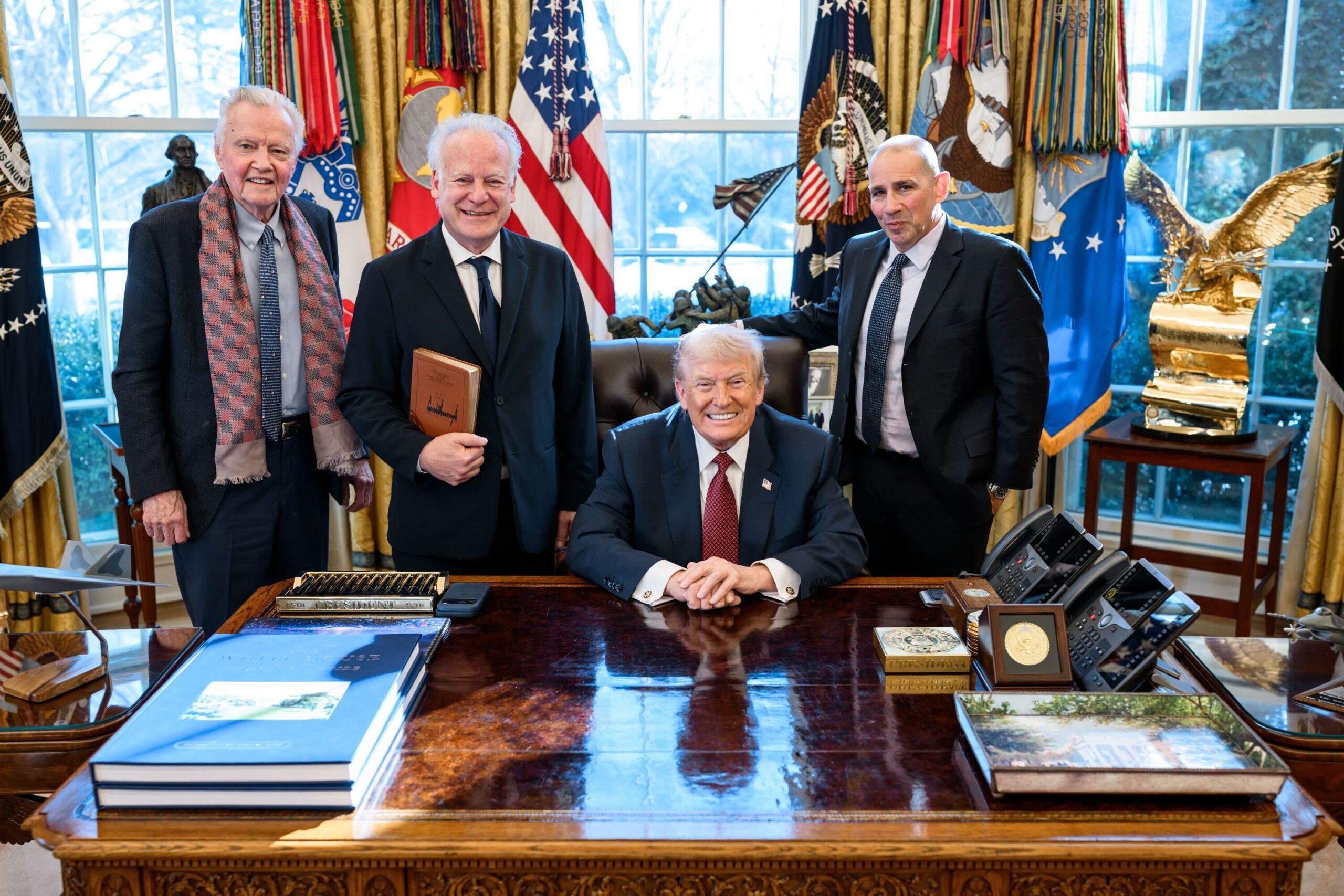
“Something can be introduced this month and as early as within the next couple of weeks,” said Scott Karol, a producer who, along with Jon Voight and his manager, Steven Paul, met with Trump on Monday to discuss the issue.
The legislation is “going to get pushed by Ways and Means,” said Karol, referring to the House committee that handles tax policy. “You are going to see a bipartisan presentation of this.”
On Tuesday, Trump posted on social media for the second consecutive day to tout support for the effort, giving the prospective legislation a name: the Motion Picture, Television and Entertainment Revitalization Act. It comes after a decadeslong exodus of film and TV shoots to countries including Canada and the United Kingdom, which have long offered lucrative incentives that in some cases have become juicier than even the most generous state-level programs.
A bipartisan group of House members from California, which more than doubled the size of its incentive last year to $750 million annually, and Georgia, which has seen blockbuster productions flee across the Atlantic, has also embraced the president’s call for Congress to “immediately” create a federal production tax credit.
The swift and wide-ranging response in support of the tax credit shows momentum for an effort led by an Oscar-winning screen icon whose star crested decades ago and backed by a coalition that includes studios, guilds and some of the president’s most strident critics in Congress. But even with the fresh hope for Hollywood, where industry figures have long dreamed of a federal production incentive, creating a major new tax break would be a tall order in a closely divided Congress.
The film and TV production incentive that is being discussed would include a 20 percent credit for labor both in front of and behind the camera, Karol said. It could also include a mechanism requiring that the vast majority of the work would go to U.S. personnel, according to the two people with knowledge of the legislative effort who were granted anonymity to describe internal deliberations.
“This is going to go through the great grinder that is Congress,” said Karol, who added that the legislation could include “upticks” for projects that shoot in enterprise zones.
Cost concerns
Proponents of the legislation — among them Rep. Laura Friedman (D-Calif.), who has taken a lead role in the effort — have noted that its bipartisan support reflects a reality: several states with sizable production ecosystems are led by Republicans.
“Eighteen months ago, I was fighting to convince my colleagues that the departure of film production from our country was a national problem,” said Friedman, whose Los Angeles-area district includes several entertainment companies, in a statement. “Now the President is asking for the same bill a group of us have been working on. Doors that were closed to us a year ago are open this morning. My job now is to keep the coalition together: the unions, the studios, and members of both parties, and do whatever it takes to get this bill to the floor for a vote and signed into law.”
Republicans from states with flagging film and TV industries, including Georgia and Florida, also expressed support, despite some wariness about helping an industry not known for backing conservative causes — as well as concerns about the cost of doing so.
Rep. Vern Buchanan of Florida, a senior Republican on the Ways and Means Committee who’s not seeking reelection, said that he hoped Trump could sign a film credit into law by the end of 2026.
“Whatever we can do to be supportive is a good thing,” he said.
Rep. Rich McCormick (R-Ga.) told POLITICO that he was “really not a big fan of federal subsidies because, once again, we’re in 30 percent deficit spending right now.”
“Georgia’s a major film-producing place, and I always want to help Georgia out,” he said. “But I also want to make sure that it makes sense for the American people when it comes to how we pay for it and how much comes back to us in tax money.”
Rep. Buddy Carter, another Georgia Republican, said that entertainment production “has been an economic boon for us.” The state, he said, has benefited from “the investment that’s been made,” citing jobs, tax revenue and tourism.
‘We need a Truth Social post’
Top lawmakers in both parties have discussed passing a bipartisan tax package after the midterm elections. It’s possible, according to the two people with knowledge of the legislative push for the incentive, that a bill to create the credit could be introduced then. But November’s results will influence how much legislating congressional leaders will want to do before the close of the year, leaving the fate of a lame-duck tax bill up in the air.
“We hope when we‘re in the majority that this is something that we can address,” House Democratic Caucus Chair Pete Aguilar (D-Calif.) said. “Maybe this is a source of something that we can do between now and then if there‘s bipartisan support.”
During their meeting with the president on Monday, Voight made “an impassioned plea to the president,” said Paul, one of the actor’s advisers.
“Jon, as you can imagine, really has a love for our business. He feels fatherly over it. It hurts him to see what is happening,” said Paul, adding that the actor “has been by our sides” at meetings with Hollywood interests supportive of the legislation, including unions and the Motion Picture Association.
During their meeting, Paul said that an admission he made got the president’s attention. Paul, who also is a producer, told Trump that he was making a new film about Richard Nixon, but said he was “ashamed” to admit he might have to shoot it overseas, owing to incentives available outside the U.S.
“What do you need from me?” Trump replied, according to Karol.
Voight’s advisers told the president, “We need a Truth Social post,” Karol said.
Before long, the president was telling his followers that a federal production incentive could be created “quickly, accurately, efficiently and, importantly, will benefit ALL of America.”
A White House official declined to discuss the meeting but said in a statement, “President Trump is right: American movies should be made in America. The President is Making Hollywood Great Again while creating high paying jobs right here in the United States.”
Karol and Paul — who along with Voight also met on Monday with MPA officials, including CEO Charles Rivkin — acknowledged that there is much work to be done. Asked about McCormick’s reservations over the cost of a potential federal incentive, Karol said “that kind of concern is valid.”
“Having said that, there are a number of industries that receive government support because of their importance for one reason or another,” he said. “This is the greatest American export. American movies need to be made in America and by Americans. This legislation will have an immediate impact in the United States.”
Read the full article here