






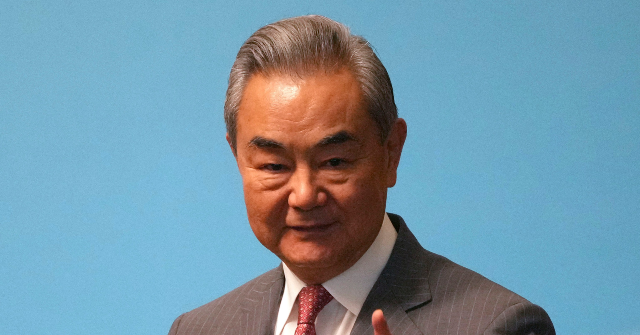
Chinese Foreign Minister Wang Yi arrived in South Korea on Wednesday, on a diplomatic mission widely seen as Beijing’s effort to exploit an opening created by President Donald Trump’s spat with Seoul.
Wang was received by South Korean Foreign Minister Cho Hyun, who invited him to visit after leftist President Lee Jae-myung expressed a desire to formally conclude the 1950-1953 Korean War through multi-party negotiations. Wang and Cho previously met in Beijing last September.
“I hope that progress in restoring bilateral relations will contribute to peace and stability in the region, including on the Korean Peninsula,” Cho said at the outset of his meeting with Wang.
“As President Lee Jae Myung has presented a blueprint for peaceful coexistence on the Korean Peninsula in his recent Liberation Day address, the South Korean government will continue efforts to achieve denuclearization and peace on the Korean Peninsula,” he added.
Wang said China intends to “continue to play a constructive role” in promoting peace and stability on the Korean Peninsula, and saluted South Korea as China’s “most important neighboring country.”’
“We also hope that South Korea and North Korea will gradually move toward peace and coexistence, and sincerely wish for lasting stability and progress on the Korean Peninsula,” he said.
Liberation Day, a South Korean holiday celebrating the end of Japanese military occupation in 1945, was observed on Saturday. Lee said during his speech this year that he wanted both Koreas to “cease unnecessary confrontations and show their respect for each other.”
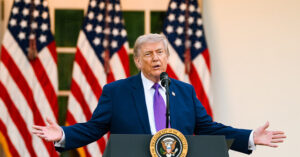
President Trump said on Sunday that he would reduce the scale of the Ulchi Freedom Shield joint military exercise with South Korea this week, because the exercise is “costly” and sends “a signal that is totally inappropriate and hostile” to North Korea. The North Koreans have long complained that the military drills are provocative.
The South Korean Defense Ministry announced on Tuesday that Ulchi Freedom Shield would be cut short by six days at Washington’s request, concluding on August 21 instead of August 27. The drills will also be “partially reduced in scale” although the Defense Ministry offered no details of that reduction.
Cho told a parliamentary hearing that the reduction came as a complete surprise to both South Korean and American defense officials when Trump announced it with a social media post on Sunday.
Trump told reporters on Monday that his decision to reduce the military exercises was connected to South Korea refusing to “give us a little hand” with the Iran crisis.
“Wait a minute. We have 39,000 soldiers over there guarding you from Kim Jong-un, your next door neighbor, and you’re not going to help us on a very easy military operation in Iran. That’s strange,” he said.
“We can’t go around and protect all of these countries, especially when they’re not there to help us,” he added.
Trump also hinted that North Korean dictator Kim Jong-un has responded positively to his overtures for another meeting to discuss ending North Korea’s nuclear weapons program.
The Blue House, South Korea’s presidential office, on Tuesday reiterated the longstanding U.S.-South Korean position that joint military exercises were not a provocation, and do not “reflect any intention to attack North Korea or escalate tensions on the Korean peninsula.”
The Blue House added that contrary to North Korea’s complaints, the drills were not designed to “treat a specific entity as an adversary,” but rather served to “safeguard the safe and peaceful daily lives of the people.”
China’s state-run Global Times said on Wednesday that Wang’s visit to Seoul, his first in five years, was intended to bring Chinese-South Korean relations to a higher level — and to lay the groundwork for China to displace the United States as leader of the alliance of Southeast Asian industrialized nations.
Tianjin Foreign Studies University professor Zheng Jiyong told the Global Times that current events could lead to a decisive pro-China shift in South Korean politics.
“[South Korean President] Lee is positioning himself for the next phase of South Korea’s domestic political landscape, [as] changes in the external environment, including the relation with China, exert substantial influence on South Korea’s domestic politics,” Zheng predicted.
Read the full article here


