
Close Menu
The Politic ReviewThe Politic Review
  • News
  • U.S.
  • World
  • Politics
  • Congress
  • Business
  • Economy
  • Money
  • Tech
  • More Articles
Trending

Fashion Notes: First Lady Melania Trump Hosts British Royals in Ralph Lauren Suit, Eric Javits Hat

April 30, 2026

King Charles III Meets Mayor Mamdani in New York at 9/11 Memorial

April 30, 2026

Report: Justice Department Indicts Former FBI Director James Comey for Second Time

April 30, 2026
Facebook X (Twitter) Instagram
  • Donald Trump
  • Kamala Harris
  • Elections 2024
  • Elon Musk
  • Israel War
  • Ukraine War
  • Policy
  • Immigration
Facebook X (Twitter) Instagram
The Politic ReviewThe Politic Review
Newsletter
Thursday, April 30
  • News
  • U.S.
  • World
  • Politics
  • Congress
  • Business
  • Economy
  • Money
  • Tech
  • More Articles
The Politic ReviewThe Politic Review
  • United States
  • World
  • Politics
  • Elections
  • Congress
  • Business
  • Economy
  • Money
  • Tech
Home»World»China won’t fight the US, but may still pay the price
World

China won’t fight the US, but may still pay the price

Press RoomBy Press RoomApril 30, 2026No Comments5 Mins Read
Share Facebook Twitter Pinterest Copy Link LinkedIn Tumblr Email VKontakte Telegram

By Timofey Bordachev, Program Director of the Valdai Club

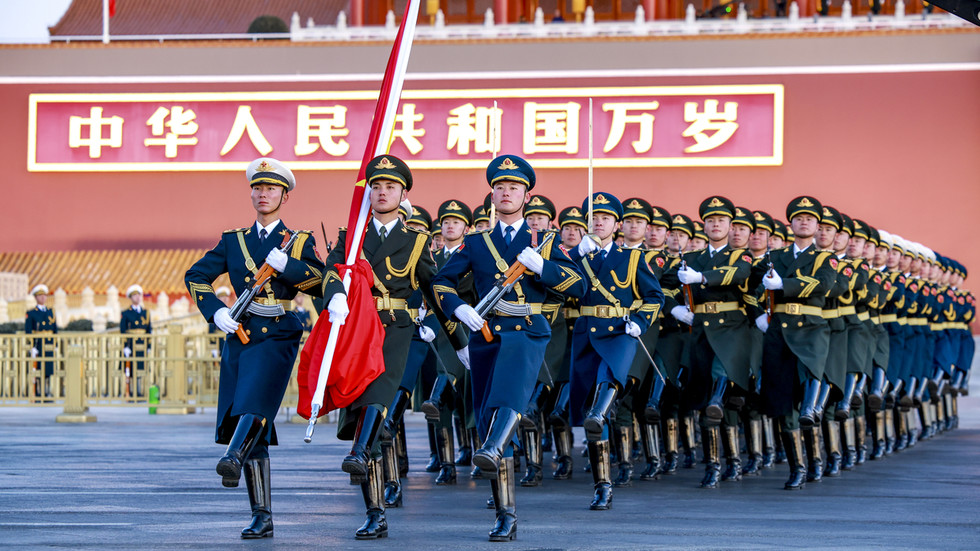
The dramatic events of the first months of 2026 offer a useful lens through which to assess the evolving role of the world’s major powers. Among those often cast as architects of a new international order, China stands out, arguably even ahead of Russia and the United States, both of which remain preoccupied with their rivalry in Europe.

For decades, China’s rise has been one of the central forces shaping global change. As far back as the late 20th century, Henry Kissinger argued that China’s growing importance would prove more consequential than even the end of the Cold War. That judgment now appears prescient. Drawing on vast domestic resources and sustained inflows of foreign investment, Beijing has, in a remarkably short time, established itself as a leading economic power and a confident political actor on the global stage.

A decisive step in this transformation came with the launch of the Belt and Road Initiative in 2013. This ambitious project was designed not only to expand China’s economic reach but to position Chinese capital and infrastructure as the engine of development across entire regions. For many countries in the Global South, it offered an alternative to Western-led models, which have often been accompanied by political conditionality.

In parallel, Beijing has advanced broader concepts such as a “community of shared future for mankind” and new approaches to international security. These ideas have found receptive audiences among a wide range of states in Asia, Africa, and Latin America, particularly as China has deepened its investment presence and become an indispensable economic partner.

Against this backdrop, China has increasingly been viewed as a credible alternative to the United States and the West more broadly. Western powers, after all, have long been accused of cloaking self-interest in the language of liberal economic ideals. China, by contrast, has emphasized non-interference and support for political stability in partner countries. Whether entirely accurate or not, this perception has strengthened Beijing’s appeal.


At the same time, China’s growing capabilities have generated rising expectations. Many countries now look to Beijing not merely as a partner, but as a counterweight, or even a potential successor, to Western leadership. Such expectations are partly a product of Western rhetoric itself, particularly the long-standing American claim to global responsibility. They also reflect the desire of many states to diversify their strategic options.

By the time the current phase of global restructuring began, China was widely seen as a power comparable to the United States in its ability to influence events far beyond its borders. Yet recent developments suggest a more cautious reality.

In the face of escalating international tensions, China has consistently refrained from intervening where its core interests are not directly at stake. These interests, it is increasingly clear, are concentrated primarily in its immediate neighborhood. Beijing’s response to events in 2026 illustrates this approach. It reacted calmly to the US strike on Venezuela, despite close ties with the country’s leadership. It has also avoided significant involvement in Cuba’s deepening crisis, even as the island faces unprecedented external pressure.

The same pattern is visible in the Middle East. Following US and Israeli actions against Iran, China has maintained a notably restrained position. This is striking given Beijing’s reliance on Iranian energy and Iran’s membership in organizations such as the Shanghai Cooperation Organization and BRICS. Rather than confronting Washington directly, China has focused on maintaining dialogue and protecting its broader strategic interests.

For some observers, this restraint raises questions about whether China is living up to the expectations placed upon it. But from another perspective, it reflects a deliberate and coherent strategy. China appears intent on avoiding direct confrontation with the United States, instead seeking to outmaneuver its rival over the long term.


Woke in Brussels, pragmatic in Beijing: Spain is making its move in China

Such an approach is not without risks. If Washington achieves success in its current initiatives, its confidence may grow, potentially bringing greater pressure to bear closer to China’s borders. In that scenario, Beijing could find itself facing a more assertive adversary in its own immediate environment.

At the same time, China’s current posture invites a broader reconsideration of how great powers define their interests. One of the enduring principles of international relations is that the greatest threats to major powers tend to come from within, rather than from external actors. From this perspective, China’s focus on internal stability and sustained economic growth is both logical and necessary.

Indeed, by maintaining domestic cohesion and economic momentum, China may ultimately draw other states into its orbit, not through coercion, but through the force of example and opportunity. Yet this strategy has its own vulnerabilities. Unlike Russia or the United States, China lacks abundant domestic energy resources and remains dependent on external supplies. This dependence introduces a degree of fragility into its broader geopolitical position.

Ultimately, for a power of China’s scale, the disruption of foreign economic ties could prove deeply destabilizing. A loss of geopolitical standing that limits access to global markets and resources would go beyond simply weakening China externally, it could undermine the internal stability that its leadership prioritizes above all else.

In this sense, China faces a fundamental dilemma. To withdraw too far into its own sphere of influence risks exposing the limits of its economic self-sufficiency. But to engage too deeply in global conflicts carries the danger of overextension.

For now, Beijing has chosen caution. Whether this strategy will prove sustainable in an increasingly volatile world remains to be seen. What is clear, however, is that China’s dependence on the global economy will shape its choice, and their consequences, for years to come.

This article was first published by the Valdai Club and edited by the RT team.

Read the full article here

Share. Facebook Twitter Pinterest LinkedIn Tumblr Email Telegram Copy Link

Related Articles

World

King Charles III Meets Mayor Mamdani in New York at 9/11 Memorial

April 30, 2026
World

Russia Scales Back Victory Day Parade, Fearing Ukrainian Drone Strikes

April 30, 2026
World

UK police release bodycam footage of anti-Semitic stabbing attack (VIDEO)

April 30, 2026
World

Trump Vows to Maintain Iran Blockade Until Nuclear Terms Met — Tehran Threatens ‘Unprecedented’ Response

April 30, 2026
World

Italy probes Venice Biennale over Russia’s participation – media

April 30, 2026
World

Current Governor of Sinaloa, Mexico, to Face U.S. Drug Trafficking Charges

April 30, 2026
Add A Comment
Leave A Reply Cancel Reply

Editors Picks

King Charles III Meets Mayor Mamdani in New York at 9/11 Memorial

April 30, 2026

Report: Justice Department Indicts Former FBI Director James Comey for Second Time

April 30, 2026

China won’t fight the US, but may still pay the price

April 30, 2026

Russia Scales Back Victory Day Parade, Fearing Ukrainian Drone Strikes

April 30, 2026
Latest News

Watch: Bill Maher Clashes with ‘Arrested Development’ Star David Cross over Gender Transitioning Toddlers

April 30, 2026

Thom Tillis isn’t done yet with Donald Trump’s nominees

April 30, 2026

UK police release bodycam footage of anti-Semitic stabbing attack (VIDEO)

April 30, 2026

Subscribe to News

Get the latest politics news and updates directly to your inbox.

The Politic Review is your one-stop website for the latest politics news and updates, follow us now to get the news that matters to you.

Facebook X (Twitter) Instagram Pinterest YouTube
Latest Articles

Fashion Notes: First Lady Melania Trump Hosts British Royals in Ralph Lauren Suit, Eric Javits Hat

April 30, 2026

King Charles III Meets Mayor Mamdani in New York at 9/11 Memorial

April 30, 2026

Report: Justice Department Indicts Former FBI Director James Comey for Second Time

April 30, 2026

Subscribe to Updates

Get the latest politics news and updates directly to your inbox.

© 2026 Prices.com LLC. All Rights Reserved.
  • Privacy Policy
  • Terms of use
  • For Advertisers
  • Contact

Type above and press Enter to search. Press Esc to cancel.