


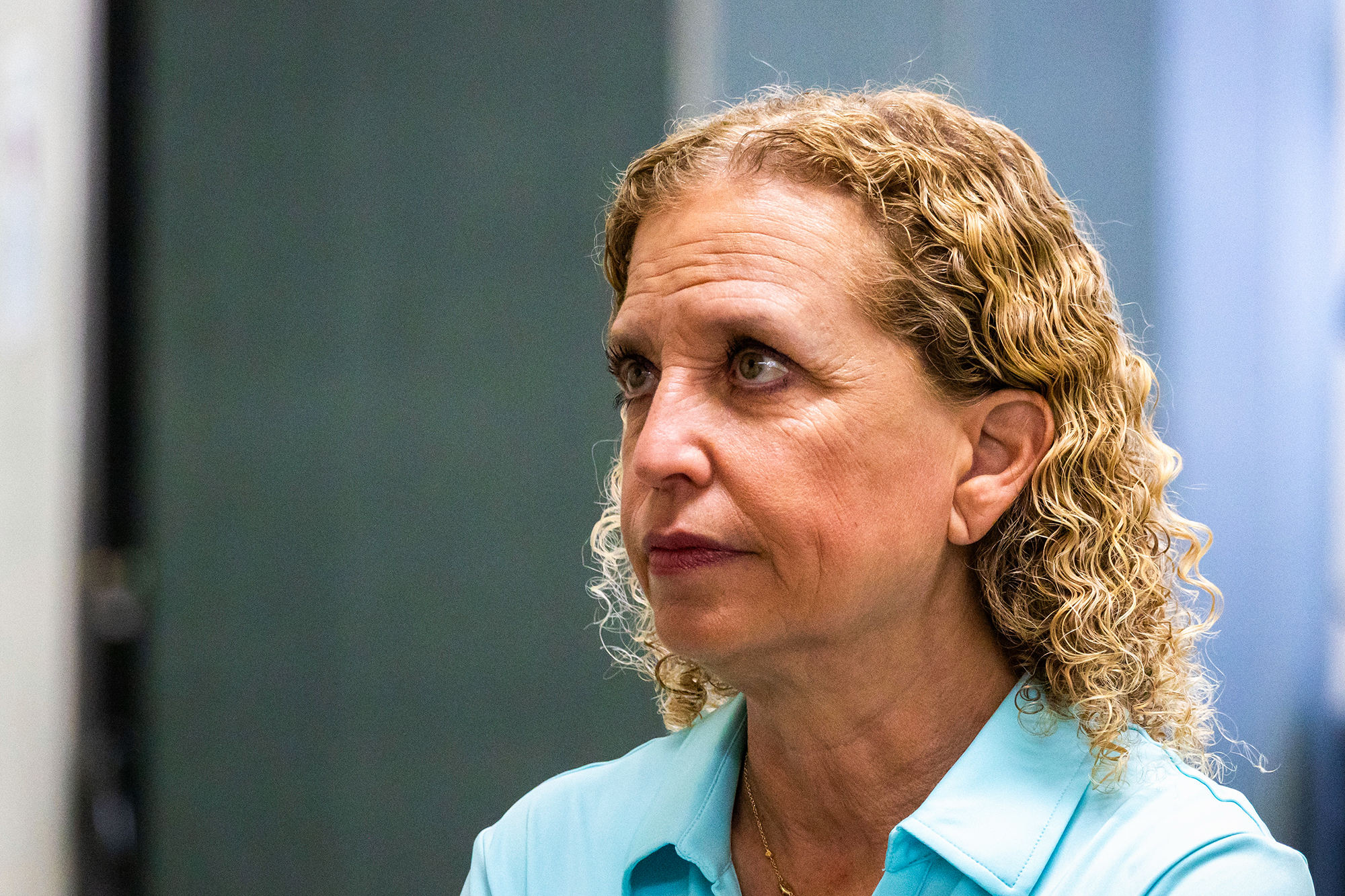
Florida’s primary next week will test whether Debbie Wasserman Schultz can survive her latest fall from grace within the Democratic party she’s served for decades.
Her run in the state’s 20th District has roiled the caucus: Wasserman Schultz, 59, is facing a crowded slate of challengers —several of them younger, several of them Washington outsiders — in an election cycle that has increasingly seen its voters oust longtime incumbents in favor of generational insurgents.
But it’s her decision to run in one of a dwindling number of majority-Black districts after Republicans redrew her former seat that has deeply divided colleagues.
“It’s a painful situation,” says Rep. Yvette Clarke, the Congressional Black Caucus chair. “To have a beloved colleague who made a decision basically to run in a district where historically there’s been CBC representation, and I know that the community has been really disrupted by it.”
The CBC has warned that 19 representatives of 61 could lose their seats this cycle thanks to a Supreme Court ruling making it harder to challenge congressional maps on racial discrimination grounds.
Wasserman Schultz’s gambit is that voters in the district will want someone with her seniority and experience to take on President Donald Trump.
“We have to make sure we’re putting the strongest fighter on the field,” she told POLITICO after entering the race.
But she’s wholly unwelcome by the rest of the all-Black primary slate. Competitor Dale Holness tried to convince her she could keep her redrawn district blue by running there instead. But Wasserman Schultz refused.
“The biggest disappointment for me, and what makes me most upset, is she was positioned to win that seat better than anyone else in South Florida,” Holness said, “and she gave up that fight for expediency to take something away from a community that has been most loyal to the Democratic Party.”
Now, given her name recognition and more than $3.3 million in fundraising, she’s considered the front-runner for the 20th District.
Some critics view Wasserman Schultz’s race as similar to the controversy that forced her to step down as DNC chair in 2016. That’s when Bernie Sanders supporters accused her of tipping the scales in the presidential primary for Hillary Clinton, and Wasserman Schultz became the face of an establishment critics said was fixated on protecting its power.
Still, Wasserman Schultz maintains a deep bench of supporters from her party – including Rep. Emanuel Cleaver, a past CBC chair and a friend going back 20 years. Cleaver campaigned with her in the district and called it a “tough situation.”
“Wouldn’t it be ugly if I’m driving down the street with Debbie Wasserman Schultz in my red convertible, and I see an African American standing on the road without a ride, and they ask me to stop, put Debbie out of the car? Let them get in because they are African American? I don’t roll like that.”
What else we’re watching:
— CONGRESS’ SOCIAL MEDIA STARS: A little known Louisiana Republican just a few years ago, Speaker Mike Johnson has easily cleared over a million followers on X. So too has House Minority Leader Hakeem Jeffries. Senate Minority Leader Chuck Schumer laps them both, with 3.6 million follows on X. And Senate Majority Leader John Thune — though he’s been at the top of his party for fewer years — is trailing at around 373,000 followers. And apart from leadership, a POLITICO analysis shows members of the 119th Congress are growing more viral than ever.
— JEFFRIES TARGETS FILIBUSTER, VOTING RIGHTS: Jeffries on Thursday spelled out his more ambitious goals if Democrats take control of both chambers. On his agenda: pushing for Senate filibuster reform, passage of the John R. Lewis Voting Rights Act, a full repeal of the 2010 Citizens United campaign finance decision and changes to structure of the Supreme Court, Jeffries said in comments at the National Association of Black Journalists conference in Atlanta.
Kimberly Leonard, Riley Rogerson and Cassandra Dumay contributed to this report.
Read the full article here