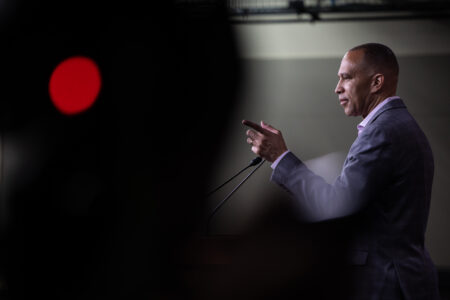




Speaker Mike Johnson’s day will be consumed by the SAVE America Act — again.
President Donald Trump’s signature election security bill is on track to derail his chamber’s agenda for the rest of the week as a small group of hard-liners demand House GOP leaders somehow find a way to force the Senate to pass the measure.
Johnson Monday night tried to appease the group by leveraging an unusual procedural maneuver that would send the elections measure and the annual Pentagon policy bill to the Senate in a single package.
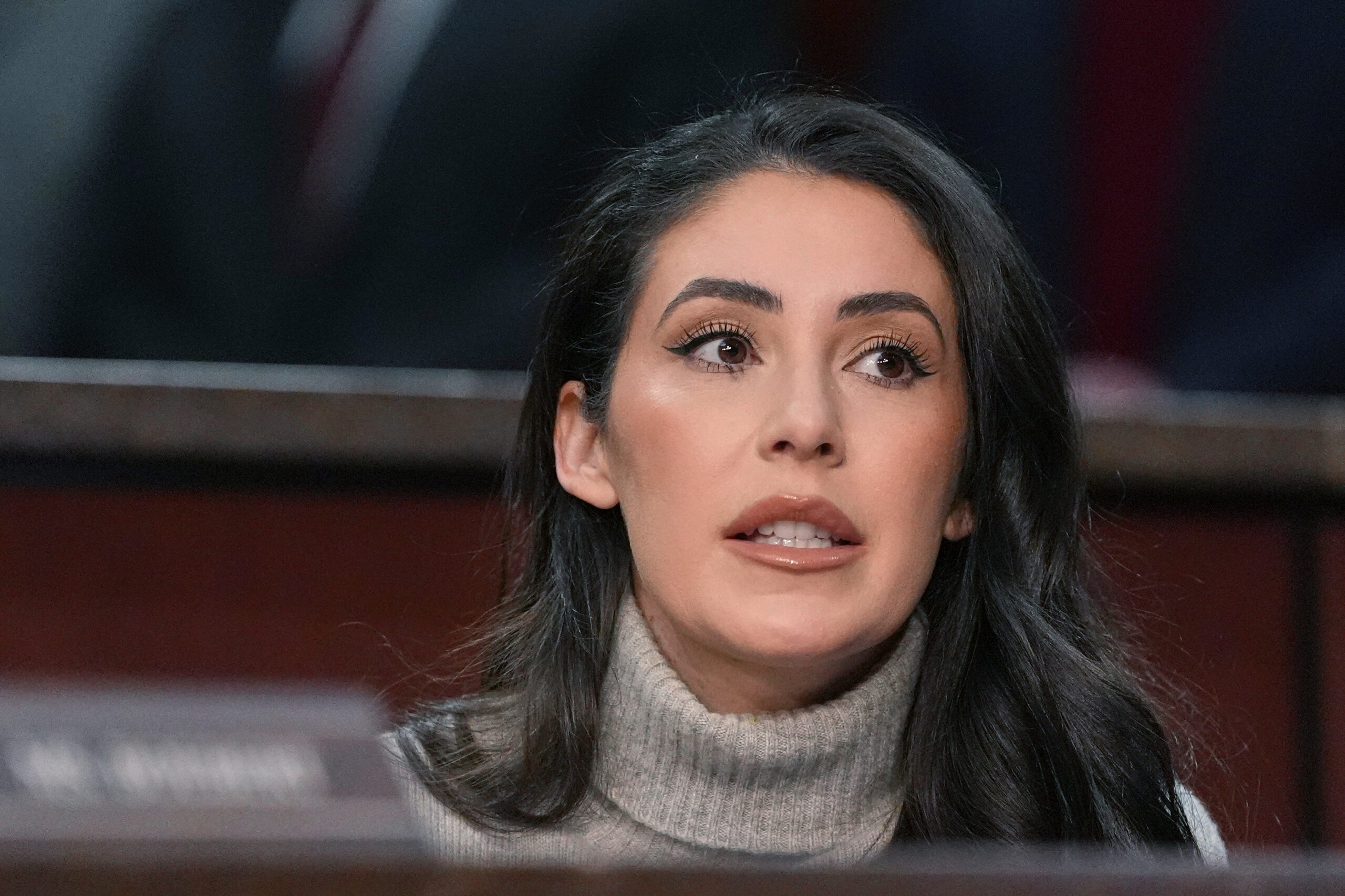
But Rep. Anna Paulina Luna, who has led the bloc halting House business, dismissed Johnson’s move, arguing it’d allow the Senate to easily strip out the SAVE America Act.
It “will not work,” Luna said Monday night after demanding “a full bakeage” into the must-pass defense bill earlier in the day.
To be clear: Her own proposal to simply add SAVE America as an amendment could be removed just as easily in the Senate as with Johnson’s plan.
But with the speaker needing a unified conference to unlock floor business for the rest of the week — he may be forced to deal with Luna and allied hard-liners regardless of legislative logic.
Meanwhile, a Supreme Court decision Monday only sharpened Trump and his allies’ fixation on the legislation, as the court ruled states may accept mail-in ballots that arrive after Election Day so long as they are postmarked by that day.
“In light of the tremendous loss in the Supreme Court today concerning Voter’s Rights, and the fact that ‘people’s’ votes are allowed to be counted LONG AFTER an Election is over, it is more important than ever to pass THE SAVE AMERICA ACT,” Trump said on Truth Social, reinvigorating hard-liners’ crusade despite his calls last week for them to stop threatening “No’s” on rule votes.
The court’s ruling spotlights another complication for Johnson: The version of the elections bill he is proposing to attach to the Pentagon legislation doesn’t include the latest demands from Trump — including a near-total ban on mail voting that is opposed by many Republicans.
Rep. Brian Fitzpatrick, for example, was noncommittal Monday when asked about supporting Trump’s full demands for the bill.
“The voter ID part I’m fine with,” he said in an interview. “I’ve already voted for that.”
Even if the House somehow overcomes a tight rule vote and subsequently passes the merged bills, Senate Majority Leader John Thune has said the combo could not pass his chamber.
Senators are set to debate their own version of the defense bill next month, and it is all but certain the election overhaul would be removed in negotiations between the two chambers.
What else we’re watching:
— JOHNSON HUDDLES WITH TRUMP ON HOUSING BILL: Johnson said a landmark housing affordability package Congress cleared last week will become law, and that Republicans won’t have to take an uncomfortable vote to override a presidential veto to make that happen. Johnson in an interview Monday said he’d speak again with Trump Tuesday about signing the bipartisan housing bill. The president tanked plans last week to swiftly sign into law one of Republican lawmakers’ top priorities before the midterms, saying he’d hold the measure hostage until Congress passed his election security bill.
— RELATIONSHIP FRAYS BETWEEN SENATE’S TOP APPROPRIATORS: It’s getting harder and harder for the top Republican and Democrat overseeing government funding in the Senate to keep up the collegial working relationship they’ve long prided themselves on. Sens. Susan Collins and Patty Murray have been increasingly at odds as the midterms approach and spending priorities diverge. It comes after their successful collaboration on bipartisan legislation during Murray’s two-year reign as chair of Senate Appropriations, which continued when Collins took the gavel last year.
Meredith Lee Hill, Kelsey Brugger, Jennifer Scholtes and Jordain Carney contributed to this report.
Read the full article here