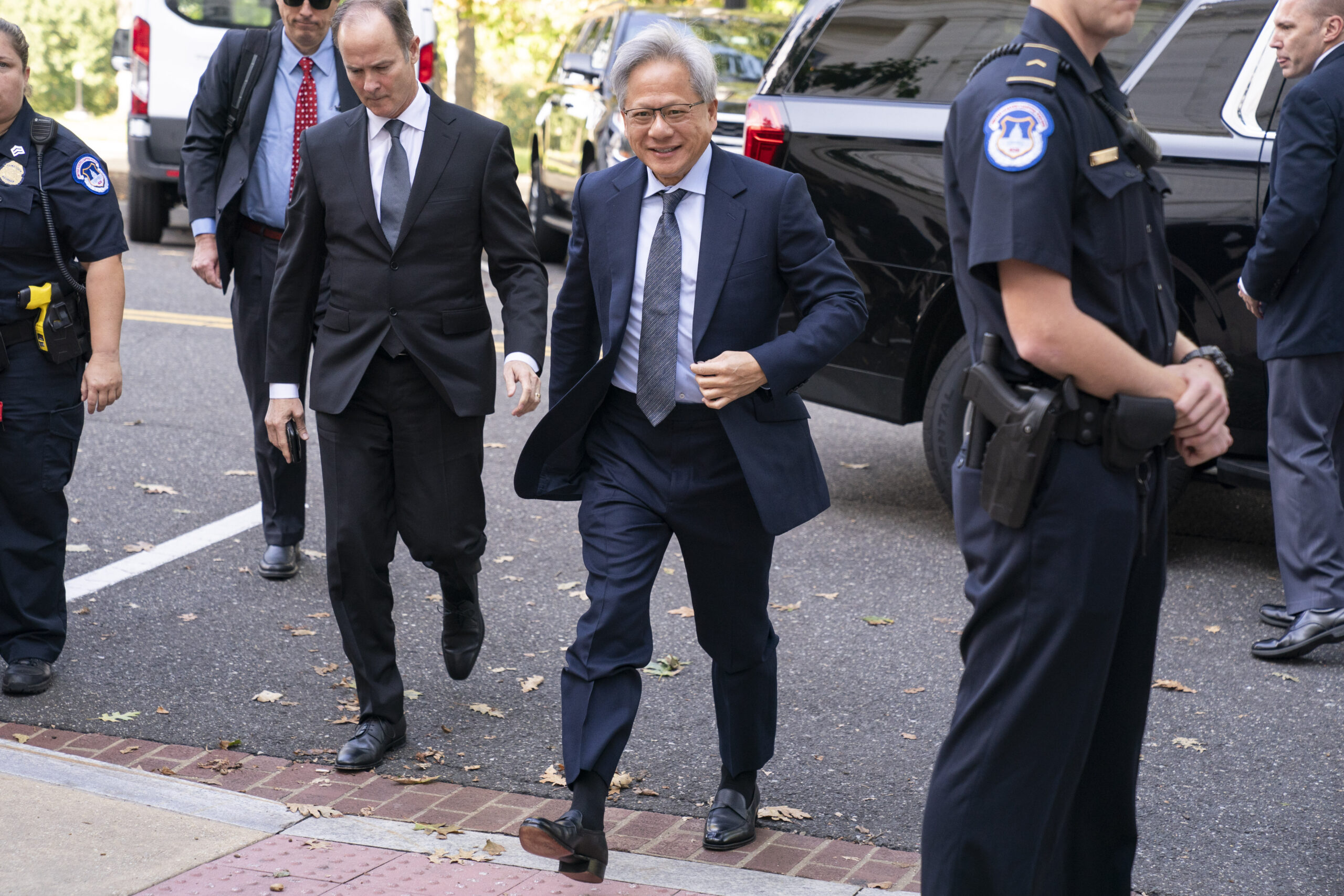
Jensen Huang’s clout as the leader of the world’s largest company is about to be tested on Capitol Hill as debates around artificial intelligence safety intensify.
The Nvidia boss and his army of lobbyists want Congress to lay off restricting exports, particularly to China, of high-end computer chips — the building blocks necessary to power AI development. Lawmakers could include these guardrails as part of the annual defense policy bill set for negotiations this fall.
But despite Huang’s team having had some success over the past year in convincing lawmakers to peel back regulations that would hamper exports, the swift shift in the AI political landscape has led the company to start sounding out of touch — at least to some lawmakers’ ears.
One Senate Democratic aide, granted anonymity to describe private meetings, said Huang’s recent visits to congressional offices have “repeatedly been seen as tone deaf, as he’s openly dismissed or downplayed the risks of AI, including denying any likely workforce disruptions from the technology.”
“Jensen makes an argument — I’m not sure I fully buy it — that as long as the world is relying on Nvidia chips, that’s a good thing,” the Senate Intelligence panel’s top Democrat, Mark Warner, said in an interview. He’s among those who fear giving a top U.S. competitor more tools to advance AI technology, which other industry executives have recently warned could have catastrophic consequences for humanity if left unchecked.
Huang last week echoed President Donald Trump’s sentiment that no new AI laws or regulations are necessary. But even Trump this weekend seemed to concede there are some dangers to the emerging technology. In a Truth Social post, he announced an “AI Force” and an AI czar to lead it — though he offered few details about what powers it would have or whether its creation would need congressional approval.
Meanwhile, a trio of GOP senators is trying to convince their leaders to do something — anything — on AI safety, an issue they believe could tilt the midterms and 2028 elections.
Sens. John Curtis, Josh Hawley and John Kennedy aren’t coordinating their efforts, but each is making a push from the back benches to jolt more senior senators to take action, with Curtis and Hawley teaming up with Democrats on various efforts.
Curtis said in an interview lawmakers need to “show that we’re adults in the room, that we can talk about this, that we can find solutions.”
Hawley is also convening a hearing this week in the Judiciary subcommittee he chairs on AI-powered Flock cameras, and using another subcommittee gavel to investigate OpenAI over the runaway model that led to rogue AI agents escaping testing.
But any hopes of passing legislation are facing skepticism among Senate Republicans that they will ever be able to overcome Trump’s opposition to AI regulations and House GOP leaders who side with the administration, according to three people granted anonymity to describe private conversations.
Kennedy said in an interview he hadn’t heard “anything” about movement in the Senate to address AI and that lawmakers who ignore the growing voter uproar around the issue were courting peril.
“We really need to send a memo around explaining we’ve got midterm elections coming,” he said. “I may send that out.”
Meanwhile, a deep dive in POLITICO’s magazine digs into the Trump administration’s complicated relationship with Anthropic and how officials’ perspective has shifted on AI this year as they discover the fearsome computing power being assembled by private companies on their watch.
What else we’re watching:
— DEMS EYE ONE MORE IRAN VOTE — Senate Democrats are hoping to rebuke Trump and the Iran war in one last war powers vote this week before the midterms. Sen. Thom Tillis is expected to flip his vote after saying he would support efforts to curtail the war if the administration hadn’t sought an authorization from Congress to continue it by mid-September. Senate Dems have attempted 14 similar votes in the past seven months with only two advancing due to GOP absences, but are now hoping increased dissatisfaction with the war will drive more defectors.
— CASSIDY SETS TEST FOR FDA PICK — Trump’s pick to lead the FDA must acknowledge the president’s claim that the measles vaccine is lethal is “absurd,” Sen. Bill Cassidy said Sunday. Senate HELP, which Cassidy chairs, is set to consider Dr. Heidi Overton’s nomination to lead the FDA on Thursday. “I need to hear that she understands that calling the measles vaccine lethal is absurd, and we need radical honesty,” Cassidy said on CBS when asked what he needs to be persuaded during the hearing.
Kelsey Brugger, Ari Hawkins, Jordain Carney, Sophia Cai, Cheyenne Haslett, Leo Shane III, Connor O’Brien and Jalen Beckford contributed to this report.
Read the full article here