








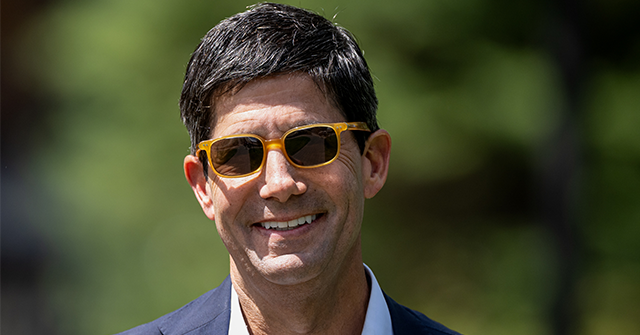
Way Out West with Kevin Warsh
Professional Federal Reserve watchers have already written Kevin Warsh’s assignment for Jackson Hole. They want the new Fed chairman to explain whether inflation reflects temporary shocks or an economy running too hot, and then tell markets whether interest rates are going up.
Warsh appears likely to turn in a different assignment.
At his July press conference, Warsh said he wanted to use Jackson Hole to “frame the big questions.” He named three: What is happening with productivity? What is happening with demographics? And what is happening to the global economy amid repeated shocks?
That sounds like the outline of a speech about how the economy works rather than a preview of the September Fed meeting. It also reflects ideas Warsh has been developing for years.
His central concern is that the Fed’s inherited framework pays too much attention to aggregate demand and too little to the economy’s productive capacity. At the July press conference, he said the Fed has a reasonably good picture of demand but must infer supply and productivity. He described the current economy as a “race between supply and demand.”
Jackson Hole presents Warsh with a unique opportunity to address his big-picture views of the economy. He’s unlikely to squander that opportunity by caving in to demands that he smuggle in the kind of forward guidance he has announced should be put to rest. If anything, he may view the speech as a chance to show the market and analysts that he remains independent not just from political pressure but also from pressure from the analyst and pundit classes.
The AI Boom: Inflation First, Productivity Later?
Artificial intelligence makes the race between supply and demand especially difficult to judge. The construction of data centers, power facilities, and semiconductor plants is boosting spending and raising prices for chips, electricity, equipment, and specialized labor. Those are demand effects occurring today. The productivity gains from that investment will arrive later, and no one knows how quickly.
At least so far, many businesses are finding that hoped-for quick gains to productivity have not borne fruit. If anything, the story is often the opposite. The learning curve of AI may be a drag on productivity in the short-term.
Warsh has called AI perhaps the most important technological change of his adult lifetime. He expects it to make the United States richer and more productive. Yet he has also acknowledged that AI could disrupt employment and that the immediate investment boom might outrun the supply response.
A Jackson Hole speech could explain that AI may raise investment, selected prices, and real interest rates before it begins lowering costs across the economy. He can explain how he views that back-and-forth as likely to impact Fed policy.
Demographics are the other side of the productivity question. Economic growth ultimately comes from increases in output per worker and increases in the number of people working. With immigration sharply lower and the population aging, the workforce is growing much more slowly. The economy therefore requires fewer new jobs each month to keep unemployment stable.
That helps explain the otherwise strange combination of weak payroll growth, low unemployment, and strong business investment. Businesses cannot grow aggregate payrolls much if the number of workers is not growing much. Instead, it means that businesses will increasingly compete for workers even as job growth remains low. And it means that many will need to find ways to grow by increasing output per worker rather than growing payrolls. It also means that the Fed cannot read what at first glance looks like a disappointing jobs report as automatically signaling recession or a need for easier policy.
Warsh’s distinction between inflation and relative-price changes fits naturally into this framework. He has compared wars, tariffs, energy disruptions, and supply-chain problems to weather. They move particular prices and can impose real costs on households. Inflation is more like climate: a broad and persistent rise in prices that becomes embedded in expectations and economic decisions.
Connecting the Dots
The Fed’s task is to determine whether increases in oil, imported goods, or AI infrastructure remain concentrated or spread across the economy. Whether they create lasting price pressures or are likely to fade. Warsh insists that the central bank remains responsible for inflation over time. Temporary shocks cannot become a standing excuse for missing the two percent target. At the same time, hiking in reaction to a high headline inflation figure might not bring down inflation over the longer-term, especially if higher borrowing costs inhibit the growth of the supply side of the economy.
The speech may also connect these economic changes to Warsh’s institutional reforms. His five task forces are reviewing Fed communications, its balance sheet, economic data, productivity and employment, and inflation frameworks. Those subjects correspond almost perfectly to the questions raised by an economy transformed by AI, a smaller labor supply, and a more fragmented global trading system.
Warsh is likely decline to announce or even strongly hint what the Fed will do in September, while still providing useful information about how he views the economy. He can explain which questions the Fed will ask: whether growth reflects demand or expanding supply, whether price increases are broadening, whether weak employment reflects falling labor demand or slower workforce growth, and whether financial markets are signaling inflation or stronger prospective returns on capital.
That is probably what Warsh believes Jackson Hole needs to accomplish. The economics profession wants a forecast. Warsh appears ready to offer a framework.
Read the full article here


