







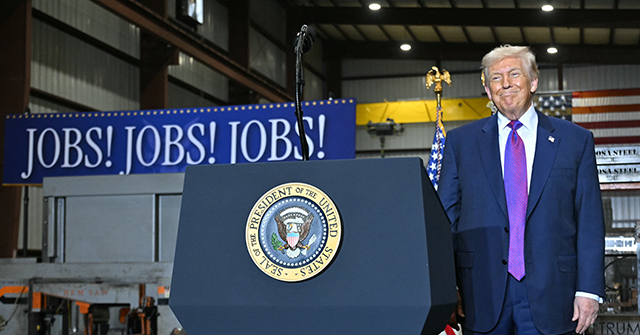
The Labor Market Defies Uncertainty
Much to the disappointment to the liberal media establishment, initial jobless claims came in at 207,000 (seasonally adjusted), down just a touch from last week’s revised figures and beating economists’ expectations by about 11,000. This signals that the labor market is still resilient in the face of an uncertain situation in the Middle East and high oil prices.
The media has insisted over the past two months that Trump’s war in Iran is going to slow the economy. If it is, it certainly isn’t showing up in the data. If the war was causing real problems for businesses, they would be slashing jobs, which is obviously not the case.
In fact, we at the BBD are increasingly optimistic that the war could lead to a permanent realignment in energy sector power dynamics and be a boon for American companies. After all, how long do civilized nations want to be dependent on Islamist powers in war-torn regions for their oil supply? Let’s bring some of those oil jobs back home!
Additionally, the A.I. job-pocalypse might be coming sometime soon, but it doesn’t appear to have arrived yet… at least not fully.
Stocks were up a bit Thursday and could be heading toward a new record. Oil was flat and is down nearly $20 from its recent peak on April 7.
A surprising (and highly encouraging) 10-day ceasefire between Lebanon and Israel suggests that a lasting peace could be possible in the region.
All of this suggests we could be on the verge of a prosperous and confidence-building second half of the year.
We aren’t counting our chickens quite yet, but we remain optimistic.
Powell’s Unprecedented Defiance of Trump
Jerome Powell’s term as Fed chair ends on May 15… or does it? He said he’ll stay on as chair until a successor is confirmed, which might not be right away. Powell is clearly bitter about the Department of Justice’s criminal investigation centered around the long-running renovation project of the Fed headquarters in Washington, DC, and his associated congressional testimony.
Still, his bitterness does change the fact that his resistance to the sitting president is unprecedented. He has been negative on Trump’s tariffs despite the fact that they’ve proven successful, having demonstrated revenue generation and little to no correlated inflation.
President Donald Trump speaks to Fed Chair Jerome Powell during a tour of the Federal Reserve in Washington, DC, on July 24, 2025. (Official White House Photo by Daniel Torok)
It’s clearly not good for the economy if the president and the Fed are feuding. Perhaps the solution is for the DOJ to shut down the investigation into Powell, and for the Fed chair himself to be more prudent with his trash talk about the economic policies of the duly elected president.
Complicating matters is the media’s sustained critique of Trump’s chosen successor for Powell, Kevin Warsh. Warsh’s sin appears to be simply that… he’s rich. Warsh served on the Federal Reserve Board of Governors from 2006 to 2011 (he was the youngest person ever appointed at the time), and then he went to Wall Street where he made a fortune. He also married well. His wife, Jane Lauder, is the granddaughter of cosmetics royalty Estée Lauder.
Nothing about this is a crime, and it probably wouldn’t even be controversial, save for the fact that recent Fed chairs have been known more for their government service and academic careers than their investment history and familial ties.
Yet, in this particular moment, being wealthy is not seen as an advantage when it comes to getting political appointments, even for a job that is one of the most influential economic positions on Earth.
Repeat after us: Working and succeeding in the private sector should not be a liability in a capitalist society.
Socialist Sabotage in New York?
Yet, success in the private sector is most certainly a liability in Zohran Mamdani’s New York.
Mayor Mamdani celebrated Tax Day (who celebrates Tax Day?) by proposing a “pied-à-terre tax” on ultra-luxury second homes worth more than $5 million owned by people whose primary residence is outside of the city. Mamdani (an admitted socialist) claims that this project could generate $500 million annually for the city and that this revenue could be directed toward public services for the poor.
That’s a very round number. Color us at the BBD highly skeptical that he’ll raise as much as he claims, much less precisely half-a-billion.
In fact, we wouldn’t be surprised if the downstream negative side effects more than cancel out any revenue benefits of the new tax.

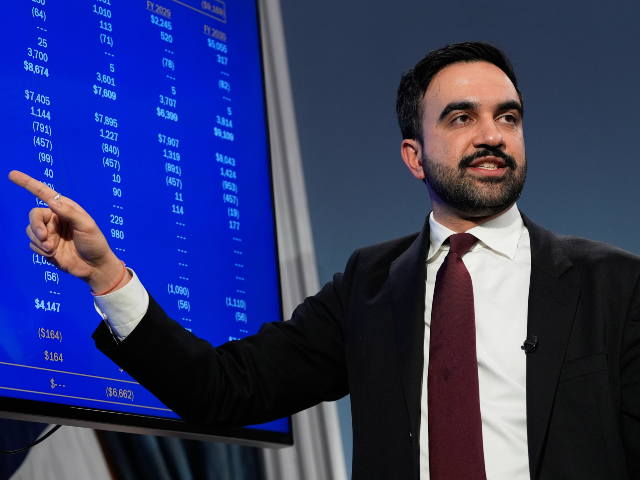
New York City Mayor Zohran Mamdani speaks to reporters about the city’s finances during a news conference in New York, on Feb. 17, 2026. (AP Photo/Seth Wenig)
Consider than some wealthy individuals will likely sell these homes and even take their businesses with them. The new tax could slow down development and construction of luxury buildings and the associated jobs from renovations and furnishings. Lower demand for these units could lower property values, which would lower property taxes.
An exodus from NYC remains a possibility. This would lead to massive upheaval in the retail, restaurant, services, and culture sectors, all of which are used by the wealthy but employ countless working and middle class New Yorkers.
Thus, the average New Yorker might not benefit from this tax at all.
However, the economics of it somehow aren’t as offensive as the values behind them.
Mayor Mamdani is governing as though New York City is only a place for renters, third-world immigrants, and the working poor who are dependent on government to get by. All of those people deserve to be treated humanely, but trying to pilfer the country’s most successful business people consistently backfires.
Mamdani must know that.
So, what is he really up to? What is his actual intention with his eat-the-rich agenda?
That’s the real question.
Read the full article here


