







Waller Explains How Forward Guidance Led the Fed to React Too Slowly to Inflation
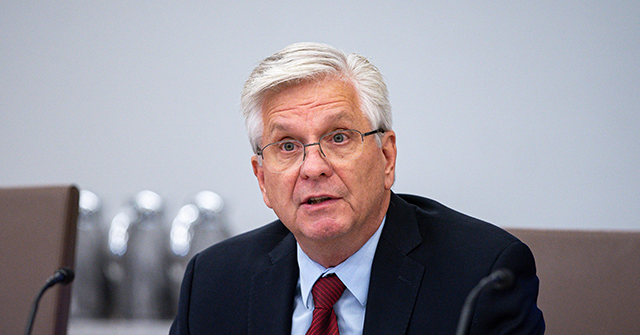
Federal Reserve Governor Christopher Waller gave a speech at a Bank of Italy conference in Rome on Monday titled “Two Thoughts on the Transmission of Monetary Policy.” This is the first major speech by a Fed official on monetary policy since Kevin Warsh’s chairmanship began.
Waller’s first thought is that initial conditions dominate. He argues that the Fed should not set policy off historical averages or an assumption about a reversion to prior conditions. Instead, central bankers need to calibrate policy to the precise economic conditions prevailing. His favorite illustration is the one he has run since 2022: the post-pandemic tightening did not detonate unemployment because the economy began with a vacancy-to-unemployment ratio of two, an unprecedented pile of excess labor demand sitting in job openings rather than in payrolls. Firms cut vacancies instead of workers, and the feared unemployment spike never came.
In other words, the “soft landing” was achieved because the initial conditions allowed for tightening without many layoffs.
That is the same logic that justified last year’s cuts. The labor market appeared to be softening and inflation was coming down. Watching this, the Fed was able to implement a series of cuts meant to support the labor market.
The more consequential piece of Waller’s speech is on forward guidance—and here Waller lines up squarely behind Kevin Warsh. Waller’s cautionary tale is September 2020, when the Committee’s “for some time” guidance grew too rigid. Waller argues that the Fed felt like its hands were tied and so it delayed raising rates while inflation was already building. In short, Waller is providing a concrete, recent example of the problem with forward guidance from his own time at the Fed. He names the guidance-heavy regime as the source of a genuine error. That’s the sort of thing that would be difficult for Warsh to say explicitly because it would sound like an attack on his fellow board members. Waller’s speech, in other words, suggests that Warsh has support for his campaign to reform central bank communications.
In short, forward guidance made inflation worse because it led to Fed to react too slowly to incoming data.
Two Percent Target Remains
But Waller also pushed back on the idea that the Fed was insufficiently committed to fighting inflation. Pressed on whether the Fed needed to “recommit” to price stability, Waller disputed the idea that this was ever in question. “I’ve never been anything but committed to a two percent target,” he said. “The issue is just how fast we get there.”
And Waller seems to be putting his ideas into practice. The economic risks, he said, have “completely flipped around” over the past year. Where the risk last year was a slowing economy, it is now accelerating inflation, according to Waller.
“The labor market seems to be stabilizing in the U.S.; inflation’s been taking off,” he said. “So then that changes how you might want to think about policy.”
One question is whether Waller himself might be behind the curve. Inflation has been running hot for the past several months, but there are many signs that it is going to come down fast. Gasoline prices have plunged from a national average above $4.50 to $3.79 today. Walmart, our biggest retailer, recently announced deep price cuts. The Truflation CPI index now reads just 1.76 percent year-over-year, down from 2.4 percent last fall when the Fed was cutting. Signals of underlying inflation, such as the Cleveland Fed’s median and trimmed-mean CPI, never rose all that much and came down in May. S&P Global’s purchasing managers index survey found that “overall input costs” were still rising sharply in June, but “the rate of inflation eased to its weakest since February.”
In other words, the risk of rising inflation already appears to be in the rear-view mirror.
Read the full article here


