
Wall Street’s Counter-Revolutionaries Demand the Fed Stay King of the Bond Market

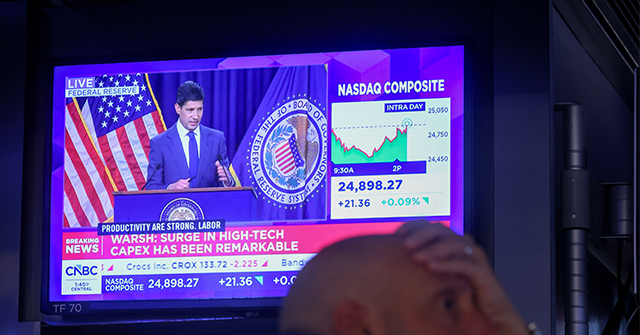
Kevin Warsh used his first meeting as Federal Reserve chairman to announce a break with the communications regime that the Fed has deployed for nearly two decades. The policy statement shrank. Warsh withheld his own dot from the Fed’s interest-rate projections. He announced the end of forward guidance and told investors to spend less time trying to anticipate the Fed’s policy and more time watching the economy.

The bigger picture here is that Warsh has announced the end of financial crisis-era monetary policy and a return to normalcy. Back in the bad old days of the global financial crisis, the Fed cut rates all the way down to zero. Unwilling to experiment with negative nominal rates—which was probably wise—the Fed instead sought additional stimulus by promising years of extraordinary accommodation. Those promises pulled down expected short-term rates, which lowered bond yields and lifted asset prices. Communication—and especially forward guidance—became an instrument of monetary policy because the Fed needed markets to carry its intentions across the yield curve.

Warsh has inherited a funds rate far above zero. The Fed can change that rate whenever officials decide economic conditions warrant a move. The emergency need to steer long-term rates through promises about future policy has passed. Warsh has been very explicit, for years, that the style of communications and the provision of forward guidance that is appropriate during a crisis does not fit the needs of monetary policy outside of a crisis.

The Market Adjusts to a Quieter Fed

In the weeks since that meeting, markets attempted to adjust to the new regime. Longer-term Treasury yields climbed, raising mortgage rates and borrowing costs across the economy. The dollar strengthened a bit. The market appeared to be reacting to signs that inflation may stay elevated due to the persistence of the conflict with Iran while the labor market remains on solid footing and the AI-investment boom continues.

Three Fed officials voted Wednesday to raise the federal funds rate by a quarter point. Warsh joined the majority in holding the target range at 3.5 percent to 3.75 percent. He pointed to the tightening in financial conditions that had already occurred through the bond market, saying that the rising yields had done some of the job of fighting inflation for the Fed.

Markets quickly separated the two parts of the yield curve. The two-year yield fell as traders reduced their expectations for near-term Fed hikes. The 30-year yield jumped 13 basis points to around 5.22 percent, its highest level since 2007. Stocks plunged as the cost of long-term financing rose.

That reaction revealed more about Warsh’s approach than another carefully massaged Fed statement could have done. Investors understood that the Fed was not going to attempt to influence the long end of the curve and that Warsh was very happy to let financial conditions tighten through market processes even though the Fed was not hiking and was not sending the message that a hike is imminent. Higher yields didn’t require fighting a Fed that was holding its benchmark rate steady.

The Old Guard Fights Back

Former New York Fed President Bill Dudley finds this deeply troubling. In a column published by Bloomberg the day after the conclusion of the Fed’s meeting, Dudley says he has “no quarrel” with the end of forward guidance but insists that Warsh’s talk-less approach has gone too far. He argues that investors need to know how officials will respond to economic developments so that market rates can move in advance and transmit policy through the economy.

In other words, Dudley wants the Fed to hold onto what’s known as “main character syndrome. He sees the bond market as a channel for the transmission of policy rather than an independent source of information and even economic stability.

This is a pretty widespread view on Wall Street and in the corners of the economic profession that profess to study monetary policy. Long-term rates are seen as mostly a forecast of the path of short-term rates and, ultimately, the Fed’s policy rate, which directly affects the interest the Fed pays on bank reserves and the price banks pay to borrow reserves from each other. In this paradigm, if inflation is expected to be higher, longer yields go higher in anticipation of the Fed hiking.

But that’s not a complete view of the bond market. Even without knowledge of what the Fed will do, the anticipation of higher inflation—or even the perception that the risk of higher inflation is greater—can push up longer rates because investors demand compensation for the inflation they anticipate. In other words, interest rates rise and financial conditions tighten even in the absence of a hike from the Fed. Those tighter conditions act just like tighter conditions caused directly by monetary policy, helping contain inflation.

If investors expect stronger productivity growth, the prospective return on private capital rises. Treasury yields may have to rise to compete. If Treasury issues more long-term debt, private investors may demand a higher yield to absorb the duration. If the Fed owns fewer securities and supplies less assurance about future rates, investors must bear more duration risk themselves.

None of these mechanisms logically requires investors first to forecast policy moves by the Federal Open Market Committee. A long-term nominal yield reflects expected future real short rates, expected inflation, and premiums for inflation and duration risk. Warsh would say this is an equilibrium identity, not proof that the Fed is the fundamental cause of every yield movement. The future short rates investors expect will themselves reflect future growth, inflation, saving, and returns on capital.

Dudley doesn’t like this at all. He thinks that if long-term yields rise without the Fed telling them to, this represents a “loss of confidence in the Fed.” That’s just main character syndrome in monetary policy terms. It assumes that the Fed’s extraordinary dominance of markets since 2008 is a permanent economic necessity. Warsh’s goal is the end of that dominance. He wants interest rates to move without waiting for instructions from the Fed.

Dudley also argues that an uncertainty-driven increase in long rates is an inefficient way to tighten monetary conditions. Better for the Fed to raise the funds rate deliberately than to allow investors to demand a larger risk premium. Warsh’s answer—if he were the sort who offered answers to critics—would be that compensation for genuine uncertainty is not obviously a deadweight loss. It is the market price of bearing risk.

If Fed guidance previously compressed term premiums by assuring investors that policy would follow a predictable path, the lower yields were partly produced by public insurance against duration risk. Restoring private responsibility for that risk may increase borrowing costs, but that does not make it economically inefficient.

The New Warsh Regime

Warsh wants investors focused on the economy rather than the central bank. Anticipation of Fed policy will always be a part of the calculation, but it does not have to be the dominant part.

The post-crisis paradigm taught investors to translate every economic event into a forecast of the Fed’s next move. Warsh is allowing growth, inflation, government borrowing, and risk to enter market prices more directly. The yield curve can then carry investors’ own judgments about the economy alongside their expectations for the federal funds rate.

Warsh, in short, wants the Fed to abdicate its role as king of the markets. No wonder the monetary monarchists on Wall Street and beyond are horrified.

Read the full article here

Share.
Leave A Reply

Exit mobile version